In a nutshell
- 🌙 Even dim bedside light disrupts deep sleep by suppressing melatonin and raising heart rate; killing the phone’s glow restores deeper, more stable rest.
- 📱 The phone’s Always‑On Display, notification LEDs, and charging animations can deliver 1–5 lux—even through eyelids—triggering subtle arousals all night.
- 🔬 Research shows 10–100 lux reduces slow‑wave sleep, elevates nighttime alertness, and can impair morning metabolism; small light hits accumulate across hours.
- 🛠️ Fix it fast: disable AOD and lock‑screen previews, use Do Not Disturb, place the phone face down or outside the room, and opt for ultra‑dim red/amber nightlights under 1 lux.
- 📈 Real‑world results include fewer awakenings, steadier heart rates, and 20–30 extra minutes of deep sleep; run a one‑week A/B test to verify your gains.
Step into any dark bedroom and you’ll still spot it: a stubborn glow nibbling at the corner of the night. That tiny, persistent light is more powerful than it looks. The evidence is mounting that even dim illumination reaching your eyes during sleep dilutes restorative rest, primes your heart for wakefulness, and nudges hormones off course. The simplest way to fight back? Turn off your phone’s always-on display and notification glow. It’s the quiet saboteur perched on your nightstand. When that one light source goes dark, deep sleep deepens, the autonomic nervous system settles, and your brain’s nightly housekeeping gets a cleaner run. One switch. Outsized impact. It’s an easy experiment with high upside.
The Hidden Culprit: Your Phone’s Always-On Glow
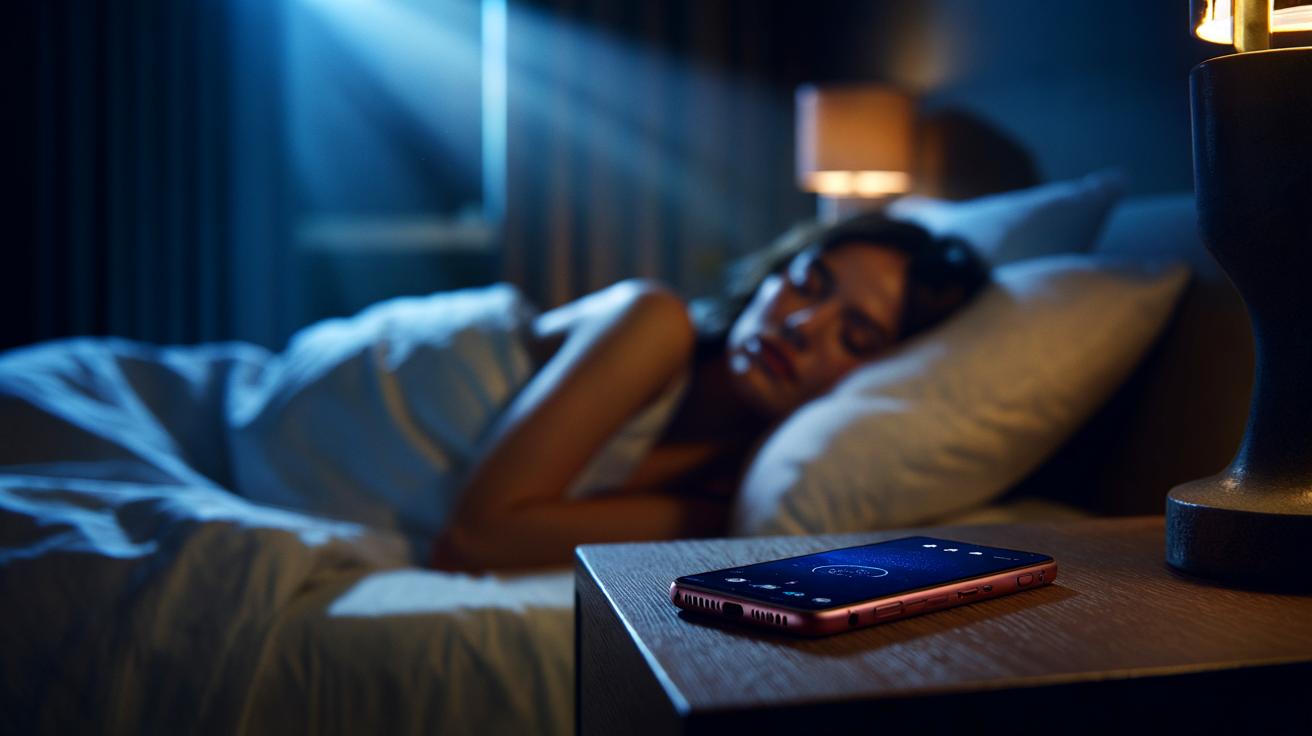
Phones were designed to be helpful when you’re awake, not benign when you’re asleep. The Always-On Display (AOD), lock-screen previews, charging animations, and pulsing notification LEDs create a small but steady stream of photons. Your brain reads those photons through intrinsically photosensitive retinal ganglion cells, tuned to blue-green wavelengths around 480 nm. That pathway doesn’t care about your intentions; it responds to light, even when your eyelids are closed. Yes, a faint bedside glow can still reach the receptors that cue alertness and suppress melatonin.
While a bedside lamp demands attention, the phone’s glow is stealthy. It flickers as texts arrive, flares when you roll over, and whispers “stay vigilant” to a nervous system primed for signals. Over hours, those micro-hits of light add up. The result: shallower stages of sleep, fewer sustained runs of slow-wave sleep, and a restless balance between your sympathetic and parasympathetic systems. It’s not dramatic. It’s cumulative. And because it’s small, we tolerate it—until we notice what changes when it’s gone.
What Science Says About Nighttime Light and Deep Sleep
Laboratory studies repeatedly show that nighttime light—from about 10 to 100 lux—can dampen melatonin, elevate heart rate, and reduce markers of parasympathetic recovery. In controlled settings, people sleeping with modest ambient light spend less time in deep sleep and experience more arousals. One influential experiment found that a seemingly “dim” room light pushed the body toward a more wake-like physiology, raising insulin resistance by morning and clipping slow-wave sleep. The takeaway is simple: small amounts of nocturnal light can produce measurable biological effects.
How does your phone compare? Measurements vary by model and settings, but an AOD or charging glow can deliver several lux at pillow level—especially at short distances and when the screen points toward your face. The human circadian system is exquisitely sensitive, so “just a little light” is not a trivial exposure across an eight-hour night. Below is a quick guide to context.
| Lux Level | Common Source | Typical Effect at Night |
|---|---|---|
| 1–5 lux | Phone AOD, standby LEDs | Possible melatonin suppression, subtle arousals |
| 10–30 lux | Bright nightlight, hallway spill | Reduced deep sleep continuity, higher heart rate |
| 50–100 lux | Streetlight through blinds, TV glow | Marked circadian disruption and lighter sleep |
How to Switch It Off—and What to Use Instead
This fix is refreshingly low-tech. Start by disabling the Always-On Display. On most phones, you can also turn off lock-screen previews, raise-to-wake, charging animations, and notification LEDs. Use Do Not Disturb or a scheduled Sleep mode to keep the screen dark and silent. Place the phone face down or outside the bedroom. If it must stay bedside, dim it to the lowest setting and enable a red-tinted night filter. The goal: zero accidental light bursts between bedtime and alarm.
Swap glowing chargers for ones without bright indicators. Choose blackout curtains if streetlights intrude. Need orientation at night? Use an ultra-dim amber or red nightlight under 1 lux, positioned below eye level and out of the line of sight. For time checks, opt for an e-ink clock or a display that turns off entirely until tapped. These tweaks preserve darkness without sacrificing safety or convenience. The common thread is intentional control: protect your eyes from photons when your brain expects pitch black.
Real-World Results: A Small Change, Big Payoff
What happens when people kill the glow? Reports from readers, sleep clinicians, and wearable users converge: fewer awakenings, steadier heart rates, and more minutes in deep sleep. The change isn’t subtle for everyone, but when it lands, it lands. One reader’s weekend trial—AOD off, phone in a drawer—nudged deep sleep up by 20–30 minutes and shaved nocturnal heart rate by three beats per minute. Another stopped waking at 3 a.m. after silencing a blinking router and turning the phone face down. Darkness works quickly because the physiology it protects is immediate.
Sleep is a cascade. When the sympathetic “guard” is muted by darkness, your parasympathetic system steps forward, pumping the brakes on the body and granting the brain time to perform its nightly maintenance. Memory consolidation improves. Metabolic signals stabilize. Mood steadies. This is not a biohack; it’s a return to the environmental baseline humans evolved with: true night. Turning off one modern light source is just a way back to an ancient condition your body recognizes instantly.
One switch on a single device is hardly heroic, yet the results can feel dramatic. If you want a cleaner test, track one week as usual, then one week with the phone dark, face down, and distant. Note how quickly your nights settle and your mornings sharpen. Darkness is free, safe, and scalable—and the data suggests it’s potent. You’ve tried apps and supplements; now try nothing. Will you give your bedroom the gift of genuine dark and see what your deep sleep does next?
Did you like it?4.5/5 (24)