In a nutshell
- 🧪 Cinnamon’s science: Low-dose cinnamaldehyde selectively suppresses nuisance molds, preserves thermophilic bacteria, wicks moisture as a dry “brown,” and improves aeration for faster heating.
- ⚖️ Right dosage and timing: Use 1–2 tsp per gallon of scraps (or 1–2 tbsp per wheelbarrow), sprinkle in layers, and keep wrung-sponge moisture, regular turning, and 130–150°F temps—cinnamon amplifies good practice, it doesn’t replace it.
- 🚫 Pest and odor control: A thin top dusting deters fruit flies, reduces anaerobic crusts, and cuts odors; avoid heavy use, which can slow beneficial fungi.
- 📊 Clear use-cases: Speed early heating, reduce smells, and curb gnats; benefits hinge on distribution and structure, with overuse risks like clumping and beneficial microbe suppression.
- 🔬 Evidence and experience: Research on plant phenolics supports selective inhibition, while gardeners report a quicker hot phase and fewer insects—so long as application stays light.
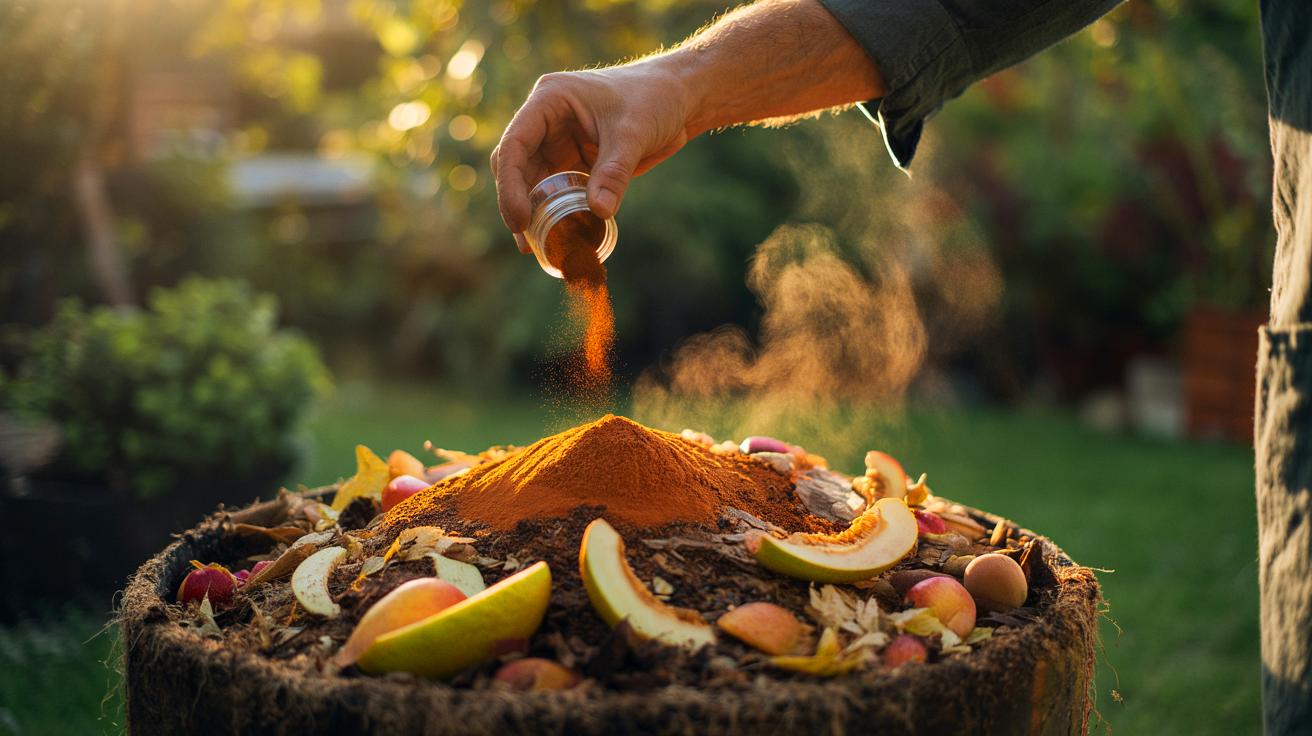
Open your kitchen cabinet, and you might find a small, fragrant accelerator for your compost pile. A light sprinkle of cinnamon, that familiar baking staple, can nudge decomposition into a higher gear by subtly reshaping the microscopic community that turns scraps into soil. It doesn’t work like a chemical activator. It’s gentler, more ecological, and—used sparingly—smarter. Cinnamon’s compounds tamp down nuisance molds and fruit flies, keep wet layers from matting, and help the pile breathe. The result is a hotter core and a quicker turn from peel to humus. One pinch too many, though, and the effect flips, so understanding how and why it works is the real secret.
The Microbial Science Behind a Pinch of Cinnamon
Composting is a microbiological marathon. The fastest runners are thermophilic bacteria and certain fungi that thrive when oxygen is plentiful and the C:N ratio hovers near 25–30:1. Cinnamon helps that race indirectly. Its key compound, cinnamaldehyde, shows selective antimicrobial activity in low doses. That means it can discourage opportunistic molds and slime-forming microbes that thrive in soggy, anaerobic pockets without significantly hampering the heat-loving decomposers that power your pile. Fewer nuisance microbes equals less matting, less stink, and better aeration.
There’s also physics at play. Ground cinnamon is a dry, fine “brown,” so a dusting over fruit-heavy kitchen scraps wicks moisture and increases surface area. Those micro-surfaces are landing pads for bacteria, which speeds the first burst of respiration that warms a pile. Cinnamon contains trace manganese and other minerals that, while small, contribute to microbial enzyme function. The spice won’t replace carbon sources like leaves or straw, but as a conditioner, it nudges the biology and the texture toward faster, cleaner breakdown.
How to Use It: Dosage, Timing, and Pile Conditions
The magic is in moderation. Think “seasoning,” not “ingredient.” As a rule of thumb, use 1–2 teaspoons of ground cinnamon per gallon of fresh kitchen scraps, or about 1–2 tablespoons per wheelbarrow of mixed additions. Sprinkle it as you layer rather than dumping it in one spot. That distributes the effects—moisture wicking, pest deterrence, and selective suppression—without creating a dead zone for beneficial microbes.
Timing matters. Add cinnamon when your inputs skew wet and sugary (melon rinds, overripe fruit, pulpy leftovers) or when insects surge. Combine with a thin layer of shredded leaves or cardboard to boost structure. Keep core conditions in the compost sweet spot: wrung-sponge moisture, regular turning for aeration, and temperatures of 130–150°F. If the pile runs cool, cinnamon won’t fix a carbon deficit or poor airflow; it amplifies good fundamentals, it doesn’t replace them.
| Goal | Why Cinnamon Helps | Suggested Amount | Risk if Overused |
|---|---|---|---|
| Speed up early heating | Dries slick layers; boosts micro-surface area | 1 tsp per gallon of scraps | Can suppress beneficial fungi |
| Reduce odors | Limits anaerobic pockets formed by slime molds | Light dusting per wet layer | Masks problems without fixing structure |
| Deter fruit flies/gnats | Aromatic compounds disrupt attraction | Thin surface sprinkle | Minimal, but avoid clumping |
What the Research and Gardeners Report
Peer-reviewed compost studies rarely test kitchen spices head-to-head. But research on plant-derived essential oils and phenolics offers clues. Low concentrations of cinnamaldehyde selectively inhibit spoilage organisms and some mold species while leaving many thermophiles largely unaffected. Studies on compost respiration show that improving structure and reducing matting consistently raises oxygen diffusion and speeds mass loss. Cinnamon aligns with those dynamics in a practical way—less slime, more air, steadier heat.
Gardeners’ logs echo the lab logic. Many report faster “hot phase” ramp-up when dusting fruit-heavy additions, plus a sharp drop in fruit flies and fungus gnats near lids and vents. The caveat is consistent: overapplication slows things down. If you smell strong spice days later, you used too much. Another pattern emerges in community bins: cinnamon makes mixed inputs more forgiving, smoothing out wet-dry swings between drop-offs. It’s not a miracle powder; it’s a micro-management tool that keeps the pile in its performance lane.
Beyond Speed: Added Benefits for Odor and Pests
Decomposition is a whole-system story. A faster pile that reeks or attracts pests still fails the backyard test. Cinnamon earns its keep here. A thin sprinkle on top acts like a natural cap that deters flies scouting for fermenting cues. It also helps keep the very top layer drier, which reduces anaerobic crusts that lead to sulfurous smells. The aroma is pleasant to humans and off-putting to many insects. The tidy side effect of going faster is going cleaner.
Pair cinnamon with smart companions. Add a handful of shredded leaves after food drops to open airflow. Mix in a cup of coffee grounds to boost nitrogen, then turn the pile to distribute both. When you water, go light; the goal is evenly moist, not soggy. If your bin trends acidic, a small sprinkle of crushed eggshell can buffer pH and complement the spice. In other words, cinnamon plays best in an ensemble—an inexpensive, accessible way to keep biology pointed at humus, not hassle.
Used thoughtfully, a pantry pinch can tilt compost toward speed, stability, and fewer pests. Cinnamon won’t rescue a starved, airless heap, but it will polish a well-managed one, helping you hit that satisfying, dark, crumbly finish sooner. Try a light dusting on your next batch of fruit scraps, monitor temperature and smell, and adjust your dose. Then step back and watch the pile breathe easier. What small, low-cost tweaks—spice, structure, or routine—are you willing to test in your compost this season?
Did you like it?4.5/5 (25)