In a nutshell
- 🌿 Cinnamon’s power comes from cinnamaldehyde, which disrupts fungal cell membranes and slows Pythium, Rhizoctonia, and Fusarium—best as a preventative, not a cure.
- 🧪 Horticulturists use three main methods: a light soil dusting for damping-off, a strained “cinnamon tea” spray for leaf issues, and a dry dab on cuts after division—always spot-test and apply in cool hours.
- ⚖️ Limits matter: cinnamon isn’t systemic, won’t reverse advanced rot, and heavy use can irritate leaves or nudge beneficial microbes; pair it with integrated pest management (airflow, sanitation, smart watering).
- 🪵 Choose wisely: affordable Cassia is typically stronger than Ceylon; essential oil is potent but risky—ground spice with gentle, repeated applications is the safer route.
- 📦 Keep it effective: store cinnamon airtight, cool, and dark to preserve aromatics; refresh every six months and dedicate a garden-only shaker for consistent, clean application.
Gardeners are rediscovering a humble pantry staple as a quiet ally in the fight against plant disease. Sprinkle a little cinnamon, they say, and seedlings stand taller, leaves spot less, and potting mix stays fresher. Horticulturists point to chemistry, not folklore: compounds in cinnamon interrupt fungal growth before it gains steam. The tactic is preventative, low-cost, and simple enough for weekend gardeners. It also pairs neatly with good cultural habits like airflow and clean tools. Used thoughtfully, cinnamon can tip the balance toward resilience rather than rescue. Here’s why it works, how to apply it, and where its limits begin.
The Science Behind Cinnamon’s Antifungal Edge
At the heart of cinnamon’s power is cinnamaldehyde, a volatile compound that disrupts fungal cell membranes and interferes with spore germination. In labs and greenhouses alike, horticulture pros observe suppression of common culprits such as Pythium, Rhizoctonia, and Fusarium, pathogens often blamed for damping-off in seedlings. Cinnamon’s aromatic oils create an inhospitable microfilm on soil and leaf surfaces, making it harder for spores to anchor. The powder also acts as a gentle desiccant at the soil line, where moisture-loving fungi typically stage their first attack.
It’s not a silver bullet. Powdery mildew and Botrytis (gray mold) may be slowed, not erased. Think of cinnamon as a speed bump for fungi, not a wrecking ball. Its greatest strength is in the earliest hours of infection, when spores are probing for entry points. That’s why horticulturists rely on cinnamon as part of a broader integrated pest management strategy: prune for airflow, water at the base, sanitize containers, and use cinnamon to keep fungal pressure low.
How Horticulturists Apply Cinnamon in the Garden
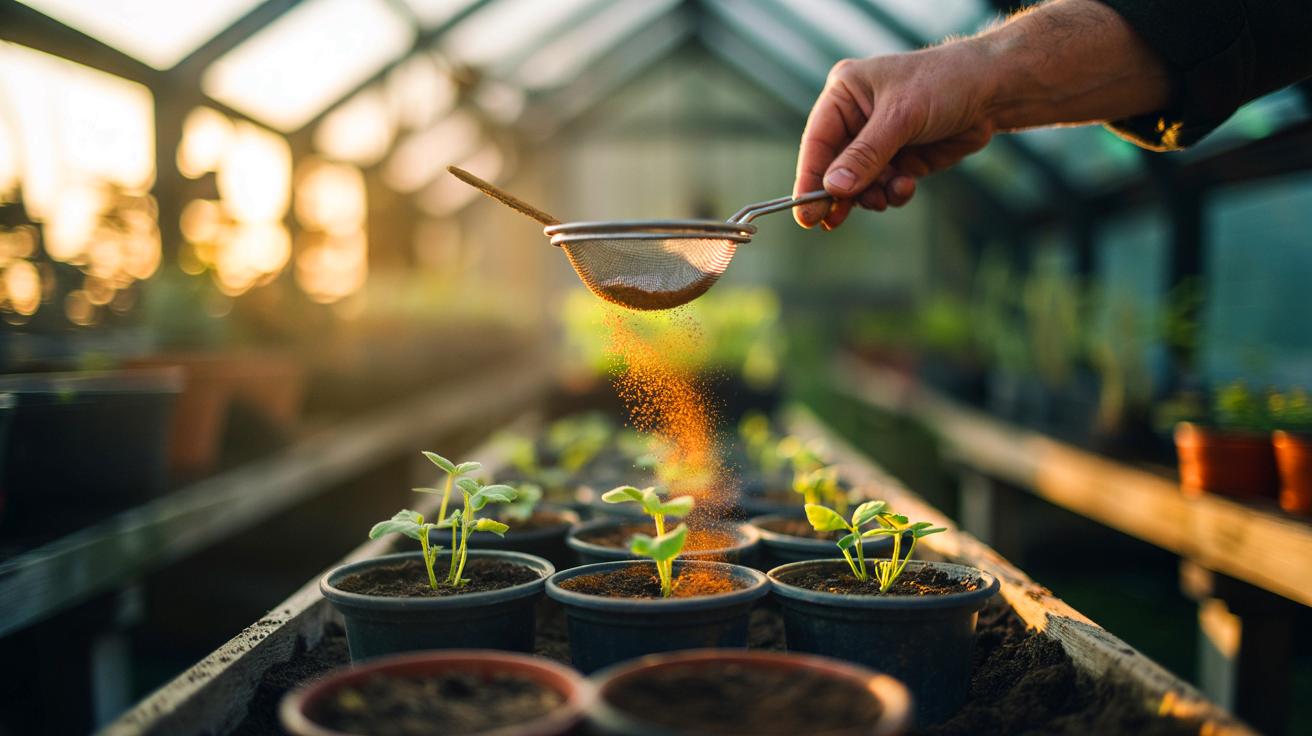
For seedlings, a light dusting over the potting surface helps reduce damping-off. Tap a small sieve to avoid clumps. Water from below or mist carefully to keep the film intact. For foliage troubles, many growers brew a simple “cinnamon tea”: 1 tablespoon ground cinnamon per quart of warm water, steeped 8–12 hours, strained through a coffee filter, then applied with a sprayer. A drop of mild, plant-safe soap improves coverage. Always spot-test a leaf and spray in the cool of morning.
Dividing orchids, succulents, or bulbs? Touch a fingertip of dry cinnamon onto fresh cuts to discourage rot while tissues dry. It’s also useful in houseplant care: dust the top layer of potting mix to make conditions less inviting for fungus gnat larvae, then fix the root cause—wet soil—by adjusting watering.
| Method | Target | Rate | Frequency |
|---|---|---|---|
| Dry dust on soil | Damping-off fungi | Thin, even veil | At sowing; refresh after heavy watering |
| Cinnamon tea spray | Leaf spots, gray mold | 1 tbsp/quart; strain well | Weekly; after rain; stop if leaf scorch appears |
| Cut-surface dab | Rot on divisions | Pinch of powder | One-time, then keep cuts dry |
When Cinnamon Helps—and When It Doesn’t
Cinnamon is preventative, not systemic. It won’t reverse advanced root rot or compensate for soggy soil and poor drainage. If containers sit in water, fungi flourish no matter what you dust. Severe outbreaks—especially in high-value crops—may require a registered fungicide or biological control. Cinnamon can also irritate young, tender leaves if applied heavily or in hot sun. Reduce concentration, spray early, and test first.
Beneficial microbes deserve respect, too. While a light sprinkle rarely disrupts a healthy soil food web, repeated heavy applications can nudge against mycorrhizal partners you want to keep. That’s why pros emphasize culture over cure: prune crowded stems, sanitize pruners, space pots, and water deeply but less often. Keep pets away from spice clouds and your lungs as well—use a mask if you’re dusting flats. Never dust buds or open flowers; residues can mar petals and entice pollinators to a nonfood source.
Choosing and Storing Cinnamon for Plant Care
Most gardeners reach for inexpensive Cassia cinnamon (Cinnamomum cassia or C. burmannii). Its higher cinnamaldehyde content delivers a stronger antifungal punch than true Ceylon cinnamon (C. verum), which is milder and pricier. For garden use, either works; cassia is simply more assertive and widely available. Essential oil of cinnamon is potent but risky; one or two drops per quart of water with an emulsifier can scorch foliage if misused. When in doubt, stick with the ground spice and patient, repeated light applications.
Potency fades as aromatics evaporate. Store cinnamon in an airtight jar, cool and dark, and refresh every six months for reliable results. Break up clumps before dusting to avoid uneven coverage. Label a dedicated garden shaker to keep cross-contamination out of the kitchen. Fresh spice, gentle technique, and consistent timing do the heavy lifting. Pair those with good hygiene and airflow, and your anti-fungal toolbox suddenly looks both affordable and effective.
Used with intention, cinnamon gives home gardeners a simple, science-backed way to nudge the balance away from disease and toward vigor. It’s not a cure-all, but it buys you time, protects tender stages, and complements every smart cultural practice you already know. Keep soil draining freely, clean your tools, and apply a whisper of spice where it matters most. The result is fewer losses and more resilient plants. Where in your garden could a dusting of cinnamon make the biggest difference this season—and how will you measure the change?
Did you like it?4.4/5 (21)