In a nutshell
- 🌿 Soap spray works by disrupting pest cuticles; it’s effective on soft-bodied pests like aphids, mites, thrips, and whiteflies, but less so on beetles or caterpillars; action is contact-only, so coverage matters.
- 🧪 Mix a gentle formula: 1–2 teaspoons per quart (or 1–2 tablespoons per gallon) of pure liquid castile or mild dish soap in water; add only a few drops of vegetable oil if desired and mix water first, then soap.
- 🕒 Apply in the early morning or late evening; target the undersides of leaves, reapply every 4–7 days or after rain, avoid blossoms and midday sun, and always spot-test one leaf for 24 hours before broad use.
- 🚫 Prevent damage: never double the dose; avoid products with bleach, fragrances, degreasers, or antibacterial additives; watch for leaf burn and rinse if needed; mix small batches and store away from heat.
- 🧰 Pair with Integrated Pest Management (IPM): use row covers, Bt for caterpillars, yellow sticky cards for whiteflies, encourage beneficial insects with nectar plants, rotate crops, and keep notes to refine strategy.
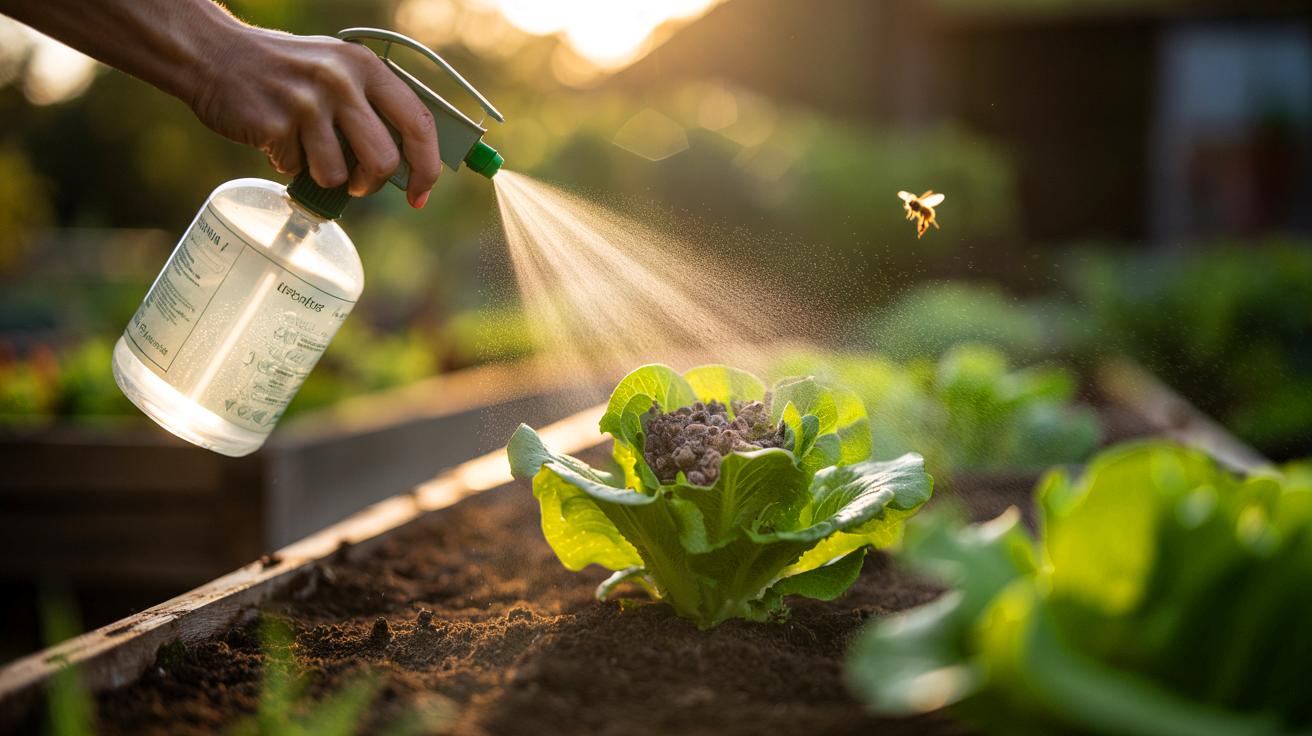
Gardeners know the heartbreak: a thriving bed of lettuce one day, lacework leaves the next. Here’s the good news. A humble household staple—soap—can disrupt soft-bodied pests without scorching the crops you nurtured from seed. The trick is precision: the right soap, the right dilution, and timing that respects your plants’ rhythms. Used correctly, a soap spray becomes a nimble tool in a bigger toolkit, knocking back aphids and whiteflies while leaving bees unbothered. Think of it as a quick-response measure that buys your vegetables room to breathe, not a silver bullet. Let’s unpack why it works, how to mix it, and the pitfalls to avoid.
What Makes a Soap Spray Work
Insecticidal soap doesn’t poison. It disrupts. The fatty acids in pure liquid soap break down a pest’s protective cuticle and interfere with cell membranes, causing dehydration and collapse. This mode of action is highly effective against soft-bodied insects—aphids, spider mites, thrips, mealybugs, whiteflies—that cling to tender leaves and stems. It’s far less effective on hard-shelled beetles or leaf-chewing caterpillars that wear armor or molt rapidly. That distinction matters. Soap works by contact, not by residue, which means you need thorough coverage when pests are present and visible.
Why don’t vegetables suffer the same fate? Dilution and formulation. A gentle, fragrance-free, dye-free soap—think liquid castile or a simple dish soap without degreasers or antibacterial additives—paired with water at the correct ratio minimizes phytotoxicity. Plant safety is also about conditions: heat and sun intensify leaf burn. Spray in the cool parts of the day and let foliage dry before midday glare. Used thoughtfully, soap targets pests while preserving the plant’s natural defenses.
The Foolproof Recipe and How to Mix It
The baseline formula is simple and scalable: 1 to 2 teaspoons of pure liquid castile or mild dish soap per quart (1 liter) of water. For a gallon, that’s 1 to 2 tablespoons. Start on the low end for tender greens like lettuces and spinaches, inch up for tougher crops like tomatoes or peppers. Distilled or rainwater helps avoid mineral spotting, but clean tap water works for most gardens. Combine water first, then add soap, swirling gently to limit foaming. Pour into a clean, labeled spray bottle with an adjustable nozzle for fine misting and pinpoint streams.
Always spot-test on one leaf and wait 24 hours. If no burn appears, proceed. Additions like a few drops of vegetable oil can improve cling, but keep it light; heavy oils can smother leaves. Never use soaps with bleach, degreasers, antibacterial agents, or fragrances—they raise the risk of damage. Freshness matters too. Mix only what you’ll use in a week and store it out of heat and sun.
| Component | Amount (per quart) | Purpose | Targets | Notes |
|---|---|---|---|---|
| Liquid castile/mild dish soap | 1–2 tsp | Disrupts pest cuticle | Aphids, mites, whiteflies | No degreasers or antibacterial additives |
| Water (preferably distilled) | Fill to 1 quart | Dilution, even coverage | — | Reduces mineral spotting on leaves |
| Optional: light vegetable oil | 3–5 drops | Improves adhesion | Soft-bodied pests | Use sparingly to avoid leaf smothering |
Application Tips and Common Mistakes to Avoid
Timing and technique make or break this approach. Spray during the early morning or late evening, when temperatures are cooler and pollinators aren’t active. Aim directly at pests. Wet the undersides of leaves where aphids and mites congregate. Reapply every 4–7 days while infestations persist, and again after rain or overhead watering. Soap must touch the pest to work, so consistent coverage matters more than heavy concentration. Resist the urge to double the dose—stronger solutions usually equal scorched foliage, not faster control.
Watch for telltale warning signs: bronzed leaf edges, speckled burn marks, or wilting soon after spraying. If they appear, rinse leaves with clean water and reduce your soap ratio next time. Sunlight can magnify damage on wet leaves, so give plants time to dry before midday. Avoid spraying blossoms to protect bees and other beneficial insects. And don’t rely solely on soap for every problem. If you’re battling flea beetles or cabbage loopers, the contact-only nature of soap won’t solve the root issue. Correct pest identification guides the right remedy.
When Soap Isn’t Enough: Integrated Tactics
Think of soap as a first responder, not the entire fire brigade. Pair it with integrated pest management (IPM) steps for durable results. Exclusion works wonders: floating row covers over young seedlings shield them from egg-laying adults. For specific pests, choose narrow tools: Bacillus thuringiensis (Bt) for caterpillars, yellow sticky cards for whiteflies, and hand-picking for small outbreaks. Strengthen plant resilience with steady watering, balanced soil nutrition, and airflow that dries leaves quickly after dew or rain.
Encourage beneficial allies. Plant nectar sources like alyssum and dill to welcome lacewings and hoverflies that feast on aphids. Mulch wisely to deter soil splash that spreads disease. Rotate crops to interrupt pest life cycles. And track your observations in a notebook: what you sprayed, weather, what worked. Data turns guesswork into strategy. If damage escalates despite your efforts, consider thresholds: it’s okay to tolerate minor cosmetic blemishes on kale if the harvest stays robust. The goal isn’t a sterile garden—it’s a living system in balance.
When you mix and apply a soap spray with care, you gain a nimble, low-toxicity way to protect vegetables while preserving the helpers that make gardens hum. It’s cheap. It’s fast. And it teaches you to look closely—at leaves, at weather, at patterns that repeat. The real victory is learning your garden’s language and responding with the lightest effective touch. Ready to try a batch, keep notes, and refine your approach week by week—what will you test first, and which pest will you target for your initial trial?
Did you like it?4.5/5 (20)