In a nutshell
- 🌱 Banana peel tea delivers fast-access minerals—especially Potassium (K), Phosphorus (P), and Calcium (Ca)—to boost blooms, fruiting, and root vigor; treat it as a gentle tonic, not a full fertilizer, and pair with nitrogen for leafy plants.
- 🧪 Brew it right: use 3–4 peels per liter of dechlorinated water, slice, loosely cap, and steep for 24–48 hours out of sunlight; strain and compost solids, and discard any batch that smells rotten to avoid anaerobic byproducts.
- ⚗️ Dilute before use: mix concentrate at 1:4 to 1:10 (weaker for seedlings and houseplants), keep the aroma mild and earthy, and refrigerate for up to three days only for best quality.
- 🚿 Apply for speed: use a morning soil drench targeting the root zone—1–2 cups for small pots, up to gallons for beds; foliar feeding is optional at 1:20 dilution with fine filtration, and avoid spraying heat-stressed plants.
- ⚠️ Avoid pitfalls: don’t oversteep or overfeed, prevent pests by sealing and promptly composting peels, consider an aerated or quick hot-steep version for cleaner results, and remember it’s a supplement, not a standalone nutrition plan.
Gardeners swear by simple kitchen scraps, and few hacks are as buzzworthy as banana peel tea. It’s fast, cheap, and—when done right—surprisingly effective. This DIY liquid feeds plants a burst of potassium, phosphorus, and calcium extracted from peels, nudging blooms, fruiting, and root vigor. Done poorly, though, it can sour, smell, or attract pests. Here’s how to brew a clean, safe, and potent batch, why it works, and how to dose it so you see visible perkiness in just days without stressing your soil microbiome. The secret is controlled steeping, careful dilution, and timing your applications to plant needs.
Why Banana Peel Tea Works
Banana peels concentrate essential minerals that plants crave during flowering and fruiting. While they’re not a complete fertilizer—there’s relatively little nitrogen—they’re rich in potassium (K) for turgor and disease resistance, phosphorus (P) for roots and blooms, and calcium (Ca) for cell walls. Steeping the peels liberates a light broth of soluble ions and organic acids that roots can access quickly. Think of it as a gentle tonic, not a full meal. For leafy greens, pair it with a nitrogen source; for tomatoes, peppers, and roses, it’s a timely boost.
Fresh water quality matters. Chlorine can hamper beneficial microbes; let tap water sit 24 hours before brewing or use filtered water. Keep expectations real: this isn’t magic, but it can close minor nutrient gaps between regular feedings and improve short-term vigor. Many growers report perkier foliage and bud set within a week when other basics—light, watering, and soil health—are on point.
| Nutrient | Plant Role | Deficiency Signs |
|---|---|---|
| Potassium (K) | Osmoregulation, disease tolerance, fruit quality | Leaf edge burn, weak stems, poor fruiting |
| Phosphorus (P) | Root growth, flowering, energy transfer | Purple leaves, stunted growth, delayed blooms |
| Calcium (Ca) | Cell wall strength, tip growth | Blossom-end rot, distorted new leaves |
| Magnesium (Mg) | Chlorophyll formation | Interveinal yellowing on older leaves |
Simple Step-by-Step Brewing Method
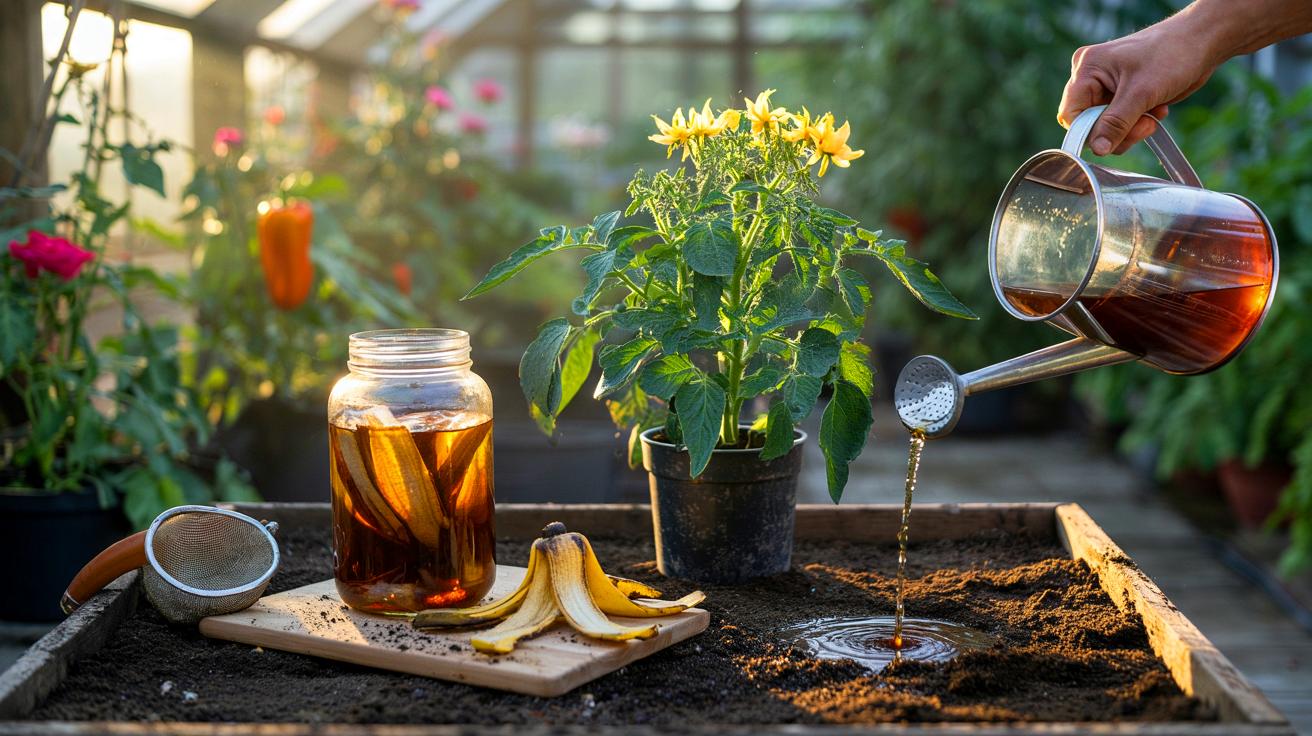
Start with 3–4 fresh banana peels per liter (quart) of water. Rinse off any residue, remove stickers, and slice peels into 1-inch pieces to increase surface area. Place in a clean glass jar, cover with dechlorinated water, and cap loosely. Do not tightly seal; a little gas exchange prevents off-odors. Steep at room temperature, out of direct sun, for 24–48 hours. Longer isn’t better—beyond two days, anaerobic microbes dominate and can create foul, plant-stressing compounds.
Strain the liquid through a fine sieve or cloth. Compost the solids or bury them at least 6 inches deep to avoid fruit flies. The concentrate should smell mildly sweet or earthy, never rancid. If it smells rotten, discard and rebatch. For use, dilute the tea 1:4 to 1:10 with water depending on plant sensitivity. Seedlings and houseplants prefer the weaker end. Always dilute before applying; concentrated brews can stress roots. Store the strained tea in the refrigerator up to 3 days; after that, quality drops sharply.
How to Apply It for Fast Results
Timing amplifies results. Apply diluted banana peel tea as a soil drench early in the morning when stomata and soil microbes are most active. Use about 1–2 cups per small container, 1–2 quarts around medium shrubs, or 1–2 gallons for mature garden beds, targeting the root zone rather than stems. Weekly during bloom is plenty. Between applications, resume your balanced feeding routine so plants get nitrogen and micronutrients the tea can’t provide.
Foliar feeding is optional. If you choose it, double the dilution (1:20), filter meticulously to avoid sprayer clogs, and mist undersides of leaves. Stop foliar sprays once plants begin heavy flowering to minimize residue on blooms. Never apply to heat-stressed or wilted plants—wait until they rehydrate. In containers, flush with plain water monthly to avoid soluble salt buildup. Observe plants 48–72 hours after a first dose: greener edges, firmer leaves, and improved turgor signal you’ve hit the sweet spot.
Common Mistakes and Safer Alternatives
Two mistakes derail this brew: oversteeping and overfeeding. If your jar bubbles aggressively or smells sour, it’s gone anaerobic; discard it. Overapplying can skew soil biology, especially in tight container mixes. When in doubt, dilute more and water in lightly. Pests are another issue—exposed peels invite fruit flies and gnats. Keep lids on, clean strainers, and promptly compost solids. Avoid chlorinated water and metal containers that can react with organic acids.
If you want a cleaner profile, try an “aerated” version: add a small aquarium pump and bubble the jar for 24 hours, which favors aerobic microbes and a fresher aroma. Or make a quick hot steep: pour near-boiling water over chopped peels, cover, and cool; this pulls minerals fast but yields less microbe activity. For a fuller nutrient spread, blend this tea with a balanced fertilizer or compost extract. Remember, banana peel tea is a supplement, not a standalone nutrition plan.
Brewing banana peel tea is kitchen-counter botany at its best: simple inputs, measurable outputs, and quick feedback from your plants. Keep it short (24–48 hours), keep it clean, and keep it diluted. Track your doses and plant responses, adjust by species, and fold it into a broader care routine that includes compost, mulch, and proper watering. Ready to test a batch and see how your roses, peppers, or houseplants respond—then tweak the recipe for your garden’s unique rhythm?
Did you like it?4.6/5 (27)