In a nutshell
- 🌱 Onion peels deliver potassium, calcium, sulfur, and quercetin that feed the soil microbiome and revive tired beds with a low-cost natural fertilizer.
- 🧪 Three DIY forms: quick tea (12–24h; dilute 1:1–1:3), short ferment (48–72h; dilute 1:5), and dry powder (sun/low-heat dried; no dilution) for immediate and slow-release nutrition.
- ⏰ Smart application: drench the root zone in the morning, use gentler dilutions for seedlings, monthly powder incorporation, and ferment every 10–14 days; extra potassium supports flowering and fruiting.
- 🛡️ Safety and troubleshooting: choose unsprayed onions, dechlorinate water, discard foul-smelling batches, avoid high-salt fertilizers, test on one plant first, and mulch to curb odors and pests.
- ♻️ Big payoffs: cuts kitchen waste and costs while improving soil structure, moisture retention, and resilience—small scraps, big soil gains.
What if the papery skins you toss after chopping onions could revive your garden’s most exhausted corner? Those crisp layers, often overlooked, are loaded with potassium, calcium, sulfur, and antioxidant compounds like quercetin. When steeped, dried, or fermented, onion peels become a potent, low-cost, natural fertilizer that feeds plants and the soil organisms that sustain them. The method is simple, the results surprising. Small kitchen scraps can catalyze big gains in soil health. Whether you nurture containers on a balcony or steward a backyard plot, onion peel fertilizer offers a no-waste way to green up leaves, bolster root systems, and coax flavor from tired soil, season after season.
Why Onion Peels Feed the Soil
Onion peels aren’t just trash; they’re a concentrated source of plant-friendly minerals and phytochemicals. The skins carry meaningful levels of potassium for strong stems and flowering, calcium for cell wall integrity, and sulfur that supports enzymatic activity and disease resilience. Polyphenols such as quercetin act as antioxidants and lightly antimicrobial agents, which can help rebalance the rhizosphere when soils are stressed by compaction, drought, or nutrient lockup. Healthy soil is alive, and onion peel inputs help feed that living engine.
Think of the peels as a slow-release booster. When brewed into a tea, soluble nutrients leach out for immediate uptake. Dried and ground into a powder, they break down gradually, providing a steady trickle of nourishment. A brief ferment unlocks bioavailable compounds and cultivates beneficial microbes. Each form supports the soil microbiome, which, in turn, improves aggregation, water retention, and nutrient exchange. The bonus: you reduce waste, cut fertilizer costs, and avoid synthetic salts that can further fatigue already depleted beds.
Step-by-Step: Three Easy Preparations
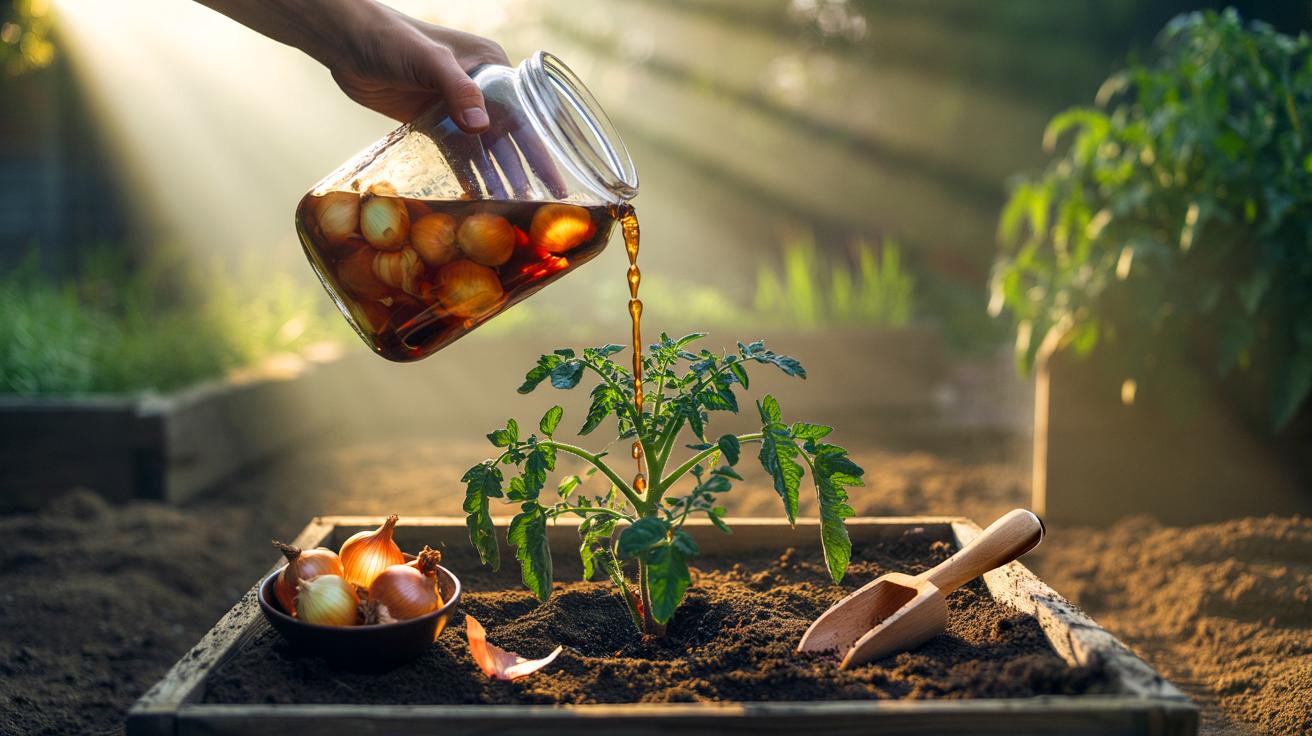
For a fast tonic, make a quick tea. Rinse a handful of onion skins (from two to four bulbs), then steep them in one quart of hot—not boiling—water for 12 to 24 hours. Strain. The amber liquid carries soluble potassium and trace antioxidants. Dilute 1:3 with water for seedlings, 1:1 for established plants. For slow-release feeding, create a dry powder: spread clean peels on a tray, dry at low oven heat (170–200°F) or in the sun until crackling, then blitz to flakes or powder. Scratch lightly into the top inch of soil.
To accelerate microbial benefits, try a short ferment. Pack a jar halfway with peels, cover with dechlorinated water, and loosely cap. Leave at room temperature for 48–72 hours, stirring daily. Strain, then dilute 1:5 before applying to soil. Stop fermenting if odor turns putrid, which signals anaerobic imbalance. Store any liquid form in the fridge up to one week. Powder keeps in a sealed jar for months, cool and dark.
| Form | Brew/Dry Time | Typical Dilution | Use Rate | Storage |
|---|---|---|---|---|
| Quick Tea | 12–24 hours | 1:1 to 1:3 | 1–2 cups per plant | Refrigerate, 5–7 days |
| Short Ferment | 48–72 hours | 1:5 | Soak root zone weekly | Refrigerate, 5 days |
| Dry Powder | 4–24 hours drying | None | 1–2 tbsp per sq ft | Airtight, 3–6 months |
How and When to Apply for Best Results
Time applications to plant needs. Use diluted onion peel tea at the start of vegetative growth to support leaf and root expansion. Apply in the cool of morning so nutrients soak in rather than evaporate. For fruiting crops—tomatoes, peppers, beans—the potassium bump helps flower set and fruit fill. Water the soil, not the foliage, to minimize potential leaf spotting. In containers, feed lightly but more often; in beds, apply a deeper drench less frequently. When in doubt, underfeed and observe.
For powder, scratch into the top inch around the drip line, then water thoroughly. Repeat monthly during the growing season. Short ferments act like a microbial starter: pour around the root zone every 10–14 days to nudge microbial diversity after heat waves, heavy rain, or transplanting stress. Avoid combining with high-salt fertilizers, which can counteract the biological benefits. A thin mulch over treated soil reduces odor, retains moisture, and helps distribute nutrients as it breaks down.
Troubleshooting and Smart Safety Tips
If a batch smells sharply rotten, discard it in the compost and start over. A pleasant earthy or oniony note is normal; sulfurous funk is not. To reduce pests, always rinse peels before use and cover soil with mulch after liquid applications. If powder cakes, it’s not fully dry; return it to gentle heat until brittle. Sensitive seedlings can show tip burn from strong tea—just dilute more. Test on one plant first before scaling up.
Use peels from unsprayed onions when possible and avoid skins treated with waxes or dyes. Dechlorinate tap water by letting it sit uncovered overnight; chlorine can suppress the very microbes you want to encourage. Store liquids cold and use quickly to prevent anaerobic blooms. For gardeners with onion family diseases in the soil, keep applications to the root zones of non-allium crops to break cycles. Pair onion peel feeds with compost and leaf mulch to build stable organic matter and long-term resilience in tired beds.
Onion peels are humble, but their impact is outsized: a thrifty stream of potassium-rich, microbially friendly nutrition that coaxes life back into weary ground. Applied with a light hand and a watchful eye, they help restore structure, improve water holding, and support steady plant growth without the collateral damage of harsh salts. Let the soil community do the heavy lifting—you just provide the brew. Ready to turn a week’s kitchen scraps into next month’s greener leaves and sturdier stems, and what will your first test bed be?
Did you like it?4.3/5 (23)