In a nutshell
- 🧪 Science: Onion peels supply quercetin, flavonoids, and mobile minerals (notably potassium) that act as a biostimulant, enhancing nutrient uptake, stomatal control, stress tolerance, and fostering beneficial microbes with light antifungal effects.
- 🧉 How-to: Steep ~1 cup peels in 1 quart water (24–48 hours, or hot for 4–6), then strain; dilute 1:3 for seedlings and 1:1–1:2 for established plants; apply as a soil drench every 2–3 weeks; for foliar use, dilute 1:4 and spray in early morning; refrigerate up to a week.
- 🌱 Best targets: Containers, tomatoes/peppers/eggplants, leafy greens, and herbs like basil and cilantro show quick responses; annual flowers hold color in heat; alliums tolerate it; indoor plants (peace lily, pothos, snake plant) benefit when lightly diluted.
- ⚖️ Evidence & limits: Benefits are real but modest—low overall NPK and batch variability mean results depend on soil biology; use onion peel water as a supplement alongside compost, mulch, and balanced fertilization.
- 🛡️ Safety: Avoid overuse to prevent salt buildup and leaf tip burn; never spray blooms or at midday; discard sour or slimy batches; keep from kids/pets; remember that less, applied consistently, outperforms heavy, sporadic dosing.
It starts as kitchen waste. It ends as a backyard secret weapon. Steeping onion peels—those papery skins most cooks toss—creates a nutrient-rich, microbe-friendly infusion that can nudge houseplants, herbs, and vegetables toward stronger growth. Gardeners like it for two reasons: it’s practically free, and it’s surprisingly effective. The soak delivers potassium, traces of calcium and magnesium, and plant-protective flavonoids such as quercetin. Results won’t mimic a synthetic fertilizer spike. They tend to be steadier, subtler. This gentle brew feeds the soil web while nudging plants toward resilience. Backyard science meets plant physiology, with a whiff of onion and a dash of skepticism turned curiosity.
The Science Behind Onion Peel Water
Onion skins are thin, but chemically dense. Their amber and crimson colors signal flavonoids, especially quercetin, a potent antioxidant known to influence plant stress responses. Water draws out these compounds along with mobile minerals such as potassium and calcium. The resulting tea is lightly colored, faintly aromatic, and primed to act as a biostimulant rather than a conventional fertilizer. That distinction matters. Biostimulants don’t feed plants directly so much as they enhance nutrient uptake, root growth, and tolerance to environmental stress.
Why does it work? Potassium helps regulate stomata, the microscopic pores that manage water loss and gas exchange. When that system works smoothly, plants photosynthesize more consistently, especially under heat. Meanwhile, quercetin and related phenolics can moderate oxidative stress from drought, transplant shock, or intense light. Some sulfur-derived molecules in alliums show antifungal and antimicrobial activity at low concentrations, which may explain why seedlings drenched with onion peel infusions sometimes resist damping-off in real-world gardens.
There’s also a microbial angle. The infusion’s organic compounds serve as a buffet for beneficial soil microbes, which in turn mobilize phosphorus and trace elements. Think of onion peel water as a nudge to the plant–microbe partnership, not a magic potion. It won’t correct a depleted soil single-handedly, but it can make a decent soil perform above its weight class, especially when used alongside compost and mulch.
How to Make and Use the Soak
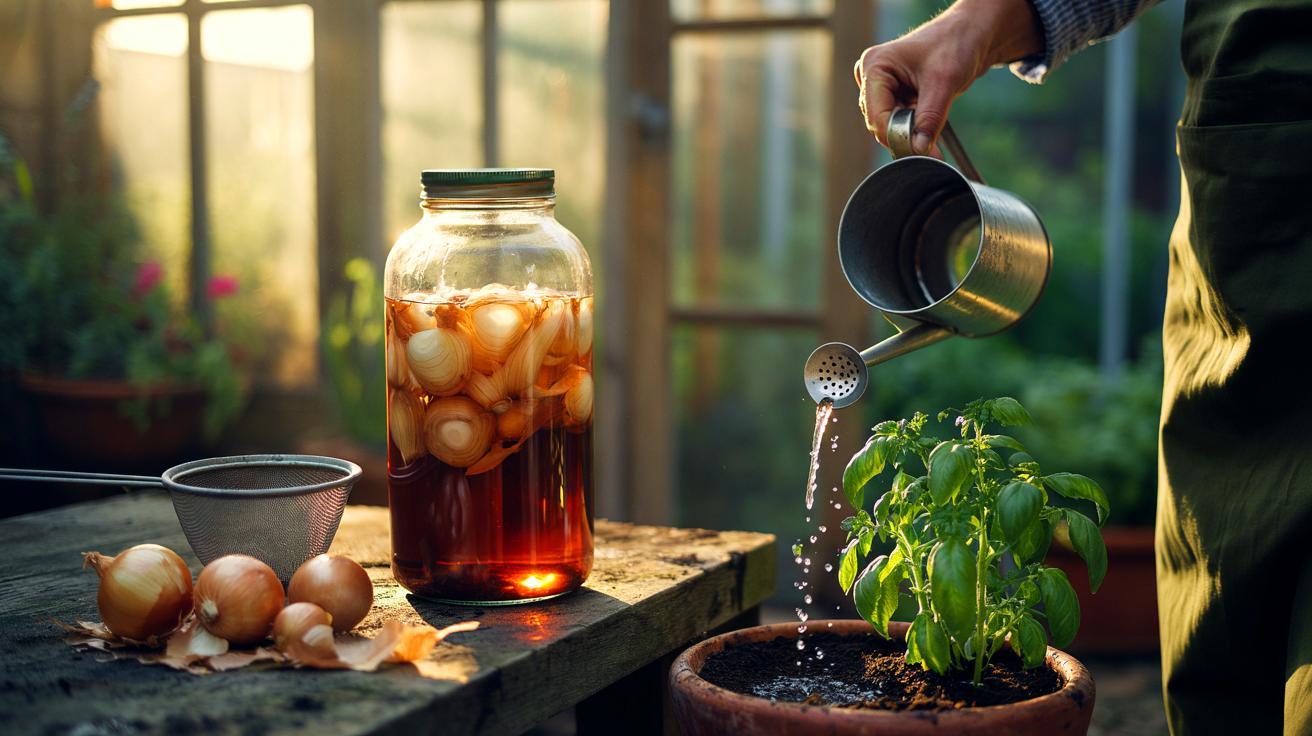
Collect dry, clean outer peels from yellow, red, or white onions. Rinse briefly to remove dust. For a general-purpose brew, combine roughly 1 packed cup of peels with 1 quart (1 liter) of clean water. Steep 24–48 hours at room temperature, loosely covered, or pour hot (not boiling) water—about 150–160°F—over the peels and steep 4–6 hours. Strain. For seedlings, dilute 1:3 with water; for established plants, 1:1 to 1:2 is typical. Apply as a soil drench every two to three weeks during active growth. Always test on a small area first.
| Component | Main Benefit | Best Use |
|---|---|---|
| Potassium | Stomatal control, water balance | Heat-stressed crops, container plants |
| Quercetin & Flavonoids | Oxidative stress moderation | Transplants, seedlings |
| Calcium/Magnesium (trace) | Cell wall strength, chlorophyll | Leafy greens, herbs |
| Sulfur Compounds | Light antifungal effects | Humid climates, seedling trays |
Storage matters. Keep the strained liquid refrigerated up to a week; discard if it smells sour, feels slimy, or shows mold. Spent peels go straight to the compost. Avoid mixing the brew with highly alkaline inputs (like fresh wood ash) in the same watering, which can destabilize phenolics. As a foliar spray, dilute more—1:4—and apply in the early morning to minimize leaf burn. Less, applied consistently, outperforms heavy, sporadic drenching.
What Plants Benefit the Most
Container-grown vegetables and herbs show the quickest response, because their limited soil volume makes every small nutrient nudge count. Tomatoes, peppers, and eggplants often display sturdier stems and more resilient foliage after alternating onion peel drenches with regular watering. Leafy greens—spinach, lettuce, arugula—appreciate the small calcium boost and steady potassium, especially under spring or fall temperature swings. Tender herbs like basil and cilantro respond with fuller canopies when stress is managed early.
Flowers aren’t left out. Annuals such as petunias and marigolds maintain color better through hot spells when stomatal regulation is on point. Perennial borders can also benefit, but apply modestly around peonies and roses to avoid overfeeding microbes in already rich beds. Root crops respond variably: carrots and beets like the balanced moisture management, though they still demand loose, uncompacted soil for top-tier shape and sweetness.
What about the allium family itself—onions, leeks, garlic? They tolerate the brew just fine. The scent does not “confuse” the plants, and in some gardens it appears to discourage soft-bodied pests that dislike allium volatiles. Indoors, use lightly around peace lilies, pothos, and snake plants, which favor consistent, gentle nutrition. When in doubt, dilute, observe, and adjust.
Evidence, Limits, and Safety
Garden trials and a handful of lab studies on Allium waste extracts point to real benefits: mild antifungal activity, improved seedling vigor, and better stress tolerance. Yet expectations should stay grounded. Compared with commercial fertilizers, onion peel water is low in total NPK, skewed toward potassium, and variable by batch. Soil type and microbial life heavily influence outcomes, which is why some gardeners rave while others register only subtle gains. Homemade brews are supplements, not substitutes.
Overuse can backfire. Strong, repeatedly applied extracts may concentrate salts in small pots, leading to leaf tip burn. If leaves bronze or curl after a drench, flush the pot with plain water and widen the interval. For foliar spraying, avoid midday sun, and never spray blooms. Store tools clean; contamination, not the peel itself, is the usual culprit when seedlings collapse. If you’re practicing no-till or mulching deeply, the brew often performs best as a light, regular drench that feeds the rhizosphere without shocking it.
Safety is straightforward: don’t ingest the liquid, keep it away from kids and pets, and discard any batch that ferments. The aroma dissipates quickly outdoors, though it can linger in closed rooms. Pair this practice with soil tests, compost, and a balanced fertilizer plan, and you’ve got a resilient system. Onion peels give you a gentle push in the right direction—consistently, quietly, and cheaply.
Onion peel water won’t revolutionize your garden overnight, but it can tilt the odds toward healthier plants and steadier harvests. The brew is easy to make, cheap to repeat, and forgiving to experiment with. Start small, note what changes, and decide if the ritual earns a place in your routine. Your plants will tell you faster than any label. Which crop—or houseplant—will you test with your first batch, and how will you tweak the recipe to fit your climate and soil?
Did you like it?4.6/5 (22)