In a nutshell
- 🧪 Cinnamon’s chemistry—notably cinnamaldehyde and eugenol—disrupts fungal growth and reduces the microbial buffet fungus gnat larvae rely on, while its strong volatiles confuse adults seeking moist egg-laying sites.
- 🌿 Smart application: a thin dry dusting (~1/8 tsp per 4–6 in pot), a strained “cinnamon tea” (1 tsp/cup, steep overnight), or a 50/50 sand + cinnamon top-dress (3–5 mm) keeps the surface hostile to mold and gnats; bottom-water to preserve the layer.
- 🦟 Practical benefits: ground cinnamon suppresses surface mold, deters adult fungus gnats, and subtly dries the topsoil microclimate—cutting life-cycle momentum without harsh pesticides.
- ⚠️ Use with care: don’t bury cinnamon in the root zone, avoid strong essential oils on tender plants, and apply the smallest effective dose; pair with drying the top inch, brighter light, and sticky cards.
- 🔧 For heavy infestations, stack controls: repot into well-draining mix and add biologicals like BTI or Steinernema feltiae; let cinnamon play a supportive, maintenance role in an integrated approach.
For generations, gardeners have reached for kitchen staples when their plants cry out for help. Few pantry fixes are as surprising—or as effective—as a dusting of cinnamon on potting soil. The spice’s warm aroma suggests pie, not pest control, yet its chemistry tells another story. When used thoughtfully, ground cinnamon suppresses fuzzy surface mold and slows the life cycle of fungus gnats, the tiny black flies that swarm when soil stays damp. Cheap, accessible, and easy to apply, cinnamon doesn’t replace good care; it amplifies it. Think of it as a gentle nudge that tips conditions away from pathogens and pests without harsh synthetic sprays.
The Science Behind Cinnamon’s Antifungal and Gnat-Deterring Power
Cinnamon’s punch comes from aromatic compounds, especially cinnamaldehyde and eugenol. These molecules disrupt fungal cell membranes and metabolic pathways, a one-two hit that slows hyphal growth and spore germination. On the soil surface—where “damping-off” molds flourish—this matters. A light top-dress creates an inhospitable zone, reducing that ghostly white fuzz on media and peat. By dialing down fungal and algal films, you also remove the buffet that fungus gnat larvae graze on.
Gnats, meanwhile, navigate by smell and moisture. Cinnamon’s potent volatiles confuse adults hunting for egg-laying sites and appear to impair larvae that feed in the top inch of soil. The effect is not a broad-spectrum toxin; it’s targeted disruption. Adults encounter a scented, drier crust and move on. Larvae face a leaner, harsher layer less suited to chewing and microbial browsing. The result: fewer eggs, slower development, smaller emergences.
There’s a bonus. The delicate crust formed by a dusting of ground cinnamon modestly dries the top layer between waterings. Not desiccation—just a subtle shift. That microclimate change alone can collapse a gnat boom without touching a pesticide bottle. The spice breaks down with time, though, so plan for periodic refreshes after heavy watering or top-ups of potting mix.
How to Apply Cinnamon to Soil Without Harming Your Plants
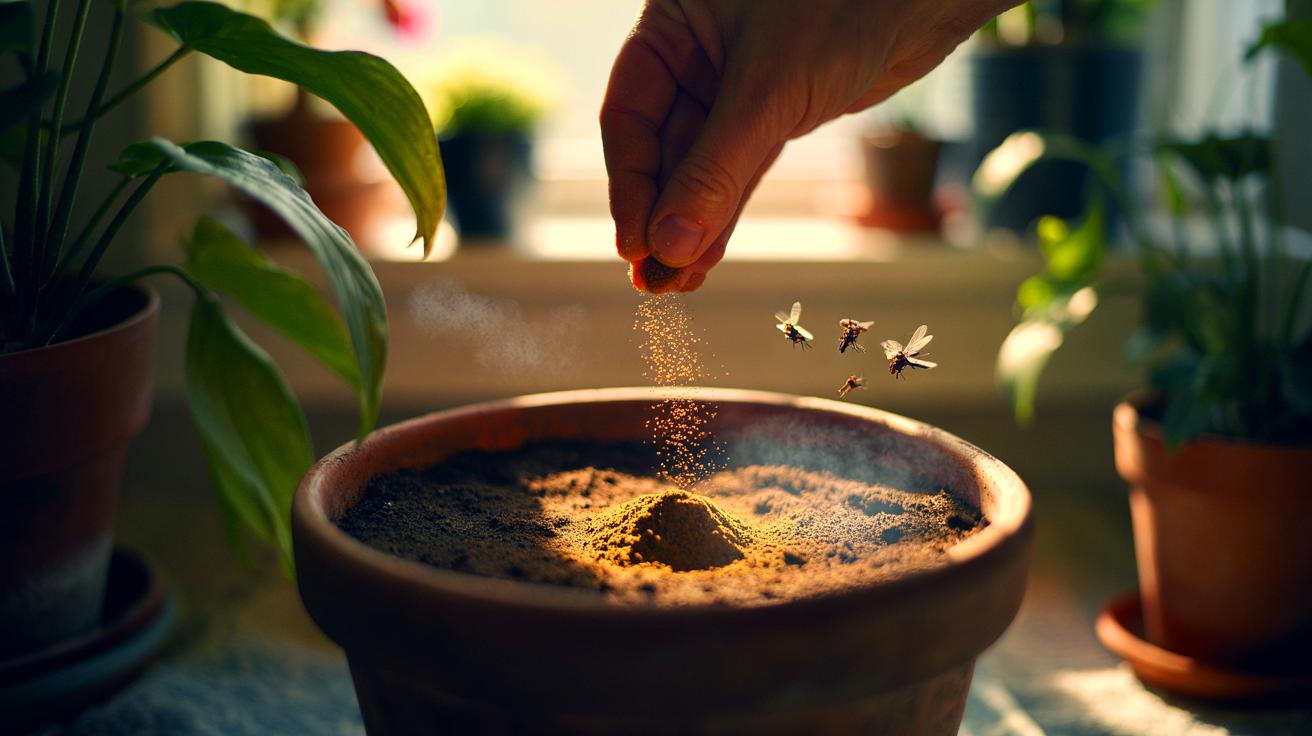
Skip the shaker theatrics. Aim for a thin, even veil, not a cinnamon roll. For small pots (4–6 inches), sift about 1/8 teaspoon of ground cinnamon across the surface, then tap the rim to settle the powder. For larger containers, scale to a whisper-fine layer that barely tints the soil. Water from the bottom or along the pot’s edge to keep the layer intact. Reapply lightly after any top-watering that visibly disturbs the surface.
Prefer a gentler touch for seedlings? Make a “cinnamon tea”: stir 1 teaspoon of cinnamon into 1 cup of hot water, let it steep overnight, and strain through coffee filter or muslin. Mist the soil surface, not the leaves, every few days while molds persist. Avoid essential oils unless you dilute heavily; concentrated cinnamon oil can scorch tender tissue. A common upgrade for gnat-heavy pots is a half-and-half mix of coarse sand and cinnamon laid in a 3–5 mm top-dress, which firms the barrier while preserving airflow.
| Method | Rate | Target | Frequency |
|---|---|---|---|
| Dry dusting | ~1/8 tsp per 4–6 in pot | Surface mold, adult gnat deterrence | Every 1–2 weeks or after top-watering |
| Cinnamon tea (spray) | 1 tsp/cup, steep overnight, strain | Early mold blooms, delicate starts | 2–3 times weekly until clear |
| Sand + cinnamon top-dress | 50/50 mix, 3–5 mm layer | Larval zone disruption, drier surface | Refresh monthly or after disturbance |
When Cinnamon Works—and When It Doesn’t
Cinnamon shines as an early intervention and a maintenance tool. It helps when soils stay a touch too moist, when airflow is weak, or when fresh potting mix sparks temporary mold. Combine it with simple cultural fixes—bottom watering, brighter light, and pruning dense foliage—to accelerate results. Keep the top inch of soil drying between waterings to starve larvae and reduce spore activity. Yellow sticky cards will trim adult gnat numbers fast, complementing the spice’s surface defense. For seedlings, go lighter and observe for a day before reapplying.
It isn’t magic. Heavy infestations—larvae wriggling in every pot, adults clouding windows—require a stacked approach. Repot waterlogged containers into fresh, well-draining media. Consider biological controls like Steinernema feltiae nematodes or Bacillus thuringiensis israelensis (BTI) drenches for sub-surface larvae. Cinnamon can play a supporting role during and after those treatments. Don’t bury cinnamon deep in the root zone; there’s no benefit and potential to irritate roots. Overuse may also dampen some beneficial microbial activity near the surface, so use the smallest effective dose. Store spice in a sealed jar; stale aromatics lose their edge, and potency matters for both mold suppression and gnat deterrence.
Used with intention, cinnamon is a frugal ally: a gentle antifungal nudge, an olfactory roadblock for gnats, and an easy ritual that keeps potting surfaces cleaner between waterings. It won’t replace good drainage, bright light, or patience, but it can tip the balance toward plant health while keeping sprays on the shelf. Start small, watch closely, and adjust your watering rhythm to finish the job. Where could a light dusting—and a slightly longer drying cycle—fit into your own plant care routine this week?
Did you like it?4.5/5 (24)