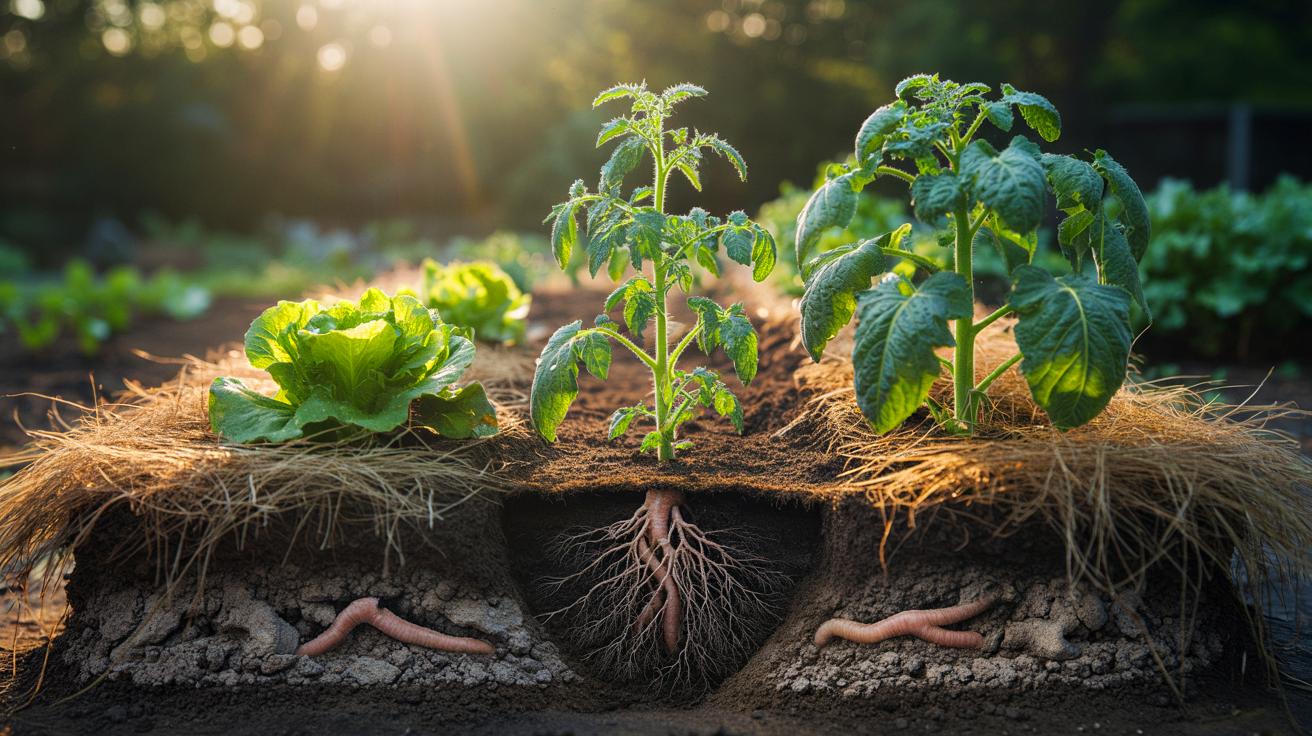
In a nutshell
- 🌱 No-dig rebuilds the soil food web—with mycorrhizal fungi, earthworms, and stable aggregates—creating better tilth and deeper root pathways.
- 💧 Higher organic matter boosts water-holding capacity and cation exchange capacity; undisturbed pores speed infiltration, cut erosion, and steady nutrient delivery.
- 🌾 Skipping tillage keeps the weed seed bank buried while surface mulch blocks light, making fewer, weaker weeds and easier pulls.
- ♻️ Avoiding tillage preserves and increases carbon sequestration and cuts CO₂ losses by limiting oxidation of organic matter.
- 🛠️ Simple setup—cardboard/newspaper, compost, and mulch—plus seasonal top-dressing, permanent paths, and cover crops shifts labor to light maintenance while raising yields.
For decades, gardeners were told to turn the earth every spring, to flip clods, to “refresh” the bed. Then came a quiet revolt. No-dig—or no-till—gardeners stopped churning soil and watched harvests rise while weeds and watering demands fell. The science is clear and the practice is surprisingly simple. When you stop disturbing the ground, the underground community rebuilds itself, locking in nutrients, stabilizing structure, and buffering extremes. Yields don’t just survive; they often climb. What looks like less work at the surface is actually more work done by biology below. Here’s what really happens when you put away the spade and let soil be soil.
The Living Architecture Beneath Your Feet
Soil isn’t dirt. It’s an ecosystem—layered, intricate, and alive. When you quit turning it, the soil food web reorganizes into stable neighborhoods. Bacteria colonize aggregate surfaces, mycorrhizal fungi stitch grains together with threads called hyphae, and earthworms engineer passageways. These relationships create a porous, sponge-like matrix that pulls in air and water without collapsing. Undisturbed soil organizes itself into a resilient living city. The payoff is better tilth, faster rooting, and a nutrient pipeline that runs on biology instead of brute force.
Tillage shatters that city each time the blade bites. It severs fungal highways, oxidizes organic matter, and collapses worm galleries. No-dig systems, by contrast, let fungal networks grow long and efficient, extending a plant’s reach for phosphorus, zinc, and water. Microbes trade these resources for sugars exuded by roots—commerce, not chaos. Over months, crumbs form and bind, a process called aggregate stability, which resists compaction under rain and footsteps alike. Plants respond with thicker roots and steadier growth.
There’s also a quiet drift in who lives underground. With every pass of a tiller, fast-breeding bacteria surge, then crash as food burns off. In no-dig beds, communities balance out. Slow-and-steady fungi increase, as do predatory mites and beneficial nematodes that keep root-feeders in check. Stability aboveground depends on stability below. By allowing time and space for these alliances, you get soil that feeds itself—and your crops—on schedule.
Carbon, Water, and Weed Dynamics in No-Dig Beds
Turned soil breathes carbon. Literally. Oxygen rushes in, microbes feast on exposed residues, and soil organic carbon volatilizes as CO₂. No-dig slows that burn. Carbon remains locked in aggregates and new organic inputs—mulches, leaf litter, compost—are digested gradually. This improves cation exchange capacity, the soil’s ability to hold nutrients, and increases water-holding capacity. Every percentage point of organic matter can store thousands of gallons of water per acre. That translates to fewer irrigation days and steadier plant metabolism through heat waves.
Water behavior changes in other ways, too. Undisturbed soil develops stable pores—from fungal glues and worm channels—that drain excess quickly yet store reserves. The surface mulches typical of no-dig gardens reduce evaporation and blunt raindrop impact, preventing crusting. When storms arrive, infiltration is faster and erosion slows to a crawl. In drought, shaded soil stays cooler and moist longer, a microclimate advantage that shows up as greener leaves at noon and less blossom drop. Stronger roots, calmer plants.
Weeds? They don’t vanish, but their math changes. Tillage brings buried weed seeds into the light, triggering germination. No-dig leaves that seed bank where it evolved to be: dormant. Mulches—straw, leaves, wood chips, or compost—then block light for surface seeds and make hand-pulling easier by softening the top inch. In a year or two, the trajectory bends toward fewer, weaker weeds. Timing helps: slice young seedlings at the white-thread stage and top up mulch before gaps appear.
What Changes When You Quit Tilling
Picture two beds after a heavy rain. The tilled bed turns to paste, dries to concrete, and cracks. The no-dig bed sheds water like a sponge being gently pressed, then rebounds, ready for a hoe within hours. That difference—structure that recovers—is the hallmark of less disturbance. It also means fewer compaction cycles from foot traffic and wheelbarrows. Resilience is a function of structure, not just fertility. Nutrients hang around longer. Roots explore deeper. Biology finds its rhythm.
| Feature | Tilled Bed | No-Dig Bed |
|---|---|---|
| Soil Structure | Clods, crusting, unstable aggregates | Stable crumbs, worm channels, fungal threads |
| Carbon Balance | Rapid oxidation, losses as CO₂ | Sequestration in aggregates, gradual cycling |
| Water Behavior | Ponding, runoff, fast drying | Fast infiltration, reduced evaporation |
| Weed Pressure | Seed bank constantly resurfaced | Seed bank buried, mulches suppress |
| Labor | High spring effort, frequent hoeing | Front-load mulch, lighter maintenance |
The human side matters, too. No-dig swaps noise and fuel for quiet, regular observation. You spend time topping up mulches, placing compost, and monitoring moisture instead of wrestling a machine. Harvest windows widen because beds are workable sooner after storms. And there’s less back pain. Effort shifts from force to finesse. That shift favors precision—plant spacing, pest scouting, timely cuts—details that compound into bigger, cleaner harvests.
Getting Started: Layering, Mulches, and Timing
Start where you are. If you’re converting lawn, scalp it or smother it. Lay down a light-blocking barrier—plain cardboard or a thick layer of damp newspaper—over the entire plot, overlapping edges by several inches. Add 3–4 inches of finished compost, then cap with 2–3 inches of straw, leaf mold, or shredded wood chips depending on the crops you plan to grow. The rule of thumb: feed the surface, not the shovel. Plant transplants right away by parting the mulch, or direct-seed into a compost-rich strip raked briefly level.
In existing beds, skip the barrier and top-dress. Apply 1–2 inches of compost in early spring or fall, then mulch. Keep mulch a finger-width from stems to prevent rot and vole mischief. Water deeply to settle layers and jump-start microbial activity. Over time, the soil below will darken, loosen, and teem with life. Worms will drag bits of organic matter down, rewriting the profile without your blade ever entering.
Maintenance is simple. Reapply organic mulch as it thins, usually once or twice a season. Use a sharp knife or stirrup hoe to skim off tiny weeds at the white-thread stage. Rotate crops to diversify root exudates and microbe diets, and consider inoculating with mycorrhizae when establishing perennial beds. If compaction exists from old traffic, stick to permanent paths and let deep-rooted cover crops like daikon or rye fracture it biologically. Patience pays; biology is a marathoner, not a sprinter.
No-dig gardening works because it enlists allies you can’t see but absolutely feel in your hands and baskets. The result is a bed that stays friable, a watering can that gets a rest, and a weed patch that shrinks instead of spreads. Less fuel, more food. Less disturbance, more resilience. And a climate benefit to boot as carbon tucks safely underground. The most radical act in your garden may be to do less. What will you stop doing this season so your soil can start doing more?
Did you like it?4.4/5 (22)