In a nutshell
- 🚀 Fast-track your pile with baker’s yeast and a pinch of sugar to spark microbial activity and heat, delivering faster compost without special gadgets.
- 🧪 Yeast boosts heat toward the thermophilic phase, but success still hinges on a balanced carbon-to-nitrogen ratio, proper moisture, and good aeration.
- 🥣 Starter recipe: 1 gallon warm water (95–105°F) + 1 tsp yeast + 1–2 tbsp sugar, activate 10 minutes, drizzle evenly after turning, then add a brown cover layer; repeat sparingly (about every two weeks).
- 🔧 Post-boost care: monitor temperature and moisture (squeeze test), turn every 2–3 days during the heat burst, layer greens and browns, and deter pests by burying scraps.
- 🌱 What to expect: a warmth bump in 24–48 hours, an earthy smell (not ammonia), quicker texture breakdown, and a path to rich, stable compost.
Waiting for compost to mature can feel like watching paint dry. Yet there’s a simple, low-cost trick hiding in your pantry: baker’s yeast. When activated with a little warm water and a pinch of sugar, this familiar kitchen ingredient can nudge your pile into a livelier, warmer phase, helping microbes work faster on kitchen scraps and yard debris. It’s not magic. It’s biology. Yeast jump-starts a burst of microbial activity, especially if the pile already has the right blend of browns and greens. In a weekend, you can often feel a temperature change, smell that earthy aroma intensify, and see textures begin to break down more quickly.
Why Baker’s Yeast Supercharges a Slow Pile
Compost thrives on microbial diversity. Saccharomyces cerevisiae, the baker’s yeast sitting beside your flour, provides a quick shot of life that complements bacteria already present in your pile. Yeast feasts on simple sugars, multiplies rapidly, and releases heat as a byproduct of metabolism. That warmth helps other microbes shift into a higher gear, taking you closer to the thermophilic phase that drives brisk decomposition and sanitizes the mix. A teaspoon of yeast can wake a tired heap—provided the fundamentals are in place.
Those fundamentals matter. Maintain a workable carbon-to-nitrogen ratio by mixing dry browns (leaves, shredded cardboard) with greens (vegetable peels, coffee grounds). Keep moisture at a wrung-out-sponge level and encourage aeration through regular turning. Yeast will amplify what’s already there; it won’t fix a sopping wet, oxygen-starved bin. Expect a short, energetic boost rather than a permanent turbo mode, and remember that any sweet solution can attract pests if left on the surface without a brown cover layer.
Think of the yeast kick as a starter pistol. It signals the whole microbial community to sprint—briefly—so long as your pile has air, structure, and balance. Use this tactic after a cold snap, following a big influx of carbon-heavy leaves, or whenever your heap seems complacent. Short boost, long gain is the goal: accelerate early breakdown so later curing unfolds cleanly and predictably.
The Simple Starter: Water, Yeast, and Sugar
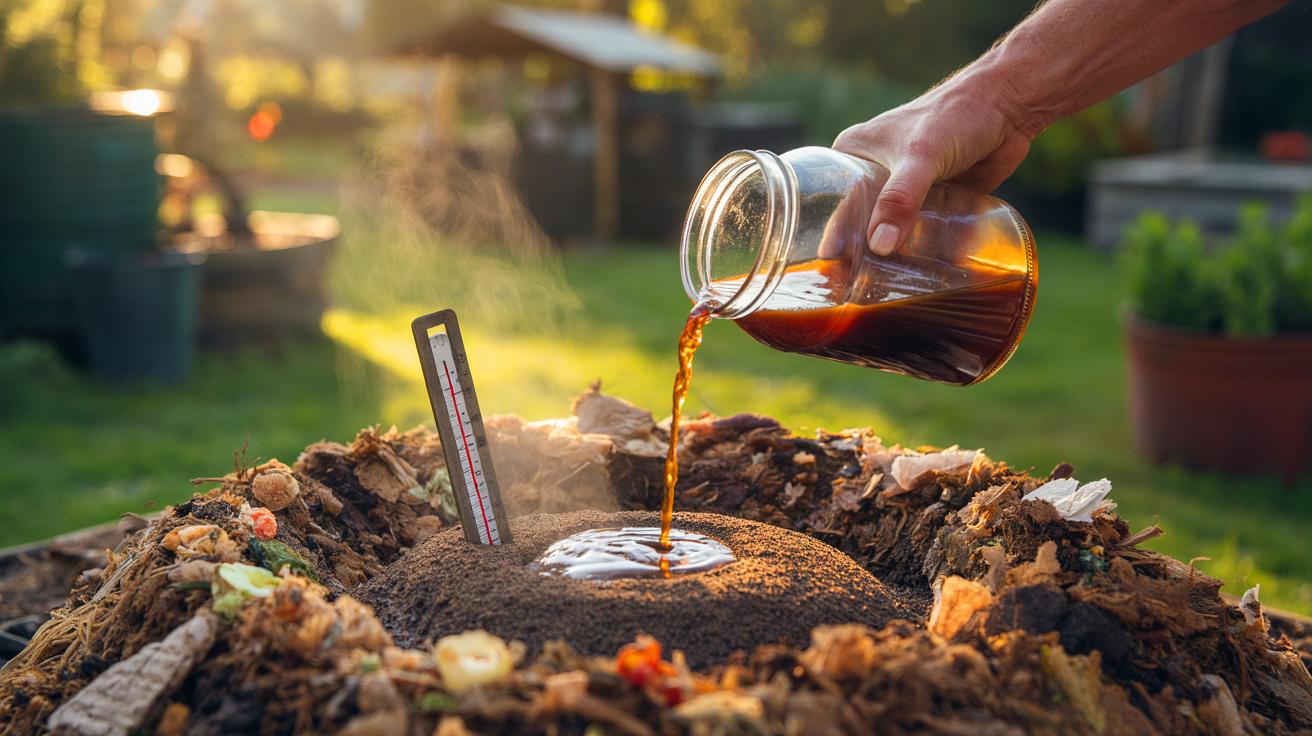
You need three things you likely own: warm water, dry baker’s yeast, and a spoonful of sugar or molasses. Mix 1 gallon of water at about 95–105°F with 1 teaspoon yeast and 1–2 tablespoons sugar. Stir and wait 10 minutes; foaming signals activation. Drizzle this starter over a freshly turned pile, wetting layers rather than dumping in one spot. Then cap with an inch of browns to reduce odors and discourage insects. Even coverage beats heavy soaking, which can push the pile toward anaerobic conditions and a sour smell.
| Item | Quantity | When to Use | Notes |
|---|---|---|---|
| Warm water | 1 gallon | After turning | Comfortably warm, not hot |
| Dry yeast | 1 tsp | Per medium bin (3x3x3 ft) | Do not overdo |
| Sugar or molasses | 1–2 tbsp | With yeast | Feeds rapid growth |
| Brown cover layer | 1 inch | Immediately after drizzling | Limits pests and odors |
If your bin is smaller, halve the amounts; if larger, scale cautiously and watch for excess moisture. A compost thermometer may show a temperature bump within 24–48 hours, but even without one, you can feel warmth in the core. Repeat sparingly—no more than every two weeks. Too much readily available sugar can lead to clumping, fruit flies, or an imbalance that crowds out the broader microbial cast you need for a stable, finished compost.
Pile Management After the Boost
The starter sets things in motion, but management keeps them moving. Check temperature: if you lack a thermometer, slide your hand into a void in the center; it should feel notably warm, not scalding. Assess moisture with the squeeze test—one or two drops from a fistful signals the sweet spot. If it’s dry, mist lightly; if it’s soggy, fold in shredded cardboard and turn. Keep oxygen moving by fluffing the pile every two to three days during the heat burst, then weekly as activity stabilizes.
Feed wisely. Add greens (fresh kitchen scraps, coffee grounds) in thin layers, then balance with browns (dry leaves, paper shreds). Chop materials smaller to increase surface area and speed. If ants or fruit flies appear, bury fresh scraps deeper and reinforce that brown cap. Skip meat, dairy, and oily foods; they slow decomposition and attract pests. Above all, watch for smell. A sweet, earthy scent is good; rotten or ammonia odors mean you need more browns and a thorough turn. Small tweaks prevent big setbacks and keep the yeast boost working for you.
With a teaspoon of yeast and a spoonful of sugar, you can give your compost a safe, controllable nudge toward faster breakdown—no exotic additives, no special gadgets. The real secret remains balance: air, moisture, and the right mix of browns and greens. Use the starter as a primer, then manage the pile like a living system. Your reward is rich, dark compost that smells like a forest floor and feeds everything you plant. Ready to try the yeast trick this weekend and see how quickly your heap wakes up—what will you measure first: heat, smell, or texture?
Did you like it?4.6/5 (26)