In a nutshell
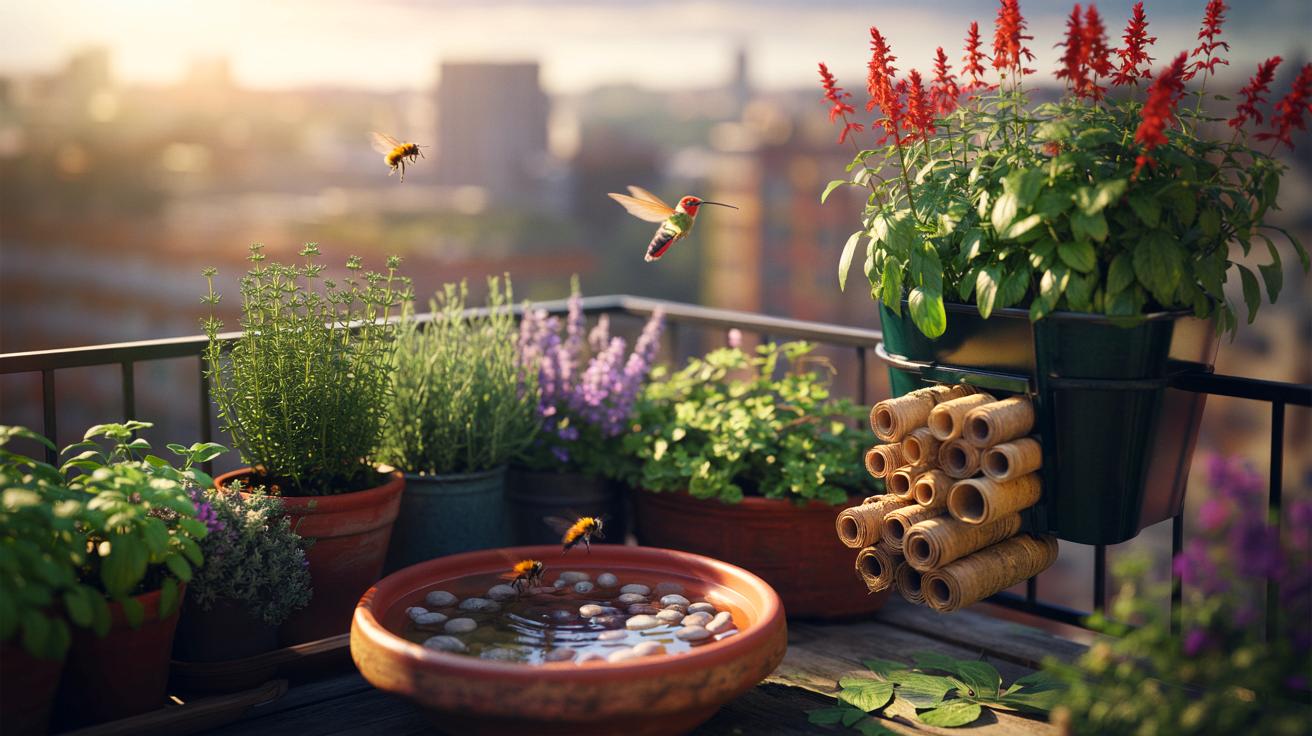
- 💧 Prioritize clean, shallow water with pebbles for safe landing; add a mineral “puddle” for butterflies, use misters for hummingbirds, and keep refills consistent to draw steady traffic.
- 🌿 Feed pollinators with pots: cluster nectar-rich herbs (thyme, oregano, basil), add annuals for staggered bloom, and slip plants into cracks and rail planters; favor native plants for higher nectar value.
- 🐝 Create nesting habitat in tiny spaces: a bare soil patch for ground nesters, reed/paper tubes for cavity bees, and winter refuge by leaving stems and leaf litter undisturbed.
- 🔧 Rethink care routines: commit to pesticide-free management, use warm, shielded LEDs to reduce light pollution, mow less to let clover bloom, and time pruning after flowering.
- 🏡 Embrace small, daily actions: a saucer here, a pot there—these micro-habitats stitch corridors across porches and patios; keep setups simple, consistent, and clean for lasting impact.
You don’t need a sprawling, manicured landscape to turn your stoop, balcony, or front walk into a buzzing lifeline. A few smart tweaks can deliver food, water, and shelter to the creatures that keep our crops and wildflowers alive. Think small. Think layered. From a saucer of water to a pot of blooming herbs, each micro-habitat adds up quickly. Pollinators respond to consistency, diversity, and simplicity. Small, intentional offerings beat grand but sporadic gestures. This is a story about making space in slivers of urban life, suburbia, and anywhere in between—no shovel-heavy weekend required, no full garden bed necessary, just thoughtful touches that fit your schedule and your square footage.
Start With Water, Not Flowers
In heat or wind, bees and butterflies need hydration and safe footing more than anything. Clean, shallow water is the fastest pollinator magnet. Fill a plant saucer with water and add pebbles or marbles so insects can land without drowning. Keep the water depth under half an inch and set the dish in light shade to stay cool. Refresh daily to prevent mosquitoes; a quick swish and refill takes seconds. Butterflies also crave minerals. Mix a pinch of sea salt into one saucer once a week, or make a “puddle” with damp sand. You’ll see winged traffic in days during dry spells.
Consider multiple micro-stations. A tiny birdbath under a shrub, a drip line that leaves a small damp spot, even a leaky hose set to the lowest trickle helps. Consistency matters more than volume. For hummingbirds, a mister or gentle fountain draws them in and doubles as air conditioning for plants. Avoid sugary mixes outside of dedicated feeders, and clean feeders every 2–3 days in hot weather. If you can keep the water fresh, pollinators will keep the neighborhood blooming.
Scatter Nectar in Pots, Cracks, and Rails
You can feed an army with a windowsill. Cluster small containers of nectar-rich herbs—thyme, oregano, basil, chives, and mint—allowing some to bolt and flower. Add low-cost annuals like sweet alyssum, calibrachoa, and nasturtium for continuous bloom. Aim for staggered timing: early (violas, chives), mid (lavender, salvia), late (sedum, goldenrod in pots). Sun for six hours is ideal, but even bright shade works for mint and alyssum. Water deeply, not constantly, and deadhead selectively so plants keep producing. One pot per month, all season long, builds a buffet without blowing your budget.
Don’t overlook micro-placements. Tuck creeping thyme into a driveway seam. Hang a railing planter with tubular red blooms for hummingbirds. Let dill and fennel flower on the stoop for hoverflies, the aphid-eating heroes. If possible, source native plants in small plugs—like beebalm or agastache—for higher nectar value and better drought tolerance.
| Pollinator | Easy Micro-Resource | Placement Tip |
|---|---|---|
| Bees | Flowering herbs (thyme, oregano, chives) | Cluster 3–5 small pots near a sunny step |
| Butterflies | Shallow dish with damp sand; overripe fruit slice | Partial shade to reduce evaporation |
| Hoverflies | Dill, fennel, cilantro left to bloom | One pot per herb, near aphid-prone plants |
| Hummingbirds | Red tubular flowers (salvia, cuphea) | Hanging basket at eye level, near cover |
Build Tiny Nesting and Overwintering Spots
Feeding is half the story; nesting habitat keeps pollinators around. Many native bees nest in bare ground. Leave a one-by-one-foot patch of undisturbed sandy soil, south-facing if you can. Skip mulch there. Resist the urge to rake. For cavity nesters, bundle paper tubes or reed stems of varying diameters (2–8 mm) and mount under an eave, facing east. Keep the bundle 5–7 feet high and protected from rain. Replace or sanitize tubes annually to prevent parasites. A small, clean bee block is better than a big, neglected hotel.
In fall, don’t “tidy” everything. Butterfly pupae and moth cocoons shelter in leaf litter and hollow stems. Cut some perennials back to 8–12 inches and leave stems standing through winter; they’ll provide nesting chambers when they hollow out. Pile leaves under shrubs to form a soft, insulating layer. Even a single storage bin of dry leaves, punched with air holes and stashed on a balcony, can become an overwintering bank for beneficial insects. Leaf litter equals life support—and it’s free. Mark these micro-reserves so you remember not to disturb them during spring cleaning.
Rethink Maintenance: Light, Chemicals, and Timing
Most pollinator loss happens not for lack of flowers but because our routines work against them. Start with a pesticide-free pledge. Skip neonicotinoid-treated plants; buy from growers who label their stock or choose organic starts. If you must manage pests, use physical methods—hand-squish, water blasts, row covers—or spot-treat with insecticidal soap at dawn when pollinators are least active. If you wouldn’t spray your dinner, don’t spray your flowers. Fertilize lightly, favoring compost tea over salts that push blooms without nectar quality. Water early mornings so blossoms are dry by midday, reducing fungal pressure without fungicides.
Night matters. Many pollinators fly at dusk or after dark, and harsh lighting disorients them. Swap bright blue-white bulbs for shielded, warm LEDs (2700K). Put path lights on motion sensors. Mow less; allow clover and violets to dot the lawn, then set the mower blade higher so flowers rebound fast. Time pruning for just after plants finish blooming to avoid cutting off the next nectar wave. Don’t add a honeybee hive unless you’re prepared for management; in many neighborhoods, native bees need the forage more. Good habitat plus gentle timing beats gear and gadgets every time.
Small offerings reshape a landscape. A saucer here, a pot there, a patch of leaves left on purpose—these choices stitch a corridor through porches and patios that pollinators learn and trust. The reward is visible and audible: wingbeats at breakfast, a shimmer of color over lunch, a hum at dusk that says the system is working. Your micro-habitat matters more than you think because it stands open every day. Keep it simple, keep it consistent, keep it clean, and life shows up. What small step will you try this week to invite the wild back to your doorstep?
Did you like it?4.4/5 (27)