In a nutshell
- 🧅 Onion peels repel pests by releasing sulfur-rich volatiles and polyphenols (like quercetin) that confuse aphids, flea beetles, and carrot flies; they’re a gentle repellent, not a kill-all.
- 🛠️ Use three methods: Mulch rings around stems, a simple spray (steep peels 12–24 hours, dilute 1:1, add a drop of soap), and scent-focused barriers with sachets or row covers.
- ⏰ Timing and consistency matter: start at transplanting or seedling emergence, reapply weekly and after rain, monitor damage, and pair with beneficial insects and row covers when pressure spikes.
- 🔬 Evidence and caveats: Allium volatiles are documented, but peels won’t solve slugs or leaf miners; keep sprays light to avoid disease and integrate with crop rotation and companion planting.
- ♻️ Eco-friendly and frugal: upcycle kitchen scraps, reduce chemical inputs, protect pollinators and soil life, and fit peels into a broader Integrated Pest Management strategy.
Gardeners love a trick that’s effective, frugal, and gentle on the soil food web. Enter the onion peel. Those papery skins you’d normally toss carry a surprisingly potent bouquet of plant-protective compounds. When used thoughtfully, they can nudge away aphids, flea beetles, and carrot flies without harming your harvest or your conscience. It’s not a silver bullet. It’s a steady, low-risk nudge that complements smart cultural practices. The best part: you’re upcycling kitchen scraps into a functional field aid. Here’s how the onion peel trick works, where it shines, and how to fold it into an integrated approach that keeps pressure down and vegetables thriving.
Why Onion Peels Repel Common Garden Pests
The thin skins of onion peels are more than packaging; they’re rich in sulfur compounds and polyphenols like quercetin. These molecules produce volatile aromas that confuse or repel sap-sucking and leaf-chewing insects. For small pests that navigate by scent—think aphids, carrot flies, and flea beetles—this cloud of odor can make your beds less attractive. The effect is subtle but meaningful when you renew it regularly and pair it with good timing.
Here’s the crucial point: onion peels do not “kill everything” like a broad-spectrum pesticide. Instead, they help tilt the odds in your favor by masking host cues and making tender foliage less inviting. That matters for young transplants and cool-weather brassicas, which are notoriously tempting targets. The peels are also dry, slow to decompose, and benign for pollinators when used as a mulch rather than a spray. A caveat: their scent won’t deter every pest. Slugs and leaf miners, for example, often require different tools. But as a first line of gentle defense, onion skins punch above their weight.
There’s a sustainability bonus. The peels function as a minimal, low-input intervention, cutting down on purchased repellents while adding a whisper of organic matter over time. It’s simple. It’s cheap. It’s compatible with organic systems.
How To Use Onion Peels: Mulch, Spray, and Barriers
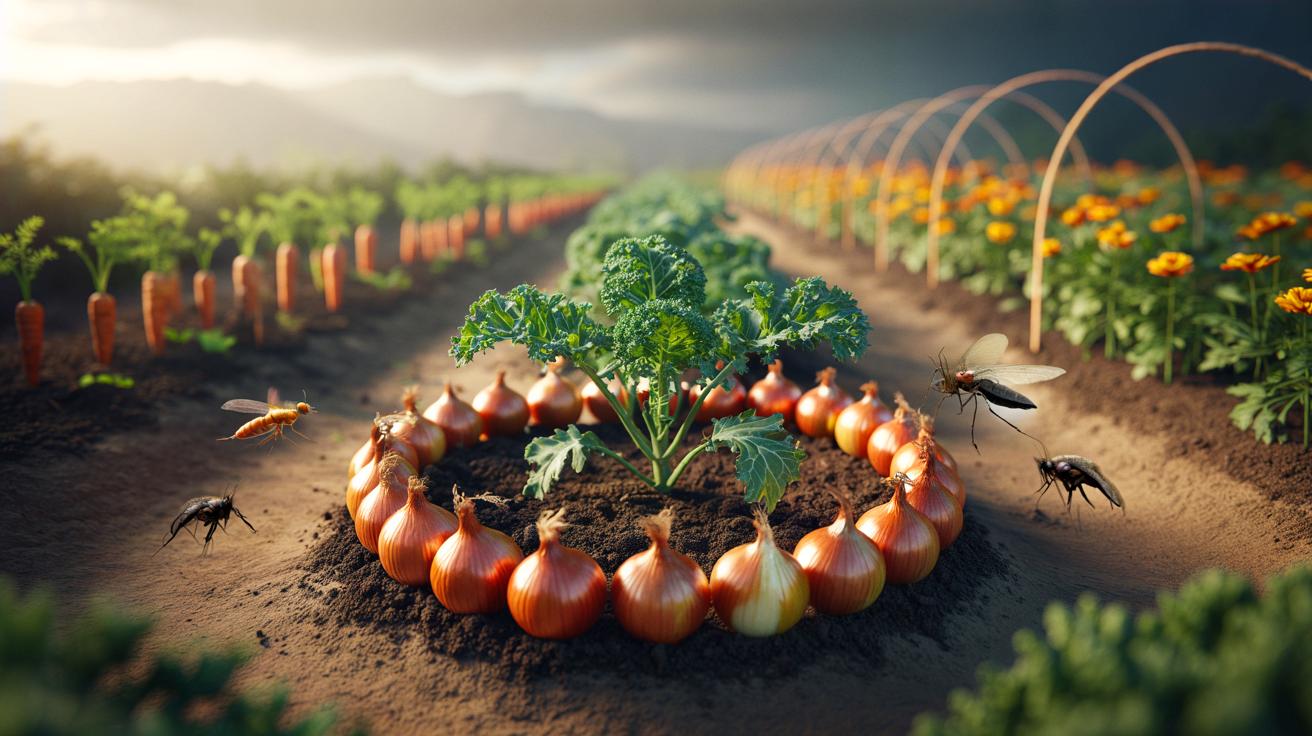
Start with mulch. Dry the peels after cooking, then crumble and ring them around vulnerable stems—broccoli, kale, carrots, and lettuces. A band 2–3 inches wide helps diffuse odor at soil level, where carrot flies and cutworms patrol. Replace after heavy rain or irrigation. Keep the peels from matting; airy layers release more scent. For transplants, tuck a pinch into the planting hole, then top with your usual mulch to keep them in place.
Next, make a light onion peel spray for foliage. Recipe: pack 2 cups of dry peels into a jar, cover with 1 liter hot water, steep 12–24 hours, then strain. Dilute 1:1 with water and add one drop of mild soap per liter to improve leaf coverage. Mist the undersides of leaves in the early morning or evening when stomata are open and sunlight is less intense. Do not spray in the heat of the day to avoid phytotoxic stress. Reapply weekly during peak pest pressure or after rain.
For barriers, weave peels into the base of row covers or slip a small handful into mesh “sachets” clipped to hoops. This localizes scent right where pests hunt. It’s tidy, and it lasts longer than a spray. Dispose of spent peels in the compost; they break down slowly and feed the heap.
A Practical Schedule and What To Expect
Timing is everything. Begin applications at transplanting or at seedling emergence, before pest populations build. Maintain a rhythm: mulch once, refresh weekly; spray weekly, pausing during cool, dry spells when pressure dips. After a heavy rain, assume your protection is gone and reapply. Observe. Look for fewer fresh stipples on brassica leaves, less clustering of aphids on tender tips, and reduced carrot fly tunneling at harvest.
Expect moderation, not miracles. Onion peels excel as a background repellent, buying you time while beneficial predators—lady beetles, lacewings, parasitic wasps—do their work. Pair the peels with clean beds, steady irrigation, and cultivar choice. If you see persistent feeding, escalate to row covers or targeted biologicals. Keep notes—dates, weather, crop stage—to refine your timing next season. Consistency beats intensity here. A little, applied often, wins.
| Pest | Tell-Tale Sign | Peel Method | Frequency |
|---|---|---|---|
| Aphids | Clusters on new growth | Spray + mulch ring | Weekly; after rain |
| Flea beetles | Shot-hole damage | Mulch ring + sachets | Refresh weekly |
| Carrot fly | Larval tunnels in roots | Mulch rows, sachets on hoops | From sowing to harvest |
| Cutworms | Seedlings clipped at base | Mulch ring at stems | At transplanting |
Evidence, Caveats, and Eco-Friendly Pairings
Scientists have long documented that Allium plants release sulfur-rich volatiles and phenolics that influence insect behavior. Onion skins, concentrated in quercetin and thiosulfinates, carry those cues. Field outcomes vary, though, because wind, humidity, and pest pressure shift weekly. Think of peels as signal jammers, not shields. They’re excellent in shoulder seasons when pressure is moderate and young plants are most vulnerable.
Two cautions. First, keep sprays light; saturated leaves invite disease in humid spells. Second, do not rely on peels for pests like slugs or leaf miners; mechanical traps, baits, or row covers work better. Integrate peels with companion planting—dill and cilantro for hoverflies, marigolds for root-knot nematode suppression—and with physical barriers. Clean up plant debris, rotate beds, and avoid excessive nitrogen that makes foliage extra tasty.
There’s also an ethical upside. By repurposing waste and cutting back on harsh inputs, you protect soil microbes and beneficial insects while keeping costs low. Small, repeatable habits beat heroic one-time interventions. The onion peel trick fits that mold perfectly: subtle, steady, and synergistic with the rest of your toolkit.
Used with intention, onion peels become more than scraps—they’re a quiet line of defense that aligns with resilient gardening. You’ll waste less, spray less, and learn to read the rhythms of your beds. That feedback loop matters. It sharpens observation, which is every grower’s superpower. Start with one bed, keep notes, and refine. What crop will you test first, and how will you combine onion peels with other tactics to build a pest-resilient patch this season?
Did you like it?4.4/5 (23)