In a nutshell
- 🌱 DIY “banana peel rescue” tea made from banana peels, eggshells, and onion skins gently revives wilted plants with potassium, calcium, and trace micronutrients.
- 🧪 Method: steep scraps 24–48 hours, strain, then dilute 1:3–1:4 to a weak-tea tint; water soil (not leaves) weekly for 2–3 cycles.
- 🔬 Science: supports chlorophyll production and root vitality via light nutrition and beneficial microbes; eggshells buffer acidity and aid new growth.
- ⚠️ Safety: avoid salted water, keep batches fresh and aerobic, skip succulents/cacti, and if edges brown, pause and flush; always test one plant first.
- 🌎 Sustainability: reduces kitchen waste and fertilizer costs; consistent, light applications plus proper light and watering yield greener, springier foliage.
Americans throw away mountains of peels, shells, and skins each week. Hidden in that heap is a gentle, low-cost remedy for houseplants that have lost their glow. The hack is simple: transform common kitchen waste into a mineral-rich “rescue tea” that restores color and vigor to tired leaves. No pricey fertilizers. No mystery chemicals. Just smart reuse. The results can be startling, especially on plants showing pale, washed-out foliage. When applied correctly, this DIY tonic coaxes chlorophyll production back into gear and turns droop into bounce. It’s quick to make, safe when diluted, and—crucially—built from scraps you already have on hand.
What Is the Banana Peel Rescue
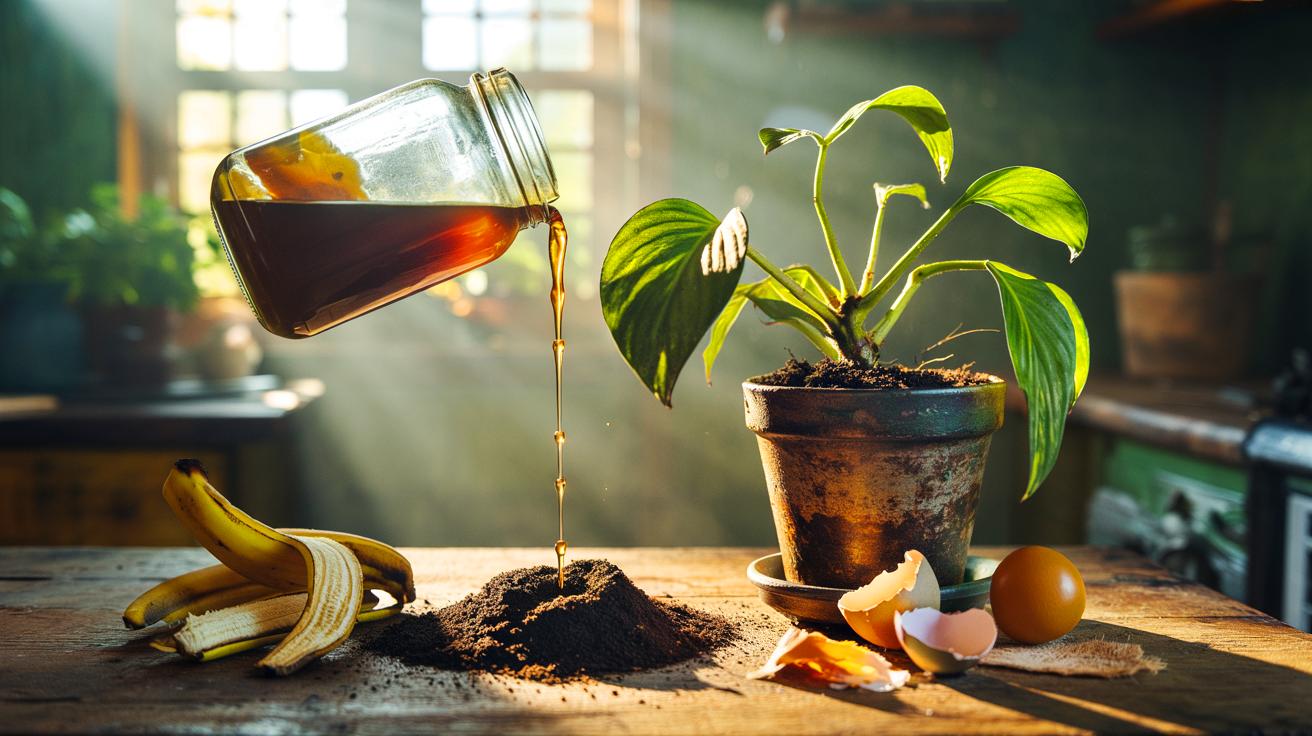
Call it a pantry-powered lifeline. The banana peel rescue is a mild, homemade plant tonic brewed from banana peels, crushed eggshell fragments, and papery onion skins. Each scrap brings a different boost. Peels deliver potassium for stem strength and fluid balance. Eggshells offer slow-release calcium for cell walls and new growth. Onion skins contribute natural pigments and trace micronutrients, including hints of iron and quercetin compounds that plants can benefit from in tiny amounts. Steeped and diluted, the mix behaves like a light compost tea that’s kind to roots.
Here’s the core idea: use what you’d toss to nudge wilted, pale plants back to green. You’re not force-feeding. You’re nudging. The brew is gentle enough for many foliage plants—philodendrons, pothos, prayer plants, even thirsty herbs—if you keep the concentration weak. Never use salted cooking water; sodium burns roots and locks up essential nutrients. And never pour it hot. Warm or room temperature only. You’re after balance—just enough minerals to fix chlorosis without shocking a stressed plant that’s already on the edge.
How to Make and Apply the Rescue Tea
Rinse two banana peels to remove fruit residue, then snip into strips. Crush one clean, dried eggshell; the pieces should be coarse, like gravel. Add a small handful of onion skins. Place in a quart jar and cover with water. Let it steep 24–48 hours, loosely covered, then strain. What you have is a concentrate. Always dilute: aim for a weak-tea tint—typically one part concentrate to three or four parts water. Water the soil, not the leaves, until it just begins to drain. Repeat weekly for two to three cycles, watching for greener, firmer foliage.
If you notice any sour smell, aerate the jar by stirring or start a fresh batch; oxygen keeps microbes friendly and odors down. For indoor plants, less is more. Use a smaller dose and monitor response. For outdoor container gardens, you can go a touch stronger. Skip this tonic for succulents and cacti; they prefer lean soil and infrequent water. Consistency, not intensity, brings results. Pair the tea with bright, indirect light and correct watering. Within days, some plants perk up; within two weeks, color deepens convincingly.
| Ingredient | Key Nutrients | Main Effect | Caution |
|---|---|---|---|
| Banana Peel | Potassium, magnesium | Stem strength, chlorophyll support | Rinse to avoid fruit flies |
| Eggshell | Calcium | Cell wall integrity, new growth | Crush finely for better release |
| Onion Skin | Trace iron, antioxidants | Color recovery, micronutrient balance | Use modest amounts |
| Rice Water (Optional) | Starches, trace minerals | Feeds beneficial microbes | No salt, dilute well |
The Science Behind the Green-Up
Why does this scrap-based tonic help? Two reasons: nutrients and microbes. Plants turning pale aren’t making enough chlorophyll. They need nitrogen, magnesium, and trace iron to build it, plus potassium to move water and sugars efficiently. Banana peels and onion skins supply micro-doses that, while not as concentrated as commercial feed, can be just enough to tip a teetering plant back into balance. Crushed eggshells slowly buffer acidity and provide calcium, supporting new cell formation without the “fertilizer burn” risk of stronger products.
The brew also hosts a small parade of beneficial microbes that make nutrients more available. Think of it as a probiotic rinse for roots. The key is control. Use a fresh, lightly scented batch and avoid letting it go anaerobic, which can harm roots and stink up a room. Keep watering consistent and avoid waterlogging. Pale leaves can also signal overwatering or poor light, problems no tonic can fix. Correct the basics—light, drainage, airflow—and then the kitchen-waste tea acts like a nudge, not a miracle, helping plants seize the improved conditions.
Troubleshooting, Safety, and Sustainable Upsides
Worried about pests or smells? Strain thoroughly and store concentrate in the fridge up to three days. Let it return to room temperature before use. When in doubt, test one plant first and wait a week. If fungus gnats are a concern, water in the morning and let the soil surface dry slightly between applications. For sensitive species, halve the dose. If leaves brown at the edges, pause—either the mix was too strong or the plant is salt-stressed from past fertilizers. Flush with plain water and reassess.
There are smart substitutions. Unsalted, cooled potato water or rice water offers gentle starches that microbes love; just dilute to the same weak-tea color. Skip coffee grounds in the jar; they compact and can go sour—top-dress them outdoors instead, lightly. The bigger story is sustainability. This hack lowers waste and trims fertilizer costs without greenwashing. You’re closing a loop. Small, regular applications beat one heavy-handed pour every time. And the payoff—lush, greener plants from yesterday’s scraps—feels like a tiny victory for both your windowsill and your wallet.
Turning wilted houseplants around doesn’t require a chemistry set, just respect for simple biology and a habit of using what you already have. The banana peel rescue is easy, cheap, and surprisingly effective when paired with right-size light and watering. Keep the brew fresh, keep the dose light, and watch for steady color gains over two to three weeks. If something looks off, stop, flush, and recalibrate. Ready to try it on one plant this week and document the before-and-after—what will your first test subject be, and what changes will you track?
Did you like it?4.5/5 (23)