In a nutshell
- 🍌 Banana peels deliver potassium, a touch of phosphorus, and micronutrients that fuel soil microbes, leading to faster fruit fill, steadier flowering, and juicier tomatoes; they complement, not replace, calcium management.
- 🍅 Step-by-step: chop peels, bury in a ring trench 6–8 inches from the stem and 3–4 inches deep, about one peel per plant weekly; or brew a 24–48 hour banana peel tea for gentle, soil-only drenching—stop solids two weeks before peak harvest.
- 🧪 Choose your route: simple trench method (steady, low-odor), quick tea (container-friendly), or potent lacto-fermented extract (dilute 1:4); keep off foliage and watch for leaf edge crisping as a sign of excess K.
- ⏱️ Dial in dosage: in-ground plants ≈ one peel weekly; containers use half; teas every 10–14 days, ferments monthly; pause if pests dig or odors turn anaerobic, and always bury 3–4 inches to deter critters.
- 🌿 Balance the system: pair potassium with calcium and magnesium (gypsum, eggshells, or soil-tested amendments), maintain even watering and mulch, and expect earlier coloring, firmer slices, and richer flavor at harvest.
Gardeners love shortcuts, yet true breakthroughs are rare. The humble banana peel might be one of them. When used wisely, it can help tomato vines push out fruit faster and keep those fruits plump and flavorful. The trick isn’t magic; it’s chemistry plus good soil ecology. Peels carry a reservoir of potassium and trace minerals that feed microbes, which in turn feed your plants. When combined with sound watering and sunlight, results can be striking. Don’t expect miracles from scraps alone, but do expect measurable gains in vigor, blossom retention, and juiciness. Here’s the banana peel method, tuned for home growers who want results.
Why Banana Peels Turbocharge Tomatoes
Tomatoes demand potassium once flowering begins. K unlocks enzyme activity, regulates water flow through stomata, and powers the transport of sugars to developing fruit. Translation: fuller clusters, less tip burn, and better flavor density. Banana peels are naturally K-rich and include a modest dose of phosphorus and micronutrients like manganese. While they don’t deliver much nitrogen, they complement balanced organic feeds or composts already in the bed.
There’s a second boost: soil biology. Chopped peels are fast food for bacteria and fungi, accelerating the mineralization pipeline that turns organic matter into plant-ready ions. Healthier microbes often mean steadier nutrient release during hot spells when tomatoes can stall. The effect most growers notice first is more confident flowering followed by faster fruit fill. Another quiet benefit is improved turgor—cells stay hydrated more efficiently—so fruit flesh feels denser and, yes, juicier. Remember, though, potassium doesn’t fix calcium issues. For blossom-end rot, pair this tactic with steady moisture and a reliable calcium source.
The Peel-to-Plate Method, Step by Step
Start with fresh, unsprayed banana peels. Rinse briefly to remove sticker glue or residues. With kitchen scissors, cut peels into postage-stamp squares; small pieces break down faster and discourage pests. For each mature tomato plant, reserve the equivalent of one peel per week during flowering and early fruiting.
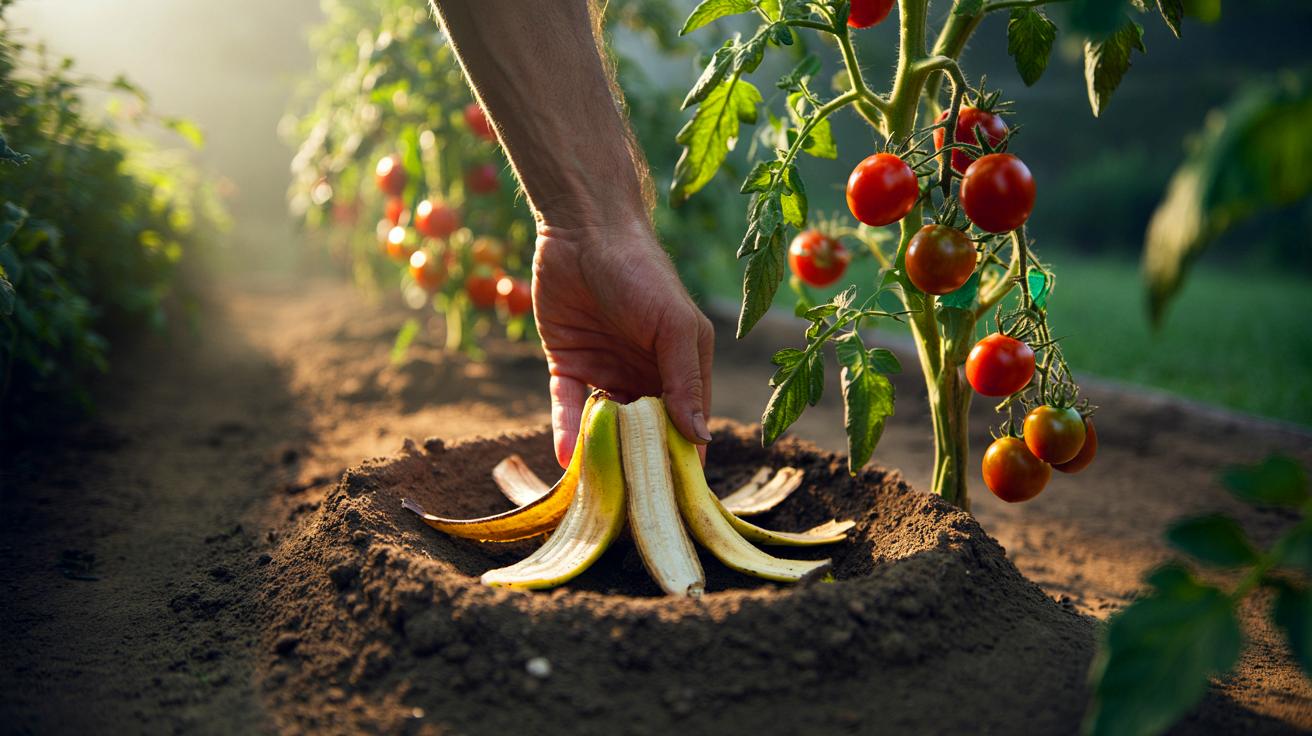
At transplant or when first trusses appear, pull mulch aside and dig a shallow ring trench 6–8 inches from the stem, 3–4 inches deep. Toss in the chopped peel, mix with a handful of finished compost, and cover firmly. Water in. That spacing matters. Keeping peels off the stem prevents rot and deters critters. Replace mulch to stabilize moisture and temperature.
If you prefer a liquid feed, soak chopped peels in a jar of water for 24–48 hours, then strain. Apply the “tea” directly to soil, not leaves, every 10–14 days. It’s gentle and quick, though less potent than fermented versions. A good rhythm: weekly chopped-peel trenching for three weeks, then switch to tea during heavy set so you can feed without disturbing roots. Stop adding solids two weeks before your expected peak harvest; let the soil finish what it has.
Variations: Tea, Trench, and Ferment
Three routes deliver similar outcomes, each with quirks. The trench method is simplest: chop, bury, water. It’s quiet, low-odor, and steadily feeds microbes that surround the root zone. The banana peel tea is fast and clean. No digging, lower pest risk, and useful in containers where solids can clog limited soil volume. The third route—lacto-fermented peels—extracts nutrients more aggressively. Submerge chopped peels with a spoon of sugar and a splash of whey or a lactic starter for 5–7 days, venting daily; dilute the resulting liquid 1:4 with water before drenching soil.
Fermented extracts are stronger, so go lighter and observe plants. Leaves clawing or margins crisping? Back off; excess potassium can antagonize magnesium uptake. The tea is gentler for weekly use, while the trench approach suits monthly baseline feeding. Container growers often alternate tea and dilute ferment to avoid gnat and raccoon interest. Whichever path you choose, keep it off foliage, integrate with even watering, and pair with calcium sources if your soil test runs low.
| Method | Prep Time | Best Timing | Pros | Watch-outs |
|---|---|---|---|---|
| Trench (chopped peels) | 10 minutes | Transplant to early fruit set | Steady release, low cost | Critter interest if not buried well |
| Banana peel tea | 1–2 days | Flowering and mid-fruit fill | Clean, fast, container-friendly | Lighter nutrient profile per dose |
| Lacto-fermented extract | 5–7 days | Heavy fruit set | Concentrated, quick uptake | Odor, must dilute, monitor leaf response |
Timing, Dosage, and What to Avoid
For in-ground plants, aim for roughly one peel per plant weekly during bloom and early fruiting, then taper. In containers, cut that in half; potting mixes saturate quickly. Apply teas every 10–14 days, fermented extract monthly. After rainstorms that leach nutrients, one extra tea drench can help your vines rebound. Stop all peel additions if you see pest digging, black slime, or anaerobic smells—those signals mean your burial depth is off or soil is waterlogged.
Balance matters. High potassium without enough magnesium or calcium can nudge deficiencies. Epsom salt isn’t a cure-all, but a light dose in Mg-poor soils can steady leaf color; better yet, get a soil test. Add crushed eggshells or gypsum weeks ahead to support calcium, and keep irrigation even to prevent blossom end rot. Rinse peels if fruit came heavily waxed, and always bury peels 3–4 inches deep to discourage flies and raccoons. The banana peel method accelerates what healthy soil already wants to do; it doesn’t replace sunlight, spacing, or vigilant watering.
Used with intention, the banana peel method is a smart, circular boost: kitchen waste into soil energy, soil energy into sweeter, juicier tomatoes. It’s cheap. It’s simple. And when dialed in, you’ll notice earlier coloring and firmer slices on the cutting board. Respect dosage, keep peels off stems, and fold the tactic into a broader plan that includes mulch, steady irrigation, and measured feeding. Ready to experiment with your next planting—tea, trench, or ferment—and track which version brings your vines across the finish line fastest?
Did you like it?4.6/5 (27)