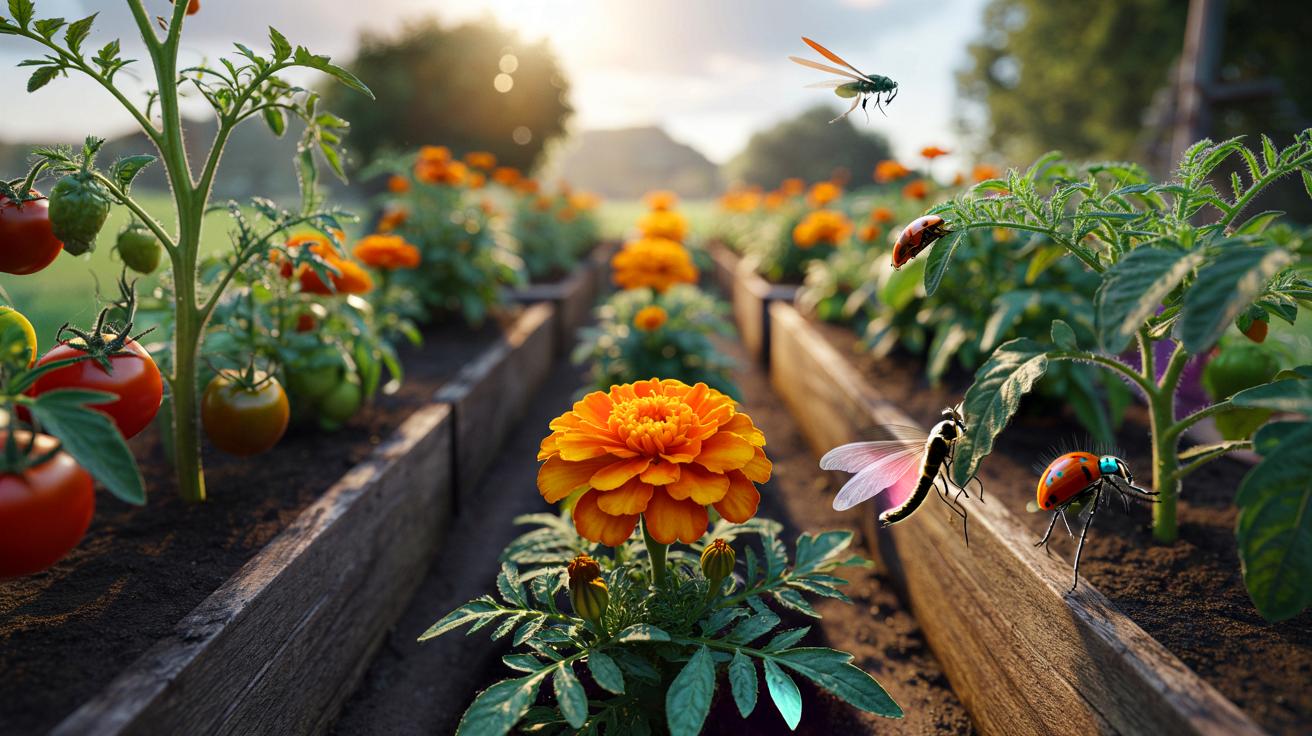
In a nutshell
- 🌼 Marigolds act as natural pest repellents: their roots exude thiophenes that suppress soil-dwelling nematodes, protecting tomatoes, peppers, and beans.
- 🧪 Above-ground VOCs (linalool, ocimene, limonene) mask crop scent trails, confusing aphids and whiteflies, while blooms feed beneficial insects like lacewings, hoverflies, and parasitic wasps.
- 🧭 Companion planting tactics: border beds and interplant at 8–10 inches, deadhead for continuous bloom; choose Tagetes patula or T. erecta, and use T. minuta cautiously.
- 🌱 Ecological gains: marigolds bolster IPM, reduce reliance on sprays, enhance soil health, and create habitat that keeps predators on-site and crops more tolerant under pressure.
- 📈 Practical payoff: lower pest pressure, resilient harvests, and affordable, climate-smart gardening—especially when layered with basil or nasturtium and other good garden habits.
Walk through a thriving American kitchen garden and you’ll spot a hidden bodyguard: the humble marigold. Its cheerful blooms do more than brighten beds; they actively shield food crops. Gardeners swear by the trick, and science backs them up. Marigolds release compounds that repel, interrupt, or outright suppress pests. They also invite helpful allies. The result is cleaner produce, fewer sprays, and a resilient ecosystem powered by flowers. Planting marigolds near vegetables can tilt the balance away from pests and toward health. It’s low-cost. It’s good-looking. It’s practical climate-smart gardening that leverages biology instead of bottles.
The Science Behind Marigolds’ Pest-Fighting Power
Start at the roots. Certain marigolds, especially Tagetes patula and Tagetes erecta, exude natural chemicals called thiophenes—notably alpha-terthienyl—that are toxic to soil-dwelling nematodes like Meloidogyne (root-knot) and Pratylenchus (root-lesion). These invisible worms attack tomato, pepper, and bean roots, stunting growth and reducing yields. Interplanting marigolds can disrupt nematode life cycles and lower populations over a season. That’s real protection, delivered from below ground without synthetic nematicides.
Above the soil line, marigolds release volatile organic compounds—including limonene, ocimene, and linalool—that can mask crop “scent trails,” making it harder for pests like aphids or whiteflies to locate hosts. This isn’t magic; it’s chemical camouflage. The bold foliage also alters the garden’s visual pattern, a small but meaningful advantage when you’re trying to confuse insect search behavior. Add nectar that sustains lacewings, hoverflies, and parasitic wasps, and you get a multitier defense: deter, distract, and then let predators mop up survivors.
Does every pest flee? No. Slugs may sample petals, and efficacy can vary by region and species. But paired with sanitation and crop rotation, marigolds become a cornerstone of integrated pest management (IPM). The key isn’t perfection—it’s stacking small advantages until pests lose the numbers game.
Companion Planting That Works: Where, When, and Which Varieties
Think in patterns, not one-off plants. Border vegetable beds with dense ribbons of French marigold (Tagetes patula), spacing 8–10 inches apart; tuck singles between tomatoes, peppers, eggplants, and beans. In nematode-prone soils, run a double row along the bed edges for an entire season. Start transplants after danger of frost. Deadhead to keep nectar flowing for beneficials and maintain the visual screen. Water consistently; avoid rich, high-nitrogen feedings that push floppy growth at the expense of resilience. Consistent bloom equals consistent protection. For a cover-crop-style reset, some growers use Tagetes erecta in blocks, then chop and incorporate to release bioactive residues before replanting vegetables.
| Pest or Problem | What Marigolds Do | Best Tagetes Type | Vegetable Partners |
|---|---|---|---|
| Root-knot nematodes | Roots exude nematicidal thiophenes | T. patula, T. erecta | Tomatoes, peppers, beans |
| Aphids, whiteflies | Volatiles mask host cues; boost predators | T. patula | Tomatoes, cucurbits, brassicas |
| Thrips, leafhoppers | Scent interference; habitat for allies | T. patula | Peppers, lettuce, onions |
If you’re tempted by Tagetes minuta (Mexican marigold), use caution; it’s potent and sometimes overly assertive. Most home gardeners will be well served by compact French marigolds, which integrate neatly into raised beds and containers. Pair with basil or nasturtium for layered benefits—scent masking, trap cropping, and nectar support. Mixing plant types builds a diversified, harder-to-crack defense line.
Ecological Side Benefits: A Living Line of Defense
Marigolds earn their keep beyond pest control. They are nectar stations that keep beneficial insects on site after they patrol your squash or brassicas. Those adults—hoverflies, tiny wasps, tachinid flies—need sugar to fuel flight; marigold disks deliver it in accessible form. Flowers also make your garden visibly “busy,” a cue that can signal healthier microhabitats. As blossoms are deadheaded, leaf litter and chopped stems add organic matter that feeds soil microbes, which in turn enhance nutrient cycling. Healthier soil grows sturdier plants, and sturdier plants tolerate pressure. Resilience is the quiet superpower of a mixed planting.
Chemical savings matter, too. When marigolds reduce pressure from nematodes or sap-suckers, gardeners can skip broad-spectrum sprays that may harm bees and predators. That protects pollination services and keeps your backyard’s food web intact. But stay observant. Slugs sometimes nibble marigold edges; a ring of copper tape, boards for trapping, or morning hand-picks will solve it. Rotate beds annually, keep weeds down, irrigate at the base, and you’ll amplify the marigold effect. In plain terms: stack good habits, add marigolds, and pests lose their home-field advantage.
Marigolds won’t replace every tool in a gardener’s kit, yet they shrink pest pressure while brightening the view—a rare one-two. Their chemistry undermines nematodes, their scent clouds confuse fliers, and their nectar feeds the very predators you want working overtime. It’s simple, affordable, and scalable from patio pots to community plots. Plant a border this weekend and watch the garden’s energy shift in a few weeks. What combinations—marigolds with basil, with nasturtiums, with herbs—will you try first, and how will you measure their impact on your vegetables this season?
Did you like it?4.4/5 (25)