In a nutshell
- 🌾 Rice water offers soluble starches, trace amino acids, and B vitamins that nurture the rhizosphere, aiding seedlings with gentle energy support—not a high-NPK feed, but a microbial boost.
- 🧪 How-to: rinse rice, use fresh or lightly fermented liquid, then dilute 1:10–1:20; apply as a soil drench weekly, with good drainage, and avoid salted or oiled cooking water.
- 📈 Botanist findings: quicker emergence, sturdier hypocotyls, more lateral roots, and slight chlorophyll gains; benefits vary by species—technique over volume is the consistent driver of results.
- ⚠️ Risks and limits: excess carbohydrates can sour media and attract gnats; store only 48 hours, dilute more when unsure, and remember it’s a supplement, not a fertilizer replacement.
- 🔍 Practical use: start post-germination, alternate with plain water, consider a foliar mist (1:20–1:30) after true leaves, then introduce a balanced feed as seedlings mature.
Gardeners love a tip that feels both old-world and evidence-backed. That’s where rice water enters the story. The cloudy liquid left after rinsing grains is more than kitchen waste; botanists say it functions as a gentle, multi-pronged tonic for seedlings during their most vulnerable weeks. It won’t replace a complete fertilizer, and it isn’t magic. Yet it reliably nudges early vigor. Short roots thicken. Leaves green up. Growth steadies. The secret lies in soluble carbohydrates, trace nutrients, and a microbe-friendly cocktail that supports soil life around tender roots. Used correctly—diluted, fresh, and targeted—it’s a cheap, low-risk ally for home growers and small nurseries alike.
Why Rice Water Works for Seedlings
What’s in the rinse? Primarily soluble starches, a whisper of amino acids, and trace B vitamins and minerals that leach from the grain. To a seedling, that translates to mild energy support and a favorable rhizosphere, the slim zone of soil wrapped around roots. Think of it as a soft landing pad during the stressful transition from germination to true-leaf growth. It is not a high-NPK feed, but a low-dose booster that feeds microbes first, plants second. That sequence matters. As beneficial microbes metabolize the starch, they release plant-available compounds and build biofilms that help roots anchor and explore.
Botanists point to two mechanisms: osmopriming-like effects that keep cells turgid and responsive, and a microbial nudge that tempers shock. In controlled trays, seedlings irrigated with properly diluted rice water often show sturdier hypocotyls and more lateral roots. Leaves can appear marginally darker, hinting at improved nutrient uptake. The effect is modest but meaningful. Used regularly yet lightly, rice water favors steady growth over spurts. Overdo it, and you risk anaerobic conditions. Apply it right, and you give young plants a calm runway into vegetative life.
How to Make and Use It, Step by Step
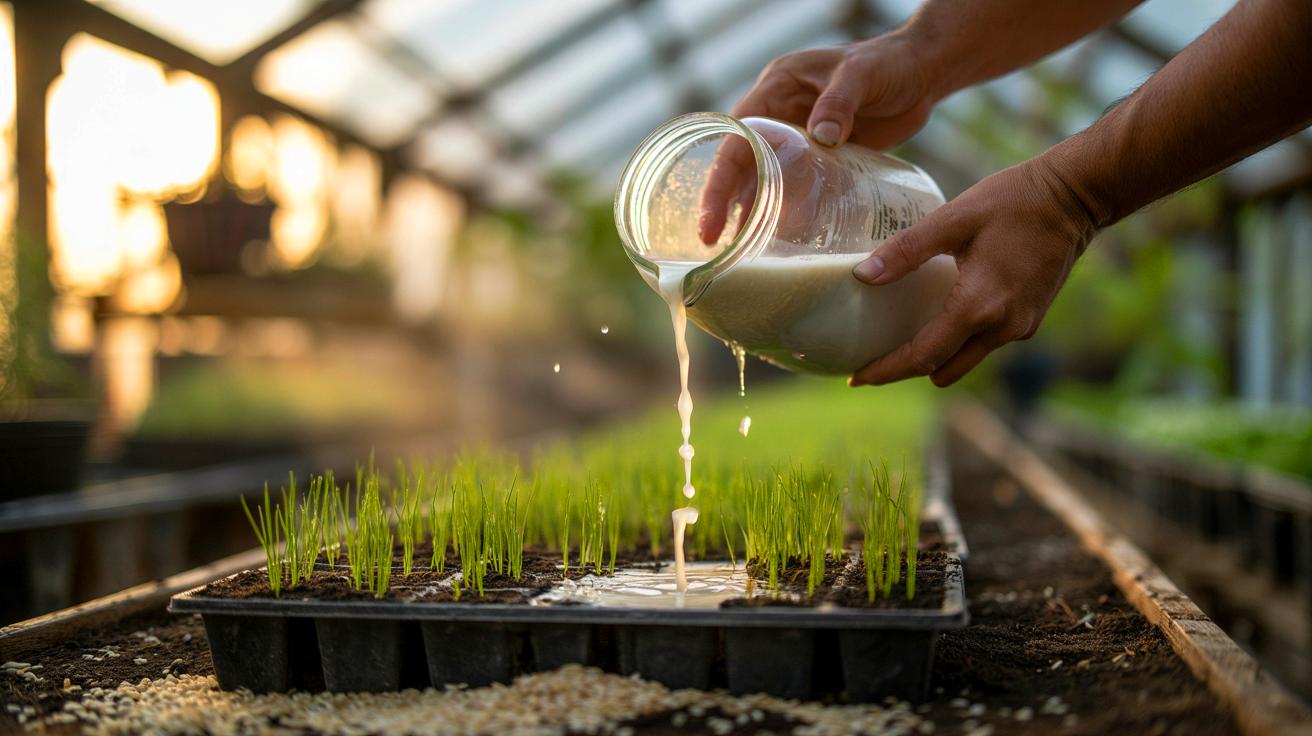
Use plain, unsalted grains. Rinse one cup of rice with two to three cups of clean water. Swirl for 30–60 seconds until the water turns milky; strain. That’s your fresh rice water. For a slightly stronger microbial tonic, let the liquid sit loosely covered for 12–24 hours at room temperature, then refrigerate and use within two days. Never use cooking water that contains salt, oil, or spices. Before applying, dilute 1:10 to 1:20 with water. Water the soil, not the leaves, during early seedling stages. A light foliar mist is fine once true leaves harden.
Start after germination when cotyledons unfold. Offer a soil drench once a week; alternate with plain waterings. In seed-starting mixes low in nutrients, you can split the weekly dose into two lighter applications to prevent sogginess. Always let trays drain well. If a sweet-sour odor intensifies or algae forms, pause, flush with water, and resume at a greater dilution. Pair with balanced nutrition once seedlings have two to three true leaves.
| Practice | Dilution | Frequency | Notes |
|---|---|---|---|
| Fresh rinse water | 1:15 | Weekly | Gentle, low odor; good for most starts |
| Lightly fermented (12–24h) | 1:20 | Every 10–14 days | Boosts microbes; watch drainage |
| Foliar mist (true leaves) | 1:20–1:30 | Every 10 days | Apply at dawn; avoid wet nights |
What Botanists Are Seeing in Trials
In university greenhouses and small lab setups, botanists testing rice water report consistent, if modest, gains in early vigor. Seed lots primed with diluted rinses show quicker emergence and tighter uniformity—seedlings pop up within a narrower window. That matters for transplant timing. Root scans often reveal longer primary roots and more lateral branching, a pattern tied to better nutrient foraging. In several leafy greens, chlorophyll readings tick up when rice water is used judiciously, suggesting improved nutrient capture rather than a direct nutrient infusion.
The appeal is partly economic. Low-cost, low-salt inputs are prized in small-scale operations and school gardens. Botanists caution that benefits vary by species and substrate: tomatoes and brassicas respond well; some natives and arid-adapted herbs prefer leaner regimes. There’s also a ceiling effect—beyond a certain point, extra applications add no value. Trials emphasize technique over volume: dilute, apply to moist media, and maintain airflow. Paired with sterile practices and a balanced starter feed, rice water consistently supports sturdier transplants without complicating schedules or budgets.
Risks, Limits, and When to Skip It
Rice water is not a cure-all. Used carelessly, it can sour media and invite fungus gnats. The culprit is simple: excess carbohydrate in low-oxygen pockets. When in doubt, dilute more and water less. Skip rice water altogether if your potting mix stays wet for days or your space lacks airflow. If an acrid, rotten smell appears, flush with clean water and resume only after the medium rebalances. Sensitive species, including some xeric herbs, may respond with stretch or pallor if overapplied.
Watch your inputs. Do not use salted, seasoned, or oil-laced cooking water; sodium and fats stress seedlings. Store fresh rice water in the fridge and use within 48 hours to avoid off-microbes. Remember the scope: this is a supplement, not a substitute for a complete nutrient program. Once seedlings set two to three true leaves, begin a dilute, balanced fertilizer and reduce rice water to occasional support during transplant hardening. Treat it like a helpful chorus, not the lead singer, and your seedlings will repay you with resilient, compact growth.
Rice water’s appeal is its simplicity: a kitchen byproduct that, used thoughtfully, becomes a quiet accelerator for early plant life. It won’t fix poor light, cramped roots, or chronically soggy trays. But as a gentle nudge—microbe-friendly, low-cost, easy to mix—it earns a place on the bench. Apply lightly, time it well, and keep an eye on the roots. Have you tried a side-by-side—half your flats with diluted rice water, half without—to see how your own seeds, soil, and space respond?
Did you like it?4.4/5 (20)