In a nutshell
- ☕ Spent coffee grounds are the $1 compost accelerator: fine-textured, ~2% nitrogen, near-neutral pH, inviting worms and speeding decomposition.
- 🔥 Grounds kickstart the thermophilic phase, helping piles hit 130–150°F quickly, which breaks down scraps faster and suppresses weed seeds and pathogens.
- 🛠️ Use them right: treat as greens, keep grounds at 10–20% of volume, layer thinly with browns, maintain moisture like a wrung-out sponge, and turn every 5–7 days.
- 🧪 Myth-busting: brewed grounds aren’t highly acidic; caffeine diminishes during composting; the real risk is matting—fix with shredded leaves/cardboard to restore airflow and structure.
- 🛒 Easy sourcing: get free café bags, office kitchen leftovers, or a $1 store bag to jump-start a cold pile—diverting waste while building richer, more resilient soil.
Compost can be slow. It doesn’t have to be. Gardeners across the country have discovered that the cheapest accelerator is hiding in plain sight: the spent coffee grounds from your morning brew. For roughly a dollar’s worth of beans—or free if you ask a café—you can turn kitchen waste into a hotter, faster, richer heap. Here’s the surprise: brewed coffee grounds aren’t acidic, they’re near neutral, and they supercharge microbes. Mixed correctly with dry “browns,” these grounds stoke heat, add moisture, and invite worms. The result is crumbly, earthy compost weeks sooner, not months later. Think of it as a tiny investment that pays off in soil health, yield, and flavor.
Why Spent Coffee Grounds Turbocharge Compost
Spent coffee grounds bring a powerful, balanced punch. They’re fine-textured, slightly moist, and rich in nitrogen (about 2% by weight), the essential fuel for microbial growth. That nitrogen nudges a sluggish pile into its thermophilic phase—the hot core where microbes break down scraps at speed. The particles are small, which expands surface area. Microbes get more places to cling and chew. Microbial real estate matters more than most people realize.
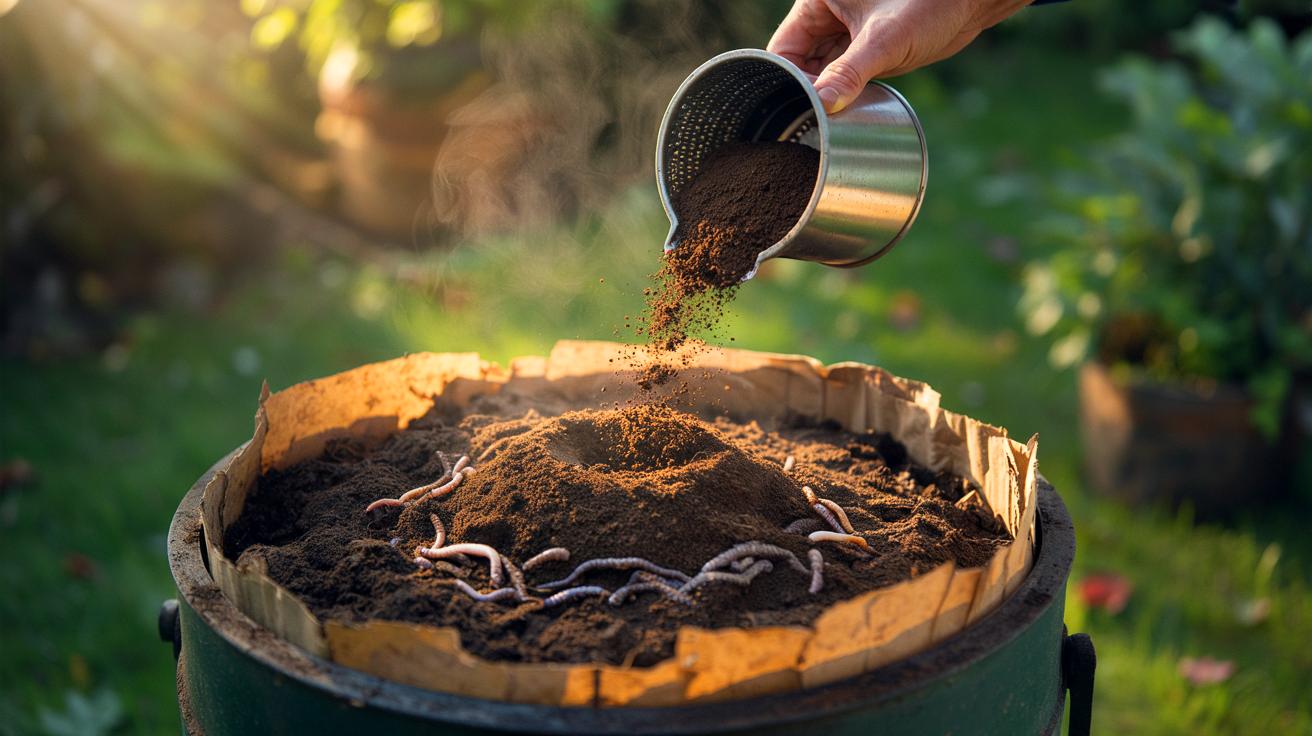
Worms also love coffee. Nightcrawlers flock to the grounds, aerating the pile as they tunnel and leaving behind castings that boost available nutrients. Despite the myth, brewed grounds are close to neutral pH, so they won’t acidify your compost. They improve texture too. Grounds interlock with shredded leaves and cardboard, preventing soggy clumps. Think of them as a gritty binder that helps air circulate. More oxygen, more heat, faster decay.
The payoff shows up in your soil: darker color, better structure, and a steady dose of slow-release nitrogen. Used wisely, coffee grounds turn a cold heap into a living furnace. That means quicker decomposition and a compost that smells like a forest floor, not a locker room.
How to Use Coffee Grounds the Right Way
Rule one: treat grounds as “greens,” not browns. Mix them with carbon-rich material—dry leaves, straw, shredded cardboard—to keep your carbon-to-nitrogen ratio roughly in balance. Aim for coffee grounds to be no more than 10–20% of your pile by volume. Sprinkle in thin layers and blend; never dump a dense bucket that mats and repels air. A pile that can’t breathe can’t heat. Keep moisture like a wrung-out sponge. If the mix smears and shines, add browns. If it crackles dry, add water or more grounds.
Paper filters can go straight in. Tear them to speed breakdown. If you brew at home, store grounds in a vented pail and use within a few days, or dry them on a tray to prevent mold. Turn the pile every 5–7 days during the active phase. You’re listening for a cue: warmth in the core and a chocolate-earth aroma. That means the coffee is doing its job.
| Practice | Guideline | Why It Matters |
|---|---|---|
| Grounds share | 10–20% of volume | Prevents compaction, balances N |
| Layering | Thin, well-mixed layers | Maintains airflow and even heat |
| Moisture | Like a wrung-out sponge | Microbes need water, not sludge |
| Turning | Every 5–7 days | Re-oxygenates, evens temperature |
| Filters | Tear and mix | Faster decomposition, more carbon |
Science, Myths, and Measurable Results
Coffee grounds clock in around a 20:1 C:N ratio, placing them squarely in the “greens” category. After brewing, they’re typically near-neutral pH, dispelling the common acidity myth. Studies and field tests show piles with coffee grounds often reach 130–150°F, sometimes within 48–72 hours, provided there’s enough carbon and oxygen. That heat isn’t just spectacle—it neutralizes weed seeds and many pathogens. Heat is the engine of clean, fast compost.
What about the caffeine? It’s present in small amounts and diminishes rapidly during composting. Most gardeners see no inhibition of plant growth once the compost has matured. Concerns about heavy metals are largely overblown for typical household quantities; grounds are comparable to other food wastes. The real risk is physical: mats that block air or soggy piles that stall. Fix it with shredded leaves, corrugated cardboard, or wood chips. Add structure, then turn. You’ll smell the shift from sour to earthy as microbes rebound.
Expect texture changes, too. Grounds help form stable aggregates that improve water infiltration and reduce crusting. That means seedlings emerge more evenly and irrigation stretches further. In a climate of drought and deluge, structure is resilience. A dollar’s worth of grounds delivers returns across the growing season.
Sourcing Coffee Grounds for a Buck (or Less)
You don’t have to drink more coffee to score grounds. Most cafés bag them for gardeners—often for free. Ask at closing time, when the filters stack up. Office kitchens are gold mines, too, if you provide a labeled bin and pick up regularly. Home brewers can save a week’s worth and freeze if pickup day is far off. The goal is steady supply, not a single soggy avalanche. Keep a stash of dry browns—shredded mail, fall leaves—so you can balance on the fly.
On a budget, one $1 store bag of pre-ground coffee can jump-start a cold pile after a long rain or a winter lull. But tap your community first. Baristas are usually happy to help, and you’ll divert pounds of waste from the landfill. Pair those grounds with cardboard and leaves, and you’ve built a low-cost, high-performance compost system powered by habit, not hardware.
In the end, the best compost hack is the one you can repeat, week after week, without fuss. Spent coffee grounds fit that bill—cheap, abundant, and microbially potent. They heat a pile, invite worms, and leave behind stable organic matter that gardens crave. Used in thin layers and balanced with browns, they turn a passive bin into an active engine. Your soil gets darker, your plants grow steadier, and your waste stream shrinks. What will you brew—and compost—this week to make your soil richer, faster, and more resilient?
Did you like it?4.5/5 (27)