In a nutshell
- 🌱 Use baker’s yeast (the $1 ingredient) to jump-start compost microbes, adding quick heat and activity without replacing the pile’s diverse biology.
- ⚡ Mix one 7 g sachet with lukewarm water and a bit of sugar/molasses, sprinkle over a turned pile, maintain moisture like a wrung-out sponge, and re-oxygenate—airflow is crucial.
- 🧪 Yeast fuels the mesophilic phase, secreting vitamins and metabolites that feed bacteria, which then drive thermophiles to 45–60°C; aeration keeps the heat steady and odors low.
- 🔧 Fix issues fast: add dry browns if it’s wet or smelly, mist if dry, cap fresh scraps, and avoid over-sugaring; alternatives include molasses, finished compost, or soil, with a balanced C:N ratio.
- 📈 Expect a temperature bump in 12–24 hours, a steeper rise as bacteria take over, and a cost-effective boost (~$1) verified by a compost thermometer—ideal for stalled or cold-weather piles.
Gardeners love shortcuts that actually work. When your compost bin stalls in the chilly shoulder seasons or after a wave of dry weather, there’s a simple, thrifty fix hiding in the baking aisle. For about $1, a small sachet of baker’s yeast can jolt sluggish compost microbes awake, adding warmth, activity, and momentum to a pile that’s lost its spark. It sounds almost too easy, yet the biology checks out. Yeast hustles fast, secretes growth-promoting compounds, and helps set the stage for the thermophilic surge that drives rapid breakdown. Used thoughtfully, this little packet transforms kitchen scraps and yard waste into a hotbed of microbial life in hours, not weeks.
What Is the $1 Microbial Kick-Starter?
The headline ingredient is active dry baker’s yeast—yes, the same Saccharomyces cerevisiae that lifts your bread. In compost, it doesn’t replace the diverse bacterial workforce; it primes it. Yeast feeds quickly on simple sugars, producing heat, carbon dioxide, and a suite of vitamins and metabolites that benefit neighboring microbes. Think of it as an energetic opening act, not the main band. The yeast’s superpower is speed, creating a short-lived pulse of activity that pushes the pile into the coveted hot zone where decomposition accelerates.
Cost matters, and yeast wins there, too. A 7 g sachet usually sells for around $1 and treats one standard backyard bin. There’s no special brand or garden-specific product required. Because yeast works best in a balanced mix, pair it with a healthy carbon-to-nitrogen ratio (roughly 25–30:1), adequate moisture, and ample air. Do that, and you’ll feel the temperature climb within a day, an early sign that bacteria like Bacillus and other thermophiles have taken the handoff and are surging.
How To Use Baker’s Yeast in Your Compost
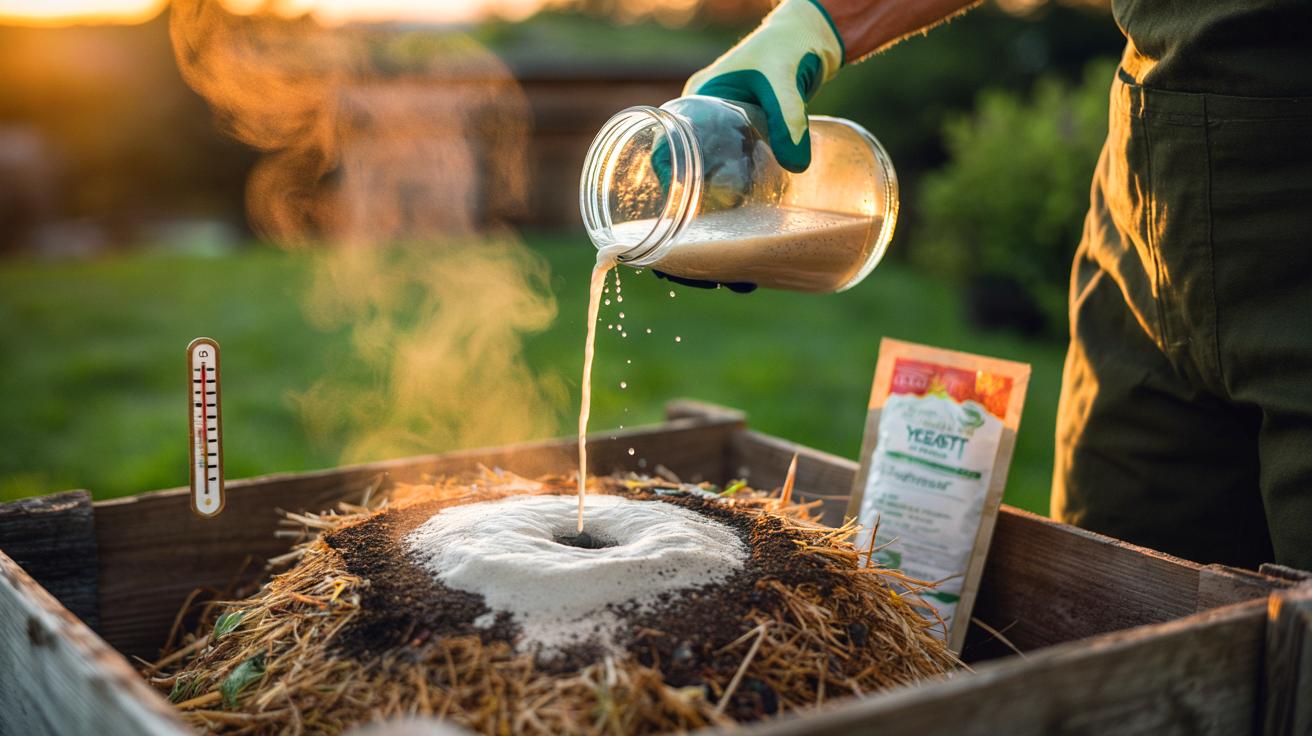
Activation is simple. Dissolve one 7 g sachet of active dry yeast in 1 liter of lukewarm water (not hot; aim for hand-warm). Stir in a tablespoon of table sugar or a drizzle of molasses to prime the yeast. Let it sit 10 minutes until frothy, then sprinkle the solution evenly over a freshly turned pile. Follow by adding a thin layer of shredded browns to absorb moisture and prevent odors. Turn again after 24–48 hours to re-oxygenate—oxygen is the throttle that keeps this microbial engine from stalling.
Keep the pile as damp as a wrung-out sponge. If you squeeze a handful and a few drops appear, you’re in the zone. Repeat the yeast treatment only if the pile cools prematurely and conditions remain right; typically, once per new layer is plenty. Avoid over-sugaring, which can trigger sour, anaerobic pockets. If your bin is tiny, halve the quantities.
| Item | Amount | Purpose | Typical Cost |
|---|---|---|---|
| Active dry yeast | 7 g sachet | Jump-start microbial activity | ~$1 |
| Sugar or molasses | 1 tbsp | Feed yeast initially | Pennies |
| Water (lukewarm) | 1 liter | Distribute inoculant evenly | Free |
| Shredded browns | Thin layer | Balance moisture and C:N | Free/low |
The Science: Why Yeast Sparks a Hot Pile
Compost thrives on succession. Early on, mesophilic microbes wake and multiply, releasing heat that invites a second wave—heat-loving thermophiles. Yeast speeds that first act. By metabolizing simple sugars into carbon dioxide and small amounts of ethanol, it releases heat and, crucially, excretes amino acids, B vitamins, and organic acids that feed bacteria. Those bacteria in turn oxidize ethanol and other intermediates, compounding the heat. It’s a relay race: yeast sprints, bacteria marathon.
As temperatures rise past 45–55°C, yeast recedes and thermophiles dominate, shredding cellulose and proteins at a clip. The pile’s aeration becomes pivotal, because oxygen regulates both speed and odor. Well-aerated yeast-primed piles see faster protein breakdown, less ammonia loss, and a steadier climb to the sanitizing range near 60°C. If you track the process with a compost thermometer, expect a gentle bump within 12–24 hours, then a steeper climb as bacteria take over—a satisfying signal that the biology is aligned and the structure is right.
Troubleshooting and Smart Alternatives
Too wet and the pile smells like vinegar or silage? You likely added excess sugar or lacked airflow. Fluff the heap, add dry browns (shredded cardboard, straw), and pause on liquids. Too dry and nothing happens; mist lightly and remix. If fruit flies appear, cap fresh layers with browns. When in doubt, prioritize structure and oxygen—those two factors make or break a yeast boost.
Don’t want to use sugar? A splash of unsulfured molasses or even finely ground oats works. Prefer not to buy yeast at all? Finished compost, worm castings, or a shovel of healthy garden soil inoculate naturally, though they’re slower and less dramatic. For high-nitrogen piles heavy on grass clippings, yeast helps moderate early ammonia whiffs by speeding the transition to a hotter, more balanced phase. For cold-weather bins, pre-warm with dark covers and windbreaks so the microbial kick has a fighting chance. And remember: the real accelerator is balance—proper C:N ratio, moisture, and air—yeast just helps pull the whole system into alignment.
At the end of the day, a $1 packet of baker’s yeast isn’t garden magic; it’s a nudge that lines up biology and physics in your favor. Used with care, it triggers rapid microbial succession, lifts temperatures, and saves weeks on the clock, especially when your pile has stalled. The best part is how quickly you can test, observe, and iterate—by tomorrow, your compost thermometer will tell the story. What would you try first: a yeast-powered hot start on a new pile, or a targeted reboot for that stubborn, slow bin lurking in the corner of your yard?
Did you like it?4.3/5 (22)