In a nutshell
- 🌶️ Built on capsaicin, chili spray acts as a behavioral deterrent—effective on aphids, mites, and whiteflies while remaining eco-friendly and kinder to beneficial insects.
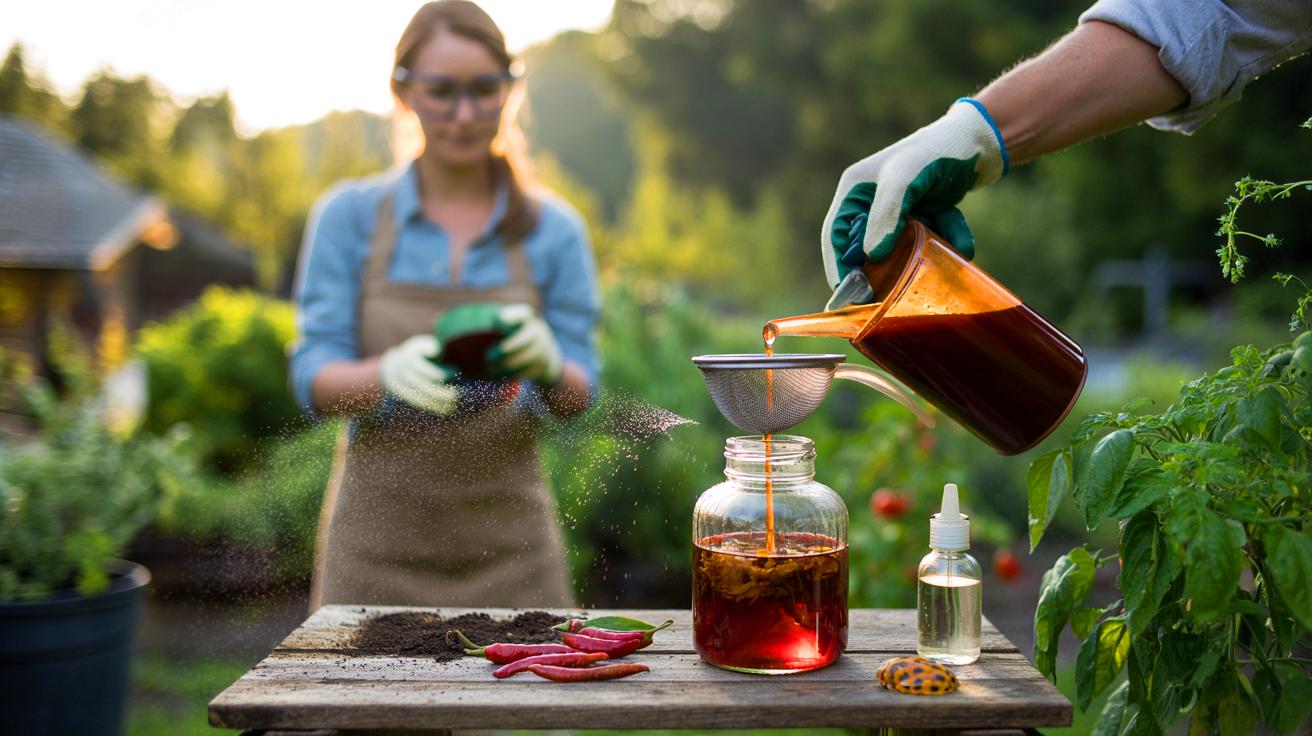
- ⚗️ Make a concentrate with 2 tbsp chili flakes + 2 cups hot water (steep 12–24 hrs, strain), then use a 1:10 dilution with water and a drop of surfactant; adjust to 1:15 if leaf burn, or 1:8 once for stubborn pests.
- 🕒 Apply on leaf undersides in morning or evening, reapplying every 5–7 days and after rain; consistency beats intensity for lasting control.
- 🛡️ Safety first: wear gloves and eye protection, avoid full sun and open blooms, store labeled concentrate away from kids and pets, and rinse edible harvests well.
- 🌱 Fold the spray into integrated pest management: test one leaf for 24 hours, protect pollinators by avoiding flowers, and pair with pruning, wash-downs, airflow, and healthy soil.
Garden pests don’t care about your principles, but they hate heat. That’s why a simple blend of chili and water can be a surprisingly potent, eco-friendly repellent that spares pollinators, reduces chemical runoff, and still protects tender leaves. The recipe is inexpensive, scalable, and built on the biologically active compound that gives peppers their kick: capsaicin. Mix it right and you’re armed with a resilient home remedy. Mix it wrong and you could scorch plants or irritate your skin. Below, you’ll find journalist-tested ratios, safe handling tips, and deployment tactics that actually work in real gardens, from balcony pots to backyard beds.
Why Chili Works as a Natural Repellent
The science is straightforward. Capsaicin binds to sensory receptors, creating a burning sensation that discourages feeding by soft-bodied pests like aphids, mites, and whiteflies. It doesn’t poison; it irritates. That makes it a low-risk alternative to broad-spectrum insecticides, which can hammer beneficial insects and contaminate soil. In ecological terms, chili spray is a behavioral deterrent, nudging pests to move on rather than wiping them out wholesale. Fewer casualties for lady beetles, lacewings, and parasitic wasps. Healthier plant communities. Less chemical dependency.
But efficacy depends on coverage, concentration, and timing. Fresh hot peppers deliver slightly more volatile compounds; dried flakes are consistent and cheap. Either source can produce a potent extract if you give it time to steep and properly strain it to avoid clogging sprayer nozzles. Always test on one leaf and wait 24 hours. Some ornamentals—especially those with delicate foliage—can react to even mild concentrations. Lastly, remember that chili spray is a deterrent, not a silver bullet. It shines as part of an integrated strategy: better airflow, clean pruning, healthy soil, and vigilant scouting.
Exact Ratios: Mixing Chili and Water That Works
You want two stages: a concentrated extract and a gentler spray dilution. Start with dried chili flakes or powder for consistency. For the concentrate, combine 2 tablespoons (about 12–14 g) of hot chili—cayenne or bird’s eye—with 2 cups (480 ml) of hot water. Steep 12–24 hours, then strain through a coffee filter or fine cloth. This yields a strong base that stores well for a week in the fridge. For the working spray, dilute 1 part concentrate with 10 parts water (1:10). Add a drop of mild, unscented surfactant (liquid soap) per cup to help the solution cling to leaves. Important: Wear gloves and eye protection.
| Component | Concentrate | Spray Dilution | Notes |
|---|---|---|---|
| Chili Source | 2 tbsp flakes per 2 cups water | 1:10 (concentrate:water) | Use hot water; steep 12–24 hrs |
| Surfactant | None | 1–2 drops per cup | Unscented soap; improves coverage |
| Shelf Life | Up to 7 days, refrigerated | Mix fresh weekly | Label and date |
| Target Pests | — | Aphids, mites, whiteflies | Deters light caterpillar nibbling |
Prefer fresh chilies? Blend 4–6 hot peppers with 2 cups water, simmer 10 minutes, cool, strain, then follow the same 1:10 dilution. If leaf edge burn appears, back off to 1:15. If pests persist after two rounds, step up to 1:8 for a single treatment, then return to maintenance strength. Do not spray in full sun or on open blooms.
Application, Safety, and Garden Timing
Spray until leaves glisten, targeting undersides where pests cluster. Short bursts. Even coverage. Mornings or early evenings are best when stomata are open and temperatures moderate. Reapply every 5–7 days during outbreaks and after heavy rain, because rinsing reduces the irritant effect. On edible crops, rinse harvests thoroughly; capsaicin is safe but spicy. For shrubs and ornamentals, spot-test first and wait a day. If no discoloration appears, proceed plant-wide. Consistency beats intensity. One careful session a week often outperforms erratic, stronger applications.
Protect yourself like a pro. Gloves, sleeves, and eye protection are non-negotiable. Keep pets and kids away while spraying, and never work upwind. Store the concentrate in a clearly labeled bottle, away from dairy or drinks—chili fumes can migrate. Avoid flowering periods to protect pollinators, and don’t blanket-spray beneficial hotspots. If predators are active, use targeted dabs with a small hand mister. Finally, pair chili spray with cultural fixes: prune infested tips, remove honeydew, wash leaves with water first, then apply the repellent so it sticks cleanly and works longer.
When mixed with care, chili and water form a nimble, low-impact shield against problem pests—strong enough to deter, gentle enough to fit a climate-conscious garden. The method scales beautifully, from a single basil pot to a row of tomatoes, and it costs pennies. It also invites observation: you’ll learn where pests land, when they cycle, and how resilient your plants really are. Ready to stir up a batch, label the bottle, and test it on a single leaf before rolling it out across the bed—what plant will you protect first, and how will you measure your success over the next two weeks?
Did you like it?4.6/5 (20)