In a nutshell
- 🌿 Garlic water functions as a plant-safe repellent, using volatile sulfur compounds like allicin to mask host cues and deter aphids, whiteflies, leafhoppers, and thrips—reducing feeding without kill-on-contact.
- 🧄 Simple, safe recipes: blend 2–3 bulbs with 1 L water (steep 12–24h) and dilute 1:10, or make a quick tea (6 crushed cloves, hot water, 1:5). Add mild soap as a surfactant, test-spray, and use weaker mixes on seedlings.
- ⏰ Smart timing: spray at dawn or dusk weekly; increase to every 5 days during outbreaks and after rain. Avoid blooms to protect pollinators; focus on leaf undersides where pests congregate.
- 🛡️ IPM synergy: works best within Integrated Pest Management (IPM) alongside reflective mulches, row covers, and pruning; safeguard beneficials like lady beetles and parasitic wasps; use mechanical/biological controls for heavy infestations.
- 📊 Field-backed results: studies show modest but meaningful repellency; gardeners report fewer colonies and honeydew within two weeks. Keep notes on dilution, weather, and pest pressure to refine a resilient routine.
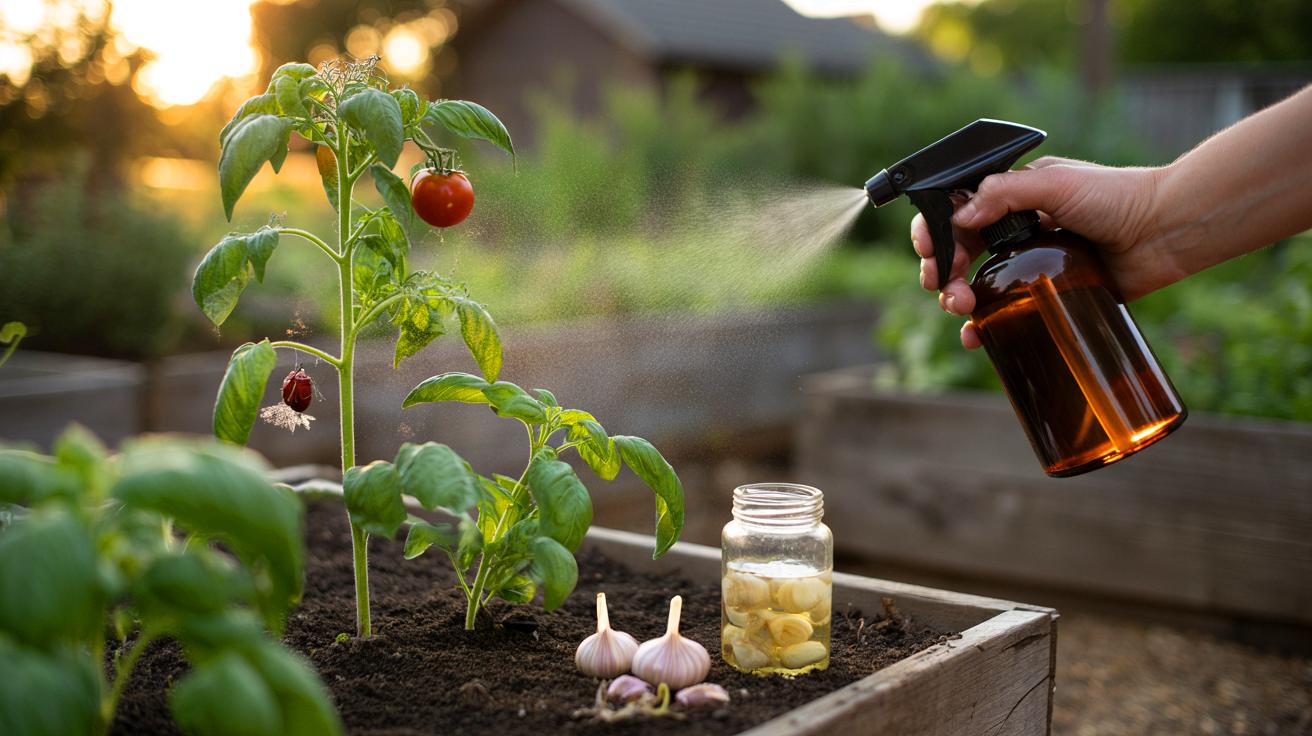
Across backyards and balcony pots, a quiet shift is underway: gardeners are swapping spray bottles of synthetics for jars of garlic water. The appeal is clear. It’s inexpensive, easy to make from pantry staples, and gentle on the soil web that keeps beds productive. Used correctly, garlic water turns scent into a shield, deterring hungry insects while keeping edible crops free from residues. From tomatoes under siege by aphids to roses tormented by thrips, growers report fewer chew marks and less sticky honeydew. It’s not magic. It’s chemistry meeting common sense, applied with a light touch and a weekly routine.
How Garlic Water Repels Garden Pests
Garlic carries a biochemical calling card. When cloves are crushed or blended, enzymes convert alliin to allicin and related sulfur compounds. These volatile molecules broadcast a pungent plume that confuses insects hunting by smell. Many soft-bodied pests—aphids, whiteflies, leafhoppers, and some thrips—avoid treated foliage because host cues are masked. The result isn’t a kill-on-contact event. Garlic water is a repellent, not a silver-bullet insecticide. It reduces feeding and egg laying long enough for plants to outgrow pressure and for natural enemies to catch up.
There’s also a physical element. A few drops of mild soap help the solution stick, turning leaves into a short-lived, uninviting surface. Sunlight and rain rapidly degrade the odor, which is both a limit and a feature. It means fewer lingering effects on the environment, but it also demands persistence from the gardener. Expect to reapply after storms or heavy dew. Take care with beneficials: avoid blasting lady beetles or lacewings directly. And remember the principle that guides successful users: small, consistent nudges beat harsh interventions that can shock a whole garden’s ecology.
Simple Recipes and Safe Dilutions
Think kitchen, not lab. A reliable concentrate starts with two to three whole bulbs of garlic (not just cloves), blended with a liter of water. Let the slurry steep for 12–24 hours, strain well, then dilute at roughly 1:10 with clean water. Add 4–6 drops of mild, unscented liquid soap per liter as a surfactant. For a quicker “tea,” crush six cloves, cover with hot—not boiling—water, steep until cool, and dilute 1:5. Always trial-spray a few leaves and wait 24 hours. If no leaf spotting appears, proceed. Tender seedlings prefer weaker solutions; mature brassicas tolerate stronger ones.
Enhancements are common. A pinch of chili powder or a sliced hot pepper boosts the sensory wall for chewing pests, while a teaspoon of mineral oil per liter improves cling in dry climates. Store concentrates sealed in the refrigerator for up to a week; the scent fades fast, which is normal. Avoid spraying during midday heat or on drought-stressed plants, when phytotoxicity risk rises. Early morning or evening is best. And never drench opening blooms. Pollinators should meet nectar, not a spicy cloud. Moderation, testing, and timing make this humble brew a trustworthy tool.
| Recipe | Concentrate Steps | Dilution | Primary Targets | Notes |
|---|---|---|---|---|
| Blender Method | 2–3 bulbs + 1 L water, blend, steep 12–24 h, strain | 1:10 (concentrate:water) | Aphids, whiteflies, leafhoppers | Add mild soap; refrigerate up to 7 days |
| Quick Tea | 6 crushed cloves, hot water, steep to cool, strain | 1:5 | Thrips, flea beetles (light pressure) | Lower potency; gentle on seedlings |
| Spicy Boost | Blender method + 1 hot pepper | 1:10–1:15 | Chewing pests | Test for leaf sensitivity |
Application Timing and Seasonal Strategy
Time the spray to when insects are active and plants are receptive. Dawn and dusk are ideal: cooler air, less UV, calmer winds. Start with weekly applications as soon as you notice scouting pests or fresh flushes of growth, stepping up to every five days during outbreaks. Consistency beats potency—light, regular coverage keeps the scent barrier intact. Reapply after rain, overhead irrigation, or heavy dew. Seedlings and shade-grown herbs benefit from weaker dilutions and shorter intervals. Sturdier crops can handle stronger mixes, especially thick leaves like kale.
Integrate garlic water into a broader, seasonal plan. Pair with reflective mulches to disorient whiteflies, row covers for young brassicas, and vigilant removal of heavily infested leaves. Keep blossoms free of spray, reserving nozzles for foliage and stems. That protects bees and allows parasitic wasps to find hosts. Rotate garlic treatments with plain water rinses or neem-free days to reduce plant stress. In warm, dry spells, focus on the undersides of leaves where pests congregate. As autumn arrives, switch to preventative passes around vulnerable beds before migrating aphids land. The rhythm matters as much as the recipe.
What Science and Experience Say
Peer-reviewed studies on Allium extracts point to modest but meaningful repellency on soft-bodied insects, with results varying by crop, climate, and application frequency. That’s a fancy way of saying field conditions rule. Gardeners’ logs often show fewer colonies and reduced honeydew within two weeks of starting a schedule. Where garlic water truly shines is as part of a layered defense, not as the lone tactic. Think habitat for predators, clean pruning, and healthy soil feeding, all supporting plant resilience. Add garlic water, and the pressure often drops below a threshold that would have demanded harsher measures.
There are limits. Heavy, established infestations may ignore scent barriers; mechanical removal or targeted biological controls may be necessary first. Some plants, especially tender ornamentals, can spot if mixtures are too strong or sun is intense. Direct overspray on beneficials can disrupt their work, a reminder to aim carefully. Still, the calculus is compelling: a low-cost, low-toxicity repellent that buys time for Integrated Pest Management (IPM) to work. Keep notes—what dilution, what weather, what pest pressure. Patterns emerge. Over a season, those notes turn into a personalized, data-backed routine.
In a world of quick fixes, garlic water succeeds by inviting gardeners back into a rhythm—observe, mix, mist, repeat. It respects beneficial insects while setting boundaries for pests. It nudges a garden toward balance rather than domination. That mindset change may be garlic water’s most powerful effect. The recipe is simple, the discipline is the craft, and the reward is produce that tastes like the place it was grown. What tweaks—dilutions, schedules, companion plantings—will you try this season to tune a garlic water program that fits your unique garden?
Did you like it?4.5/5 (24)