In a nutshell
- 🔥 Cast iron’s thermal mass sustains high heat for an aggressive Maillard reaction, building crust, fond, and deeper flavor in sears, roasts, and bakes.
- 🩸 It adds non-heme iron to food—driven by acidity, moisture, and time; tomato sauces can add ~1–3 mg/serving, chili 0.8–2 mg, cornbread 0.1–0.5 mg, eggs trace.
- 🥗 Boost absorption by pairing with vitamin C (citrus, peppers) and spacing out tea/coffee and heavy dairy; people with hemochromatosis should limit high-acid, long-simmered dishes.
- 🍳 For maximum flavor and safe iron uptake: preheat until water dances, use high-smoke-point fat, pat foods dry, don’t crowd, let crust form, and deglaze to turn fond into sauce.
- 🛠️ Maintain durable seasoning: clean warm with water/salt, dry over heat, wipe a thin oil film; re-season after rust or stickiness, avoid storing food in the pan, and expect performance to improve over time.
In home kitchens and professional restaurants alike, cast iron has staged a comeback not just as a nostalgic heirloom, but as a workhorse that elevates dinner. Its reputation is built on two intertwined promises: deeper, more complex flavor and a quiet boost to your daily iron intake. Heavy pans hold heat. That heat builds browning, which builds taste. At the same time, trace amounts of iron can migrate from the pan into your food, especially in certain recipes. That means your skillet can season your palate and your nutrition at once. The science is straightforward, the techniques are practical, and the results are delicious. Here’s how to make the most of it.
The Science of Heat, Browning, and Flavor
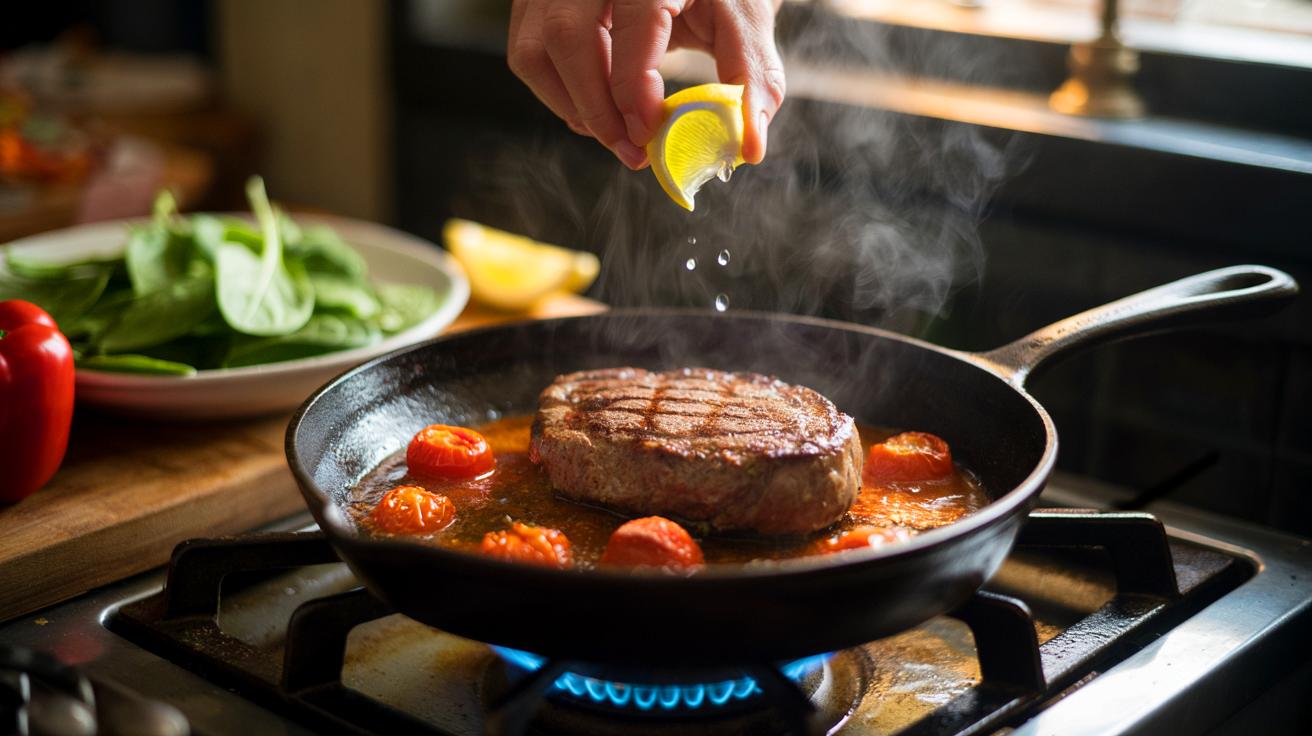
Cast iron’s signature asset is thermal mass. It absorbs and stores heat, then releases it steadily across the cooking surface. When a steak hits a preheated skillet, the temperature drop is smaller than in thinner pans, so the Maillard reaction proceeds aggressively. You get a crust that’s evenly bronzed, a bottom that isn’t steaming, and a fond—the caramelized bits—that tastes like condensed essence of dinner. Consistent high heat is the shortest path to big flavor.
Heat retention also matters for vegetables and bakes. Sear mushrooms until they squeak, roast carrots until their sugars concentrate, or slide a cornbread into the oven already hot to guarantee that dramatic rise. Cast iron’s slightly textured surface encourages micro-browning, and its dark color radiates heat efficiently. The pan transitions from stovetop to oven to table without complaint. Deglaze that fond with a splash of stock or wine and you’ve drafted instant sauce. Small moves, big dividends: pat ingredients dry, preheat until shimmering, don’t crowd, and let crusts form before flipping.
How Cast Iron Adds Dietary Iron
Iron leaches from the pan in tiny, beneficial amounts, and the transfer depends on three levers: acidity, moisture, and time. Tomato-based braises, apple-laced pork chops, or long-simmered beans tend to pull more iron than quick, dry sears. Newer or lightly seasoned skillets release more than well-seasoned veterans, and frequent stirring raises contact. The iron is non-heme iron, the plant-type form; pairing with vitamin C (think citrus, peppers) can improve absorption, while tea, coffee, and excess calcium can tamp it down. In the right recipe, your pan can add meaningful milligrams to the plate.
| Dish Example | Pan Condition | Cook Time | Estimated Iron Gain/Serving | Notes |
|---|---|---|---|---|
| Tomato sauce | New/lightly seasoned | 45–60 min simmer | 1–3 mg | Acidity + stirring boost transfer |
| Chili or beans | Moderately seasoned | 60–90 min | 0.8–2 mg | Moisture and salt aid leaching |
| Cornbread | Well seasoned | 20–25 min bake | 0.1–0.5 mg | Dry batter, brief contact |
| Fried egg | Well seasoned | 3–4 min | Trace | Minimal moisture and time |
Context matters. Many adults need 8 mg of iron daily; women 19–50 often need 18 mg. A single cast-iron meal won’t meet the day’s quota, but it helps—especially if your diet skews plant-forward. For those with hemochromatosis or iron overload, discuss cast iron use with a clinician. The rest of us can treat the skillet as a small, steady ally.
Practical Tips to Maximize Flavor and Safe Iron Uptake
Use the skillet’s strengths intentionally. For flavor, heat it until a drop of water dances, then add high-smoke-point fat and leave food undisturbed to build crust. For iron, choose recipes with moisture and gentle acidity: tomato-braised chickpeas, lemony lentils, or cider onions. Pairing cast iron cooking with vitamin C–rich sides is a simple absorption hack. Squeeze orange over spinach or toss roasted peppers into the pot. If you drink coffee or tea, wait an hour after the meal to avoid blunting absorption. Keep dairy accompaniments moderate when iron is the goal.
Safety is straightforward. Avoid prolonged storage of food in the pan—transfer leftovers to glass or stainless containers. If a dish tastes metallic, you likely used a very new pan with strong acidity; back off the simmer time or finish acidic elements at the end. People with known iron overload should limit high-acid, long-cooked cast-iron dishes. For everyone else, the numbers are small and beneficial, particularly for those at risk of deficiency, including many teens, endurance athletes, and women of childbearing age. Flavor fans and nutrition seekers can happily share the same skillet.
Care, Seasoning, and Longevity
Seasoning is the slippery, protective layer of polymerized oil that makes cast iron nearly nonstick and moderates iron transfer. Build it by heating a thin coat of neutral oil until it smokes, then letting it cool. Repeat. Each cycle cross-links oil into a tough film. A well-seasoned pan is resilient, forgiving, and ready for anything from pancakes to porterhouse. Day to day, clean while warm with hot water and a brush or coarse salt, dry thoroughly over low heat, then wipe with a whisper of oil. That’s it. Soap won’t destroy seasoning, but avoid soaking.
Rust? Scrub it off with steel wool, rinse, and re-season. Sticky patches? Bake the pan empty at 450°F for an hour to harden the film. To protect dessert flavors, consider a second skillet reserved for sweets. And remember: cast iron heats slowly but holds heat fiercely, so preheat gradually, especially on glass cooktops. Deglaze stuck bits with water, stock, or wine to save both your dinner and your patina. Over decades, the surface gets smoother, the seasoning more tenacious, and the cooking more consistent—an heirloom forged by use.
Cast iron rewards attention with results: richer crusts, deeper sauces, and a stealthy nudge toward meeting daily iron needs. It’s a rare tool that serves both taste buds and blood cells. Start with seared mushrooms, graduate to a tomato-braised chicken, and watch confidence—and flavor—soar. The skillet teaches patience, and patience tastes incredible. What will you cook first to explore both the savory power and nutritional promise of cast iron, and how will you tweak the variables—heat, acidity, time—to make the pan truly yours?
Did you like it?4.4/5 (22)