In a nutshell
- 🔥 The 5-minute sear-and-steam method delivers vegetables with perfect golden edges and tender centers by combining intense pan contact with a quick, controlled burst of steam.
- 🍳 For best browning, start with dry vegetables, use a single layer, and choose a high-smoke-point oil (refined avocado, peanut, grapeseed) to power the Maillard reaction.
- 🧰 Pick the right pan: cast iron for fierce searing, stainless steel when properly preheated, or nonstick for gentler heat; keep a tight-fitting lid and a measured splash of water ready.
- ⏱️ Follow the minute-by-minute guide: sear without stirring (90–120 seconds), add aromatics briefly, splash 1–2 tablespoons water to steam, uncover to re-crisp, then season at the end.
- 🧂 Smart tweaks: avoid early salt, consider a tiny pinch of baking soda for dense veg to boost browning, and finish with acid or butter in the last 30 seconds for gloss and balance.
You don’t need a restaurant salamander or a sheet pan army to give weeknight vegetables that photogenic bronze halo. There’s a simple, five-minute pan trick cooks swear by: a fast sear-and-steam that locks in color, crunch, and sweetness. It works on zucchini, broccoli, carrots, Brussels sprouts, even snap peas. The results are vivid and crisp at the edges, tender at the core. No breading. No heavy sauces. Just heat, time, and smart sequencing. The secret is contact, control, and restraint. Get the pan properly hot, keep moisture in check, then finish with a quick burst of steam. Dinner changes fast after that.
The Five-Minute Sear-and-Steam Trick, Explained
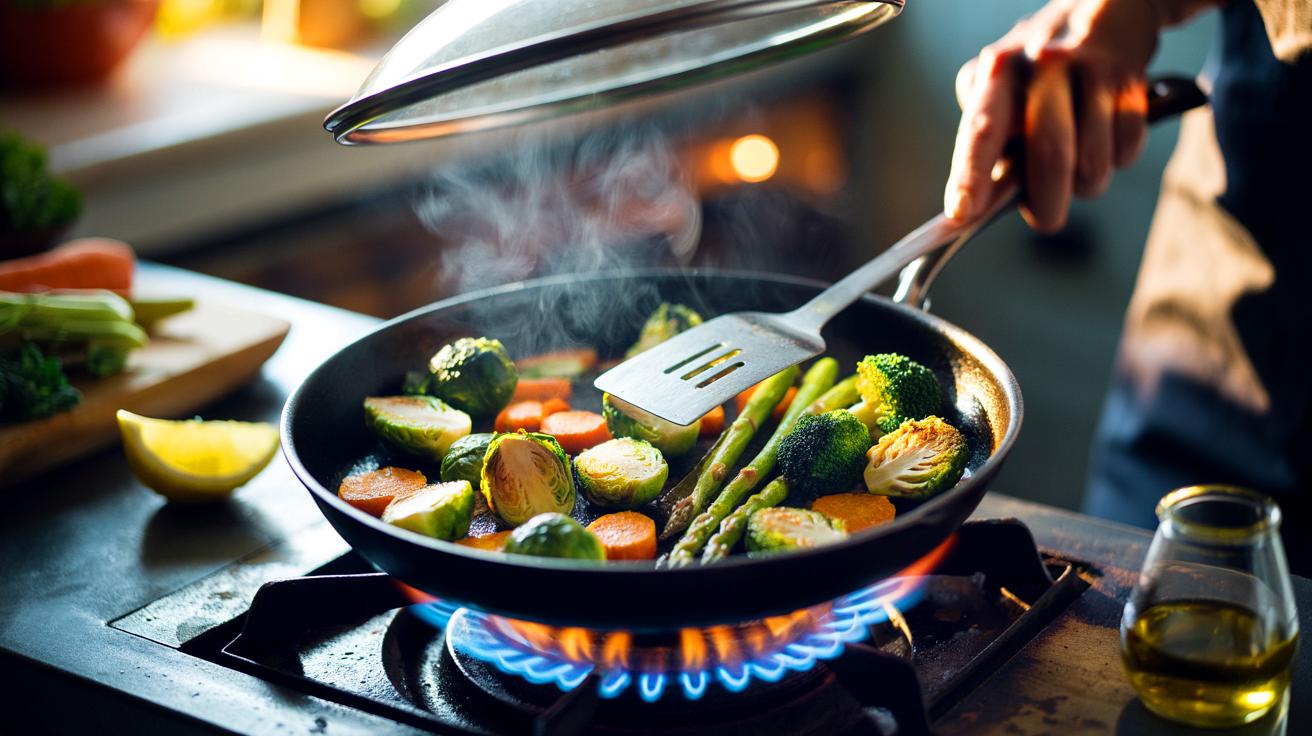
At its core, this method is about harnessing the Maillard reaction—those complex browning reactions that demand high heat and low surface moisture. You start with dry vegetables. Not damp, not beaded with rinse water. Pat them dry. Meanwhile, heat a skillet over medium-high with a thin film of high-smoke-point oil until it shimmers. Arrange vegetables in a single layer, ideally cut-side down for maximum pan contact. Press gently with a spatula. Do not stir. That stillness is what builds the crust you crave.
After 90 seconds to two minutes, edges go golden. You’ll see a cornstalk-yellow on asparagus tips, a chestnut glaze on halved Brussels sprouts, a copper edge on carrot coins. Now the second act: a quick, controlled steam. Add a tablespoon or two of water, cover, and let the trapped vapor tenderize just the interior. The pan should hiss, not sputter wildly. Right near the finish, uncover, toss, and let residual heat re-crisp the outsides. Season last; salt too early pulls moisture and slows browning.
That’s it. A two-part dance—dry, hot sear, then fast steam. The beauty is adaptability. Softer veg (zucchini, mushrooms) need less steam; dense veg (carrots, cauliflower) want a touch more. Aromatics slide in at the end, so they perfume the dish without scorching. The technique rewards attention, not constant motion. Less poking, more listening.
Tools, Oils, and Heat for Foolproof Browning
Choose a skillet that holds heat and won’t buckle under sudden temperature shifts. Cast iron delivers fierce, even searing and excels at the job; stainless steel is great when preheated properly; nonstick is gentle and convenient but less tolerant of very high heat. Preheat until the oil shimmers and a flick of water skitters instantly. If the oil smokes hard before the vegetables hit the pan, you’ve gone too far—dial it back. Keep vegetables in a single layer; crowding collapses temperature and steams prematurely.
| Oil | Smoke Point (°F) | Flavor | Best For |
|---|---|---|---|
| Refined Avocado | 520 | Neutral | High-heat searing |
| Peanut | 450 | Lightly nutty | Stir-fries, intense sizzle |
| Grapeseed | 420 | Clean | Everyday browning |
| Ghee | 485 | Buttery | Finish with richness |
| Extra-Virgin Olive Oil | 375 | Robust | Moderate heat, flavor |
Keep tools simple: a wide spatula for pressing, tongs for flipping, a lid that fits, and paper towels for drying. Have a splash of water ready for the steam phase—measured, not poured freehand. For stainless pans, preheat dry, then add oil; for cast iron, add oil early to protect the surface. Hot pan, dry veg, short contact—those are your nonnegotiables. Finishers like lemon, vinegar, or a dab of butter should wait for the last 30 seconds so they enhance, not inhibit, browning.
A Minute-by-Minute Guide to Perfect Golden Edges
0:00–1:00 Heat the skillet over medium-high. Add a thin oil film, just enough to glisten across the surface. While it warms, blot vegetables again. Even a teaspoon of extra surface water can sabotage browning. When the oil shimmers and flows like silk, you’re ready. If it’s not shimmering, it’s not time.
1:00–2:30 Place vegetables cut-side down in a single layer. Press lightly so they kiss the metal. Hear that lively, steady sizzle? That’s right. Don’t nudge them. This stillness forms the crust. Avoid salting now. After 90 seconds, peek at one piece. If the underside is golden, flip or toss once to expose a fresh surface; if pale, give it 20–30 seconds more. Consider a tiny pinch of baking soda (1/8 teaspoon per pound) for dense veg—it raises pH and boosts browning—but use sparingly to avoid off flavors.
2:30–4:30 Add aromatics (minced garlic, sliced scallion, crushed cumin) and a dab of butter or ghee if you like gloss. Toss for 20–30 seconds. Then add 1–2 tablespoons water and cover immediately. Steam 45–75 seconds, just until a knife slips in with slight resistance. Uncover. Let the steam escape and edges re-crisp for 20–30 seconds. 4:30–5:00 Season: salt, pepper, acid (lemon, sherry vinegar), herbs. Taste and adjust. If the pan dries and smells nutty, you’re perfect; if it smokes fiercely, lower heat and finish fast.
The payoffs are big: concentrated sweetness, crisp edges that stay crisp, and a vegetable side that actually steals the plate. This method scales to breakfast hash, lunch bowls, weeknight tacos. Switch the oil, swap the acid, change the spice, keep the rhythm. Five minutes, two moves, endless variations. Next time you reach for a sheet pan, try the skillet first and watch color happen on your stove. Which vegetable will you put to the test tonight, and what bold finish will you splash on in the final 30 seconds?
Did you like it?4.4/5 (21)