In a nutshell
- 🍝 Salt before pasta so noodles absorb seasoning from the start; ions strengthen the surface gel, improving texture and flavor from the inside out.
- 🔬 The boiling point rise is negligible; the real effect is ionic interactions with starch and protein that deliver a cleaner bite and less gumming at the surface.
- ⏱️ Add salt at a lively boil, stir, then add pasta—front-load seasoning to capture the prime absorption window and ensure even results.
- ⚖️ Aim for 1.0–1.5% (10–15 g/L), up to 2.0% for robust sauces; prefer kosher salt and measure by weight for consistency.
- 🥫 Salted water reduces stickiness and boosts sauce cling; finishing with reserved starchy, salty water creates a stable emulsion for glossy, balanced pasta.
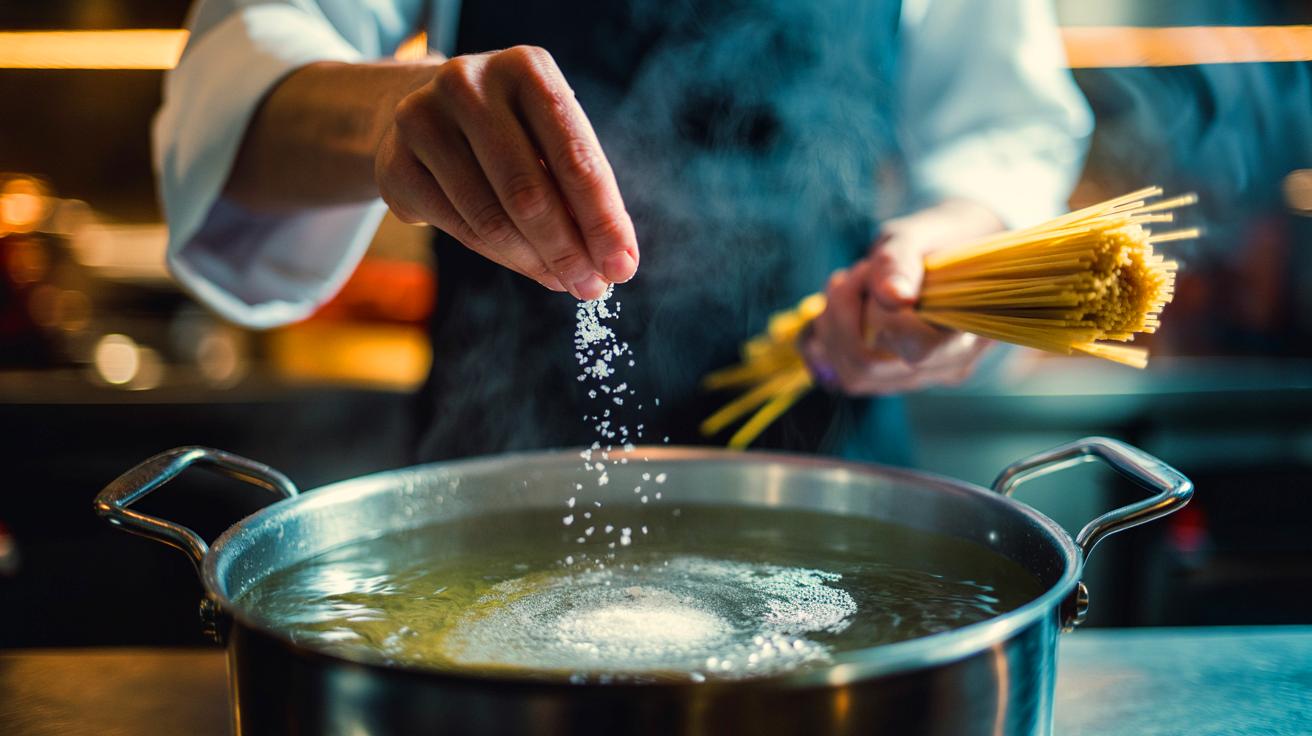
Chefs talk about salt the way musicians talk about rhythm: it sets everything else in motion. When you’re boiling pasta, adding salt before the noodles hit the water is not a garnish—it’s the baseline. The practice defines flavor from the inside out, influences texture where it matters most, and lifts the final sauce like a chorus. Home cooks often hear myths about timing and boiling points. The science is clearer, and the kitchen wisdom even clearer: start right, finish better. Salted water changes the cooking environment, not just the taste. And when you control that environment from the start, you control the dish.
The Chemistry Behind Salting Pasta Water
Let’s debunk the most stubborn myth first. Yes, salt technically raises water’s boiling point. But at the levels cooks use—say, a 1–2% solution—the increase is microscopic. A typical 1% solution raises the boil by roughly 0.2–0.3°C. In other words, negligible. The difference you notice isn’t hotter water; it’s smarter water. Salt changes the liquid’s ionic strength, which affects how pasta’s surface starches hydrate and how proteins in the dough set. That chemistry matters when strands or tubes meet roiling bubbles and friction.
As dried pasta cooks, its outer layer absorbs water first, swells, and releases starch. In salted water, sodium and chloride ions interact with that layer, helping the surface form a slightly firmer gel and reducing sticky sloughing. The result is a cleaner, more defined bite. Meanwhile, the dissolved salt carries flavor into the noodle while the matrix is still porous and hot. Salted water seasons the noodle, not just the sauce. That inner seasoning becomes the foundation of balance later, when you emulsify sauce with starchy water and need the pasta itself to contribute real flavor—not bland bulk.
Timing Matters: Before the Boil vs After
The timing is not a trivial detail. Many chefs salt as the water approaches a simmer or at the first rolling boil, then wait a moment for full dissolution. This ensures an even brine throughout the pot, avoiding “freshwater pockets” that can lead to uneven seasoning and texture. If you cook in stainless steel, sprinkle the salt when the water is moving and stir; that helps prevent crystal clusters from resting on the bottom, which can contribute to pitting over time. Add salt once you see lively bubbles, stir, then add pasta. You create a consistent cooking medium from the first second the noodles enter.
Salting after the pasta is already in the pot? It works, but it’s a compromise. Pasta absorbs the most seasoning early, during the first few minutes as its structure relaxes and water rushes in. Delay the salt and you’ll miss that prime window, forcing you to rely on a saltier sauce later—which can dull nuance and encourage over-reduction. Chefs want to season in layers: water, pasta, then sauce. Front-loading the salt gives you control, not correction. It’s a small choice with outsized consequences for flavor distribution and consistency from batch to batch.
How Much Salt, and Which Kind
Start with a clear target: most pros aim for 1.0–1.5% salt by weight in the water—roughly 10–15 grams per liter. Restaurants cooking robust sauces sometimes go to 2.0% (20 g/L), especially when pasta will be finished in a large volume of sauce and diluted by added pasta water. Taste matters too, of course. But volume measures can mislead because different salts pack differently. The fix is simple: think in grams whenever possible, or calibrate your brand of salt once and stick with it. Consistency is the hallmark of professional seasoning.
| Target Salinity | Grams per Liter | Diamond Crystal tsp/L | Morton Kosher tsp/L | Table Salt tsp/L |
|---|---|---|---|---|
| 1.0% | 10 g | ≈ 3.5 tsp | ≈ 2 tsp | ≈ 1.75 tsp |
| 1.5% | 15 g | ≈ 5.5 tsp | ≈ 3 tsp | ≈ 2.5 tsp |
| 2.0% | 20 g | ≈ 7 tsp | ≈ 4 tsp | ≈ 3.25 tsp |
These measures are approximate; brands vary, and humidity changes density. Prefer kosher salt for its clean taste and easy pinchability. Sea salt can add minerality, but keep an eye on price and consistency. Table salt is fine in a pinch—just measure carefully. Whatever you choose, keep your ratio steady, then adjust your sauce, not your pot.
Texture, Stickiness, and Sauce Cling
Great pasta isn’t just tender; it’s structured. Salted water helps the noodle’s exterior set into a tighter, more resilient surface, which reduces the gummy “exudate” that clouds water and makes strands tacky. That means fewer clumps, cleaner flavor, and a springier chew. You’ll also notice less wild foaming at furious boils, because better-managed starch release keeps the pot calmer. Salt, in effect, organizes the chaos. For shapes with ridges or high surface area—orecchiette, radiatori, shells—the benefits are especially obvious, because there’s more real estate for salt-conditioned starch to set properly.
Then comes the sauce. When you finish pasta in a pan with sauce and add a ladle of starchy, salty water, you create an emulsion that clings. The ions in that water help proteins (think Pecorino in cacio e pepe) disperse and stabilize, while the controlled starch thickens without pastiness. Because the pasta itself is already seasoned, you can keep sauces brighter and lighter, rather than cooking them down to chase flavor. Salt early, finish gently, and let the emulsion do the heavy lifting. The payoff is shine, glide, and a balanced, present flavor in every bite.
Seasoning pasta water before the noodles go in isn’t a chef’s superstition; it’s a strategy grounded in chemistry and craft. You build flavor from the core, set texture at the surface, and prepare the sauce for a clean, glossy emulsion. None of that requires extra steps—just a moment of attention at the right time. Salt first, cook with intention, finish with restraint. That’s the method. What’s your own go-to ratio, and how has changing when you salt the water altered the way your pasta tastes and feels on the fork?
Did you like it?4.6/5 (23)