In a nutshell
- 🍳 The cold-pan rule: start eggs in a cool, buttered nonstick or seasoned carbon-steel pan, then apply low heat for tender, fluffy omelets with minimal browning.
- 🔬 Science: slow coagulation forms looser protein networks and better steam management, creating custardy interiors and delicate curds.
- 🛠️ Method & tools: 8–10 inch pan, 2–3 eggs, 1–2 tsp butter, low/medium-low heat; stir, sweep, tilt; finish off-heat with carryover cooking.
- ⏱️ Timing & ratios: 2–4 minutes total; rest 30–45 seconds; add 1–2 tsp water or cream to boost lift and silkiness.
- ⚠️ Troubleshooting & flavor: fix wet or tough textures by lowering heat and adjusting fat; pre-cook watery fillings; use fresh herbs, goat cheese, crème fraîche for bright, soft richness.
Every diner counter has its secret, but few tricks inspire as much devotion among breakfast pros as the cold-pan rule. The idea sounds backward: skip the sizzle, start with a room-temperature skillet, and only then add heat. Yet chefs say this quiet beginning unlocks omelets that are loftier, silkier, and far more forgiving. It reduces browning, builds delicate curds, and leaves room for surprise—like a last-minute fold that traps steam. Start cold, finish warm, and let the egg do the rising. That’s the mantra. Here’s how the method works, why it succeeds, and the precise moves that turn three eggs into an effortlessly fluffed-up breakfast.
What the Cold-Pan Rule Really Means
The cold-pan rule is deceptively simple: crack, season, and whisk your eggs; pour them into a cool, lightly buttered nonstick or well-seasoned carbon-steel pan; then turn the burner to low or medium-low. No preheating. No aggressive sizzle. The eggs warm as the pan warms, so the proteins set at a measured pace. Gentle heat equals gentle coagulation—which equals a tender, fluffy omelet. Compare that with the classic hot-pan approach: fast curds, quick browning, and a narrower window between creamy and overcooked.
Chefs swear by this rule because it buys time. Time to swirl. Time to nudge the edges. Time to control water release so it steams the interior rather than weeps onto the plate. As the pan climbs in temperature, butter melts and spreads, coating the surface evenly. The eggs cling lightly, then release. You can tilt and draw the mixture toward the center, setting layers in wavelike passes. Minimal browning keeps flavors sweet and clean, ideal when fillings—herbs, soft cheese, sautéed mushrooms—are nuanced and fresh. It’s precision without stress.
The Science of Slow Coagulation
Egg whites are mostly water and albumen proteins; yolks bring fats, emulsifiers, and flavor. When heat rises slowly, proteins unwind and link up in a looser net, trapping moisture and tiny air pockets. That’s the secret texture: tender curds that spring back. A hot pan, by contrast, shocks proteins into a tighter network, squeezing out liquid and turning the omelet stiff. Slow heat builds structure without squeezing the soul out of the eggs.
There’s another advantage: steam management. As moisture meets the warming surface, it turns to steam that inflates micro-layers, fluffing the omelet from within. Because the pan isn’t scorching, the exterior doesn’t seal too early, so steam has room to lift rather than escape. Butter helps in two ways—its milk solids brown at higher temps (which you avoid here), and its water content supplies a gentle burst of vapor. Add a teaspoon of water or cream to the eggs and you boost steam even more. The result? Custardy, cloudlike interiors with a satin sheen and barely any browning on the outside.
Step-By-Step Method, Tools, and Timing
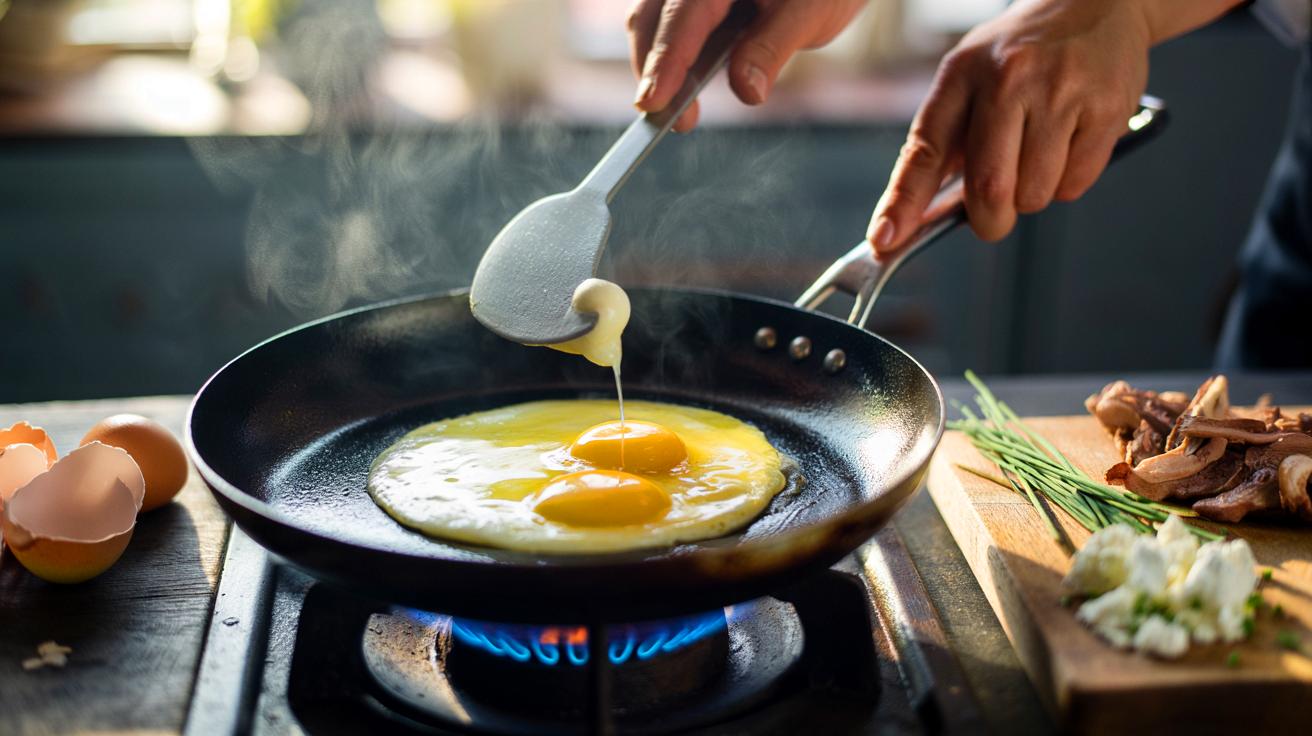
Use a 8–10 inch nonstick or seasoned carbon-steel pan for 2–3 eggs. Whisk vigorously with a pinch of salt, a small splash of water or cream, and optional herbs. Add a teaspoon of butter to a cool pan, pour in eggs, then turn the heat to low/medium-low. As butter melts, gently stir and sweep with a silicone spatula, tilting the pan so unset egg flows to hot spots. When curds are mostly set and the surface looks glossy but soft, spread the mixture evenly, add fillings, and fold. Kill the heat. Let carryover warmth finish the center in 30–45 seconds. No browning needed, only quiet puff.
| Element | Why It Matters | Typical Range/Note |
|---|---|---|
| Pan Material | Nonstick or seasoned surface prevents tearing | 8–10 in; sloped sides help folding |
| Heat Level | Controls protein set and steam inflation | Low to medium-low throughout |
| Fat | Lubricates, adds flavor, moderates heat | 1–2 tsp butter or neutral oil |
| Timing | Prevents overcooking; uses carryover | 2–4 min total; 30–45 sec rest |
| Liquid Add-In | Creates steam; tenderizes curds | 1–2 tsp water or cream |
Stop while the surface is still moist. The omelet should look barely set, then finish off-heat for that elusive, soufflé-like interior.
Troubleshooting and Flavor Upgrades
Too wet? You likely under-stirred early or added heavy fillings too soon. Give the pan a gentle stir in the first minute and let thin egg reach the heat. Gritty or tough? Heat was too high, or you cooked past the glossy stage. Lower the flame and lean on carryover cooking. Sticking at the fold? You may be short on fat or using an unseasoned pan—add 1 more teaspoon of butter up front and choose a high-quality nonstick or well-seasoned steel. Gentle heat plus patience fixes most flaws.
For flavor, think light and fresh. A teaspoon of crème fraîche enriches without heaviness. Goat cheese or ricotta folds beautifully because they melt soft, not stringy. Herbs like chives, tarragon, or dill keep things bright. Want more lift? Whisk in a teaspoon of water; for silkiness, use cream. Pre-cook watery vegetables (mushrooms, spinach) to keep the center from leaking. Season eggs early for deeper seasoning, and finish with a whisper of butter on the fold. Minimal browning, maximal perfume. Serve immediately on a warm plate to preserve that delicate fluff.
Start cold. Cook calm. Let the omelet show you when it’s done rather than forcing the finish. The cold-pan rule isn’t a gimmick; it’s a pacing strategy that turns breakfast into something serene and special. Once you nail it, the method adapts to French folds, diner-style tri-folds, even Japanese-inspired, softly layered rolls. The payoff is consistent tenderness and reliable lift. What fillings or flavors would you try first to showcase that gentle, custardy texture—herbs and chèvre, sautéed mushrooms, or something entirely your own?
Did you like it?4.5/5 (20)