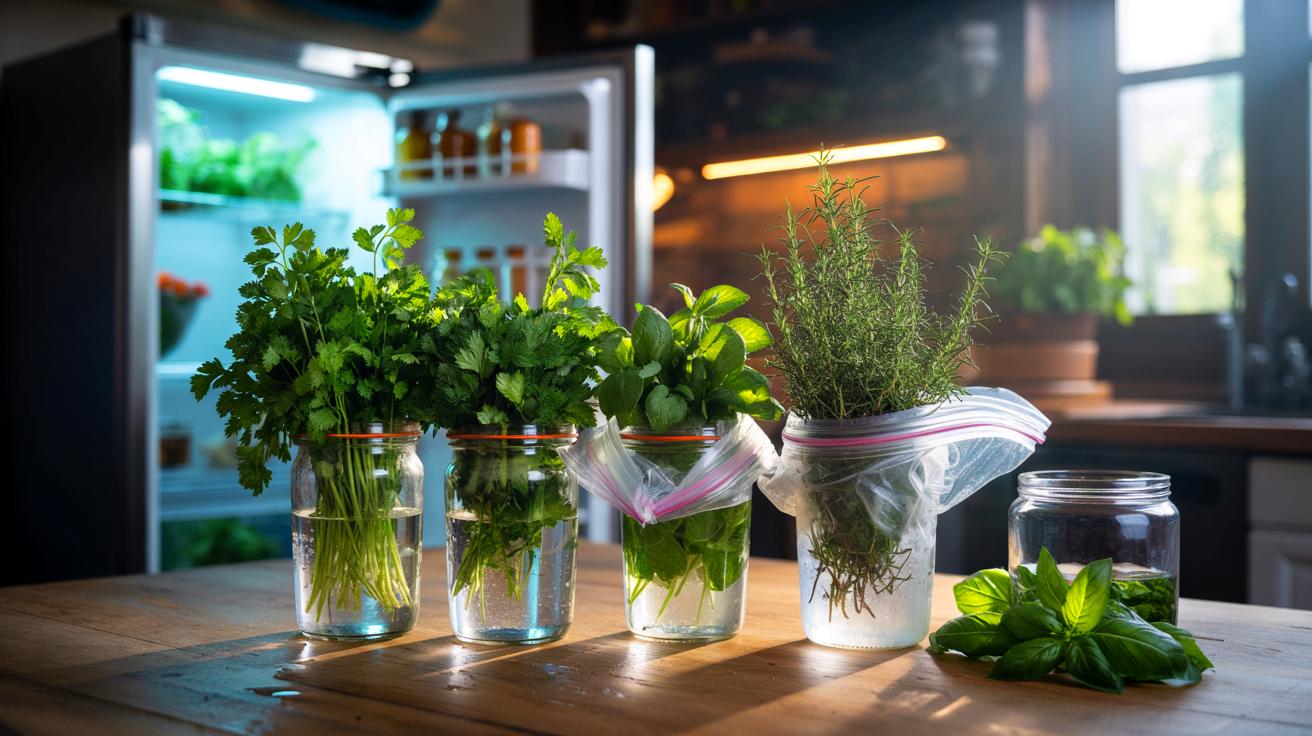
In a nutshell
- 🌿 Sort herbs by type: tender vs. hardy; treat chives as tender, and keep basil at room temperature to prevent blackening.
- 🫙 Use the jar method for tender herbs: trim stems, add 1 inch of water, and tent loosely for moisture control and airflow; change water every 2–3 days.
- 🧻 Store hardy sprigs in a paper towel pouch: roll in a barely damp towel, place in a vented bag, and maintain dry leaves, gentle humidity to avoid condensation.
- 🔁 Practice smart upkeep: wash only when needed, dry thoroughly, keep away from ethylene producers, and do a 48-hour check to remove decay and refresh water or towels.
- 🧊 For longer storage, freeze herbs in oil/water cubes or strip and freeze hardy leaves; dehydrate rosemary and thyme to extend shelf life and reduce waste.
Fresh herbs are fragile, flavorful, and fickle. Treat them right and they stay lush for weeks; handle them wrong and they collapse in days. The secret isn’t a single hack but a set of simple habits that manage moisture, airflow, and temperature. Think bouquet for soft stems, breathable pouches for woodier sprigs, and a watchful eye on condensation. Moisture is both the enemy and the ally—too little and leaves crisp, too much and they slime. With a few low-cost tools—jars, paper towels, and zip bags—you can preserve garden brightness and grocery-store value, meal after meal, through the week and beyond.
Know Your Herbs: Tender vs. Hardy
Start by sorting your bunches into two camps. Tender herbs—like parsley, cilantro, dill, mint, and tarragon—have soft stems and delicate leaves that thrive when treated like cut flowers. Hardy herbs—rosemary, thyme, sage, and oregano—are woody, resinous, and store best dry and cool. Chives and basil are the outliers; chives behave tender, while basil needs special handling. Match the storage method to the plant’s anatomy. You’ll immediately extend shelf life and preserve aroma. This isn’t culinary trivia; it’s practical triage that determines whether your salmon gets a bright herbal finish or a limp afterthought.
| Herb Type | Examples | Best Method | Fridge Lifespan |
|---|---|---|---|
| Tender | Parsley, Cilantro, Dill, Mint | Jar with water + bag tent | 7–14 days |
| Hardy | Rosemary, Thyme, Sage, Oregano | Damp paper towel + bag | 10–21 days |
| Special Case | Basil | Jar at room temp, no fridge | 5–7 days |
| Tender | Chives | Damp towel + container | 7–10 days |
Remember the core principles: moisture control prevents wilting and slime; airflow stops condensation; cool, stable temperature slows respiration. Don’t cram herbs into sealed, airless bags. They’ll sweat and spoil. Give them a breathable microclimate and they’ll repay you with snap, scent, and color long past their checkout date.
Bouquet-in-the-Fridge: Jar Method for Tender Herbs
For soft-stemmed herbs—parsley, cilantro, dill, and mint—treat the bunch like flowers. Trim stem ends by 1/4 inch. Stand the bunch in a clean jar with an inch of cold water, stems submerged, leaves above the rim. Loosely tent with a reusable bag or produce bag to guard humidity while allowing some air exchange. Park it in the fridge door or a stable shelf. Change the water every two to three days, wiping the jar to nix slime-forming bacteria.
Basil demands a twist: keep the jar on the counter, out of direct sun, uncovered or loosely covered, because cold blackens its leaves. If leaves look sandy, rinse gently, spin or pat completely dry, then jar. Pluck yellowing sprigs at first sight. Overcrowding suffocates; split one dense bunch into two jars. Label and date. This method keeps tender herbs crisp and vibrant, preserving volatile oils that deliver that burst of green you want in chimichurri, tzatziki, and minty salads. The payoff is visible: upright stems, turgid leaves, cleaner flavors.
Paper Towel Pouch: Dry Wrap for Hardy Sprigs
Woody herbs prefer a cool, dry hug—not a bath. Lay rosemary, thyme, sage, or oregano on a barely damp paper towel (think: foggy, not wet). Roll them gently—no tight cigars—and slip the bundle into a partially closed zip bag or lidded container with a small vent. Refrigerate in the crisper drawer. The towel buffers humidity while the vent prevents condensation. If the towel feels wet, swap it; if it’s crispy-dry, re-mist. Either extreme shortens life.
Strip away any bruised leaves before wrapping. Don’t pre-chop; cut cells oxidize fast and aromas fade. For chives, treat them like tender herbs but skip the water—wrap in a lightly damp towel and containerize. Check bundles twice a week. Refresh the towel. Rotate the pile to release trapped moisture. Label with purchase dates so you use older sprigs first. With this method, hardy herbs often outlast your meal plan, staying perfumed and pliable for two to three weeks, ready for roasts, pan sauces, and infused oils. Key words to live by: dry leaves, gentle humidity, room to breathe.
Smart Storage Habits: Washing, Airflow, and Timing
Wash only when necessary. Dirt demands rinsing; if so, dry thoroughly with a salad spinner and towels before storage. Water left on leaves becomes a microbial playground. Dry leaves, slightly hydrated stems—that’s the sweet spot. Avoid trapping herbs near ethylene producers like apples, avocados, and tomatoes; ethylene accelerates aging. In overstuffed fridges, herbs suffocate, so clear space. A perforated produce bin or a loosely closed container is your friend.
Adopt a maintenance routine: quick visual check every 48 hours, remove decaying bits, refresh water or towels, and re-tent bags. For long-term use, freeze what you won’t finish. Chop and pack herbs into ice trays with a splash of olive oil or water; pop cubes into sautés or stews. Tender leaves like dill and parsley freeze well this way. For hardy herbs, strip leaves and freeze on a sheet, then bag. Dehydrating is an option for rosemary and thyme if you’ll use them in rubs. The throughline is simple yet powerful: consistent microclimate, minimal stress, timely triage.
Handled with care, a $2 bunch becomes a weekslong flavor investment, not compost. Choose the right method, monitor moisture, protect airflow, and you’ll keep colors vivid and aromas potent. The routines take minutes. The results last dinner after dinner. As seasons shift and markets change, which herb will you try to extend first—and what small tweak to your routine could make it last even longer?
Did you like it?4.6/5 (30)