In a nutshell
- 🧴 Housekeepers use a whisper‑thin film of non‑gel shaving cream, buffed to invisibility, to keep bathroom mirrors fog‑free for days.
- 🧼 Pro method: clean thoroughly, apply a pea‑sized amount per square foot with a microfiber cloth, spread in overlapping passes, then buff until it squeaks; avoid dyed gels and keep product off wood/stone.
- 🔬 Science: shaving cream’s surfactants reduce surface tension so moisture sheets instead of forming light‑scattering droplets, preserving mirror clarity.
- ⏳ Longevity: typically 2–4 days in hotels; factors include shower frequency, ventilation, touch, and hard water; a quick re‑buff or re‑coat restores performance.
- 🧪 Alternatives: diluted dish soap (shorter‑term), glycerin mixes (longer but tacky if heavy), and anti‑fog sprays (strong, pricier); always clean first, coat thin, buff dry, and avoid ammonia right after application.
Hotel bathrooms seem to break the laws of physics. You finish a scorching shower and the mirror still looks showroom clear. That isn’t luck. It’s a quiet craft practiced by housekeepers who need rooms to look flawless, fast. The surprising tool? Not a pricey industrial chemical. It’s everyday shaving cream. A whisper-thin film, buffed to invisibility, keeps water vapor from clinging to glass, and the effect can last several days in a busy suite. A tiny application, done right, transforms a fog magnet into a fog fighter. Here’s how pros do it, why it works, and what you can try—safely—at home.
Inside the Housekeeping Playbook
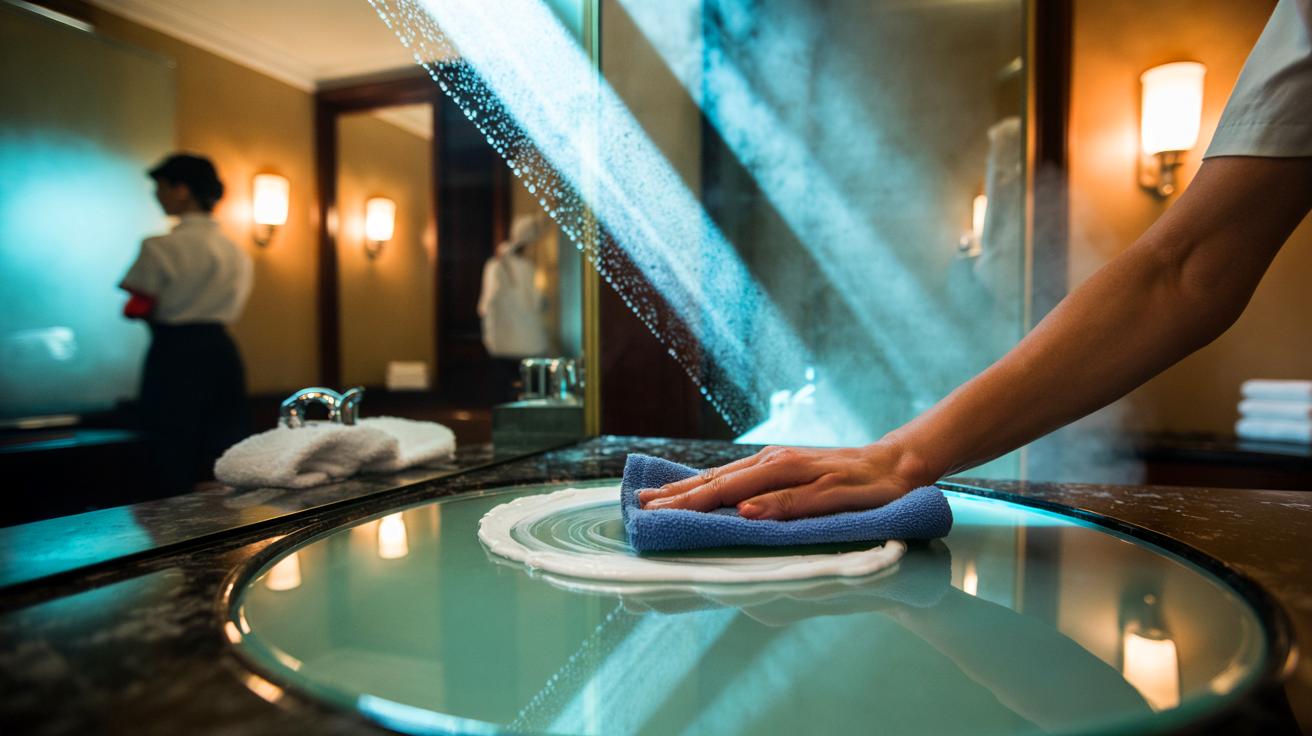
First comes a meticulous clean. Staff wipe the mirror with a standard glass cleaner or a 1:1 mix of water and isopropyl alcohol to remove soap haze, toothpaste, and oils. Then the trick: a dab of non‑gel shaving cream—unscented if possible—goes on a folded microfiber cloth. They don’t paint the mirror white. They aim for a thin film, almost invisible, spread in overlapping passes like waxing a car. A pea‑sized amount per square foot is enough. Excess equals streaks, not performance.
After a minute, the glass is buffed until it squeaks. That sound matters; it signals the film is uniform and dry. Pros work edge to center to avoid gathering residue in the frame corners, where grime loves to hide. The result doesn’t look coated. It just looks clean—then stays clear when steam rolls in.
Two caveats guide the pros. They avoid gel, dye‑heavy, or silicone‑packed creams that can smear, and they keep product off wood or stone trim. Buff until the glass squeaks—then stop. Overworking reintroduces streaks and can reduce the anti‑fog window from days to hours.
The Science Behind a Fog-Free Mirror
Steam fogs mirrors when warm, moist air condenses into thousands of tiny droplets. Each droplet scatters light. That’s the haze you see. Shaving cream contains surfactants—surface‑active molecules that change how water behaves on glass. Instead of forming discrete beads with sharp edges, moisture spreads into a thin, more uniform layer that reflects light evenly. The mirror still gets wet, but it doesn’t look white or cloudy. Clarity is preserved because droplet formation is disrupted.
Think of the cream’s residue as a micro‑thin anti‑fog barrier. It reduces surface tension, smooths microscopic imperfections, and blocks the nucleation points where droplets start. Done correctly, that barrier remains even after visible cream is gone. The film is incredibly thin, so it doesn’t attract dust or yellow the glass. It also wipes away later with mild cleaner when it’s time to refresh.
Longevity depends on variables: shower frequency, ventilation, how often guests touch the glass, and how aggressively the mirror is cleaned between stays. In many hotels, the film holds 2–4 days; in homes with daily scrubbing, expect 1–3. Hard water can shorten the window by depositing minerals. A quick re‑buff restores performance in seconds.
Alternatives, Longevity, and What Works Best
Shaving cream wins on cost, speed, and availability. But pros keep backups. A tiny swipe of dish soap diluted in water mimics the effect for shorter spans. Glycerin solutions last longer but can feel tacky if overapplied. Dedicated anti‑fog sprays work well, yet they’re pricier and sometimes leave a detectable scent—fine for ski goggles, less charming in a spa‑style bath. Here’s a quick comparison you can reference before experimenting at home:
| Method | Typical Longevity | Pros | Cautions |
|---|---|---|---|
| Shaving cream (non‑gel) | 2–4 days | Cheap, fast, low odor | Use very thin film; avoid colored gels |
| Dish soap (diluted) | 1–2 days | Already in most homes | Overuse streaks; rinse lightly if sticky |
| Glycerin mix (few drops in water) | 3–5 days | Longer‑lasting film | Can feel tacky; buff thoroughly |
| Anti‑fog spray | 4–7 days | Purpose‑built; strong performance | Cost, scent, read ventilation guidance |
| Vinegar solution | Hours–1 day | Cuts mineral film | Short‑term clarity; odor |
Whichever route you try, start with a spotless mirror and a microfiber cloth. Clean first, coat thin, buff dry. Avoid ammonia or heavy degreasers immediately after application; they strip the film you just created. If residue appears, a single pass with glass cleaner resets the surface for a fresh coat.
The secret is simple. The results feel like magic. By turning a humble grooming staple into a fog‑control tool, hotel housekeepers save minutes per room and deliver that crisp, just‑cleaned look guests expect. You can do it, too, in under five minutes, with products already in your cabinet. Practice the thin‑film, squeak‑buff method once and you’ll never reach for a towel mid‑shower again. What’s your plan: stick with shaving cream for its reliability, or test an alternative to see which anti‑fog finish wins in your bathroom?
Did you like it?4.4/5 (24)
Brilliant breakdown—thank you! I’m trying this tonight with my old microfiber rag. For a framed mirror, do you wipe edge-to-center to keep cream off the wood, or tape the trim first to avoid smears?
So the hotel sorcery is just barbershop science—love it. “Pea-sized per square foot” is going to live rent-free in my head while I buff like I’m waxing a tiny Ferrari windshield. Goodbye post-shower finger doodles!
Question for hard‑water folks: if mineral build‑up shortens the anti‑fog window, would a quick vinegar wipe, rinse, then alcohol clean before the cream extend life? I’m on well water and mirrors cloud fast—trying to set a sane refresh routine.
I’ve been using dish soap on my miror for months and it helps, but only for a day. Swapping to unscented non‑gel shaving cream sounds smarter. Any favorite brands that buff clean without leaving that weird filmy resisidue?
This hack just saved me like 3 minutes every morning. No more fog hearts on the glass, just clarity. The “buff until it squeaks” cue is gold—I didn’t know my mirror could talk back.
How long should I wait after applying before I can use an ammonia glass cleaner again—24 hours, 48? Also, any ventilation gotchas with the pricier anti‑fog sprays in a smol bathroom with no window, just a cranky fan?
Tried the glycerin trick: two drops in water on a microfibre cloth, then bufff until squeeky. Lasted four days for me, but gets tacky if you’re heavy‑handed. Thin layer + patient buffing seems to be the real secret sauce.
Former housekeeper here—this matches our playbook. Edge to center, tiny dab per square foot, and stop when it squeaks. Biggest time saver was not re‑wiping after showers; we’d just do a quick re‑buff between turns. Works fast.
The moment the mirror squeaks, my heart squeaks too—oddly satisfying 🙂 Going to treat it like waxing a car: thin on, overlapping passes, then stop before I over‑work it and make streaks. Bathroom science for the win.
Thanks for the step‑by‑step. Any tips for those big back‑lit mirrors? I worry the heat strip might mess with the coating or leave halos. Also, anti‑fog spray scents linger forever in tiny flats—brand recs with minimal odor?
My kid now thinks the mirror is on a shaving‑cream diet 😀 We tried a pea‑sized swipe per square and it definitly kept bath‑time fog away. Bonus: fewer doodles to clean off afterward.
Curious about older, lightly tinted mirrors with foxing spots—does the thin‑film method risk pushing moisture under the edges or lifting fragile backing? I’d love to test it, but I only want sparkle, not accidental patina upgrades.