In a nutshell
- ☕ Nitrogen-rich coffee grounds rebalance the compost C:N ratio (~25–30:1), igniting thermophilic microbes and accelerating decomposition.
- 🔥 Fine particle size boosts surface area and microbial contact, raising core temps to 131–160°F for faster, cleaner breakdown.
- 💧 Grounds add moisture (50–60%) but can mat; pair with coarse browns for aeration to prevent anaerobic, smelly pockets.
- 🧪 Bioactive compounds are neutralized in hot compost, while fungi and actinomycetes expand the microbial cast to digest tougher fibers.
- 🛠️ Practical use: keep grounds at 10–20% by volume, turn near 150°F, adjust with browns/water as needed, and finish in 4–8 weeks.
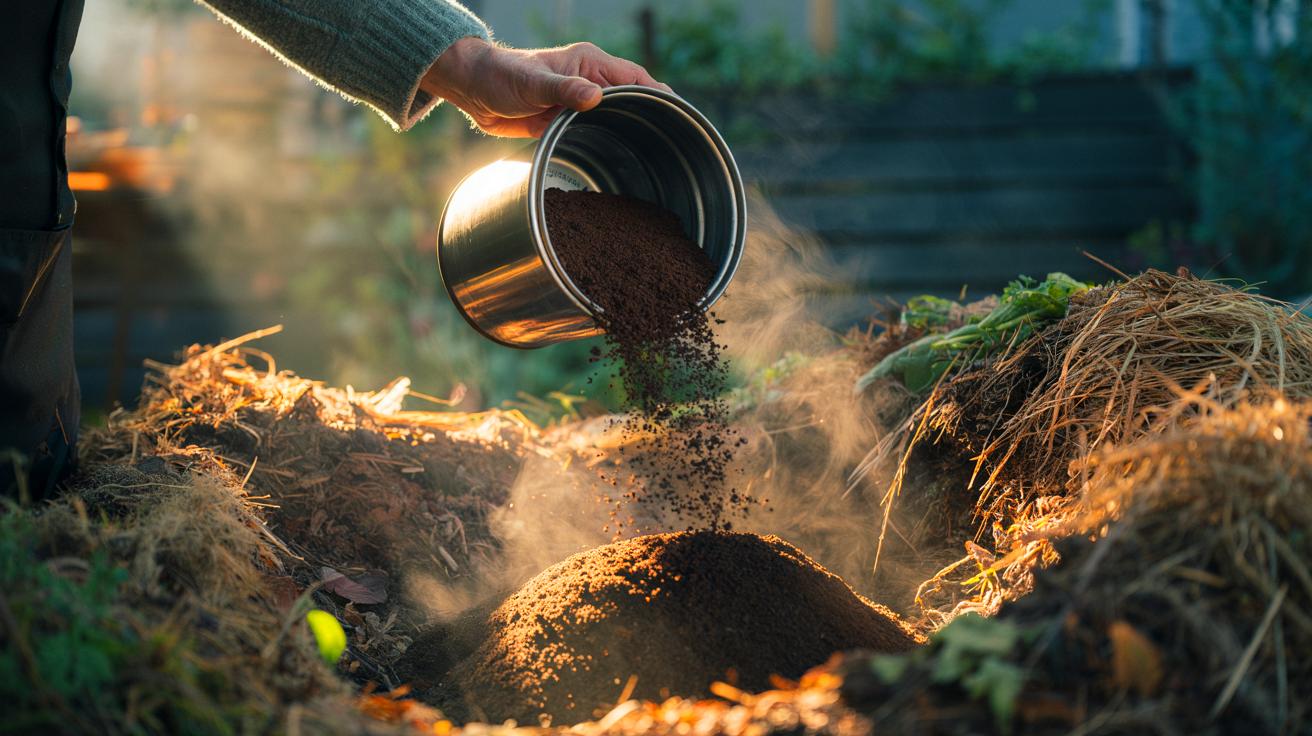
Gardeners call it black gold for a reason. Add a bucket of spent coffee grounds to a sluggish compost heap and the mass often surges from lukewarm to steamy in a day. What looks like magic is chemistry and biology working in sync. Nitrogen-rich grounds feed microbes. Fine particles speed contact. Moisture rides along with every scoop. When bacteria feast faster, they breathe faster, and the pile heats like a small furnace. That heat, in turn, unlocks tougher materials—stems, leaves, shredded cardboard—pushing the entire system toward quicker, cleaner decomposition that can look and feel “twice as fast.”
The Nitrogen-Rich Boost That Fuels Thermophiles
Compost speed hinges on the carbon-to-nitrogen ratio (C:N). Most backyard heaps start heavy on “browns”—dry leaves, straw, paper—tilting the ratio too high and slowing microbial growth. Spent coffee grounds land around a C:N of roughly 20:1 to 24:1, a potent shot of available nitrogen that pulls the overall mix toward the hot “sweet spot” near 25–30:1. Hit that balance and thermophilic bacteria ignite. They multiply rapidly, oxidizing carbon, releasing heat as a natural byproduct. A nitrogen kick is the on-switch.
Unlike woody materials that lock up nitrogen inside lignin, coffee grounds present proteins and simple compounds microbes can digest immediately. Picture a crowded cafeteria opening its doors—suddenly there’s fuel everywhere. As respiration spikes, temperatures in a well-sized pile can climb past 131°F, cruising into the thermophilic range where pathogens die and cellulose unravels. Heat is not the goal; it’s the signal that decomposition is running at full stride.
There’s more: coffee grounds contain about 2% nitrogen by weight, providing sustained energy rather than a brief flash. This steady supply helps keep the pile hot across days instead of hours. That continuity means browns decompose thoroughly, minimizing sour odors, shrinking volume efficiently, and producing a darker, finer, stable compost sooner.
Particle Size, Moisture, and Aeration: Small Things, Big Heat
Speedy compost loves surface area. Coffee grounds arrive as millions of tiny particles. Microbes cling to those surfaces like climbers on a boulder field, vastly increasing contact compared with curled leaves or straw. More contact equals more digestion, which equals more heat. Grounds also carry moisture—often 50–60%—delivering water exactly where microbes need it. This is a big deal because many heaps stall from dryness, not lack of carbon. The catch? Fine particles can mat, starving the pile of oxygen. That’s where structure matters.
Blend grounds with coarse browns—shredded stems, straw, wood chips—to create micro-chimneys that keep air moving. Turn the pile as temperatures crest to prevent anaerobic pockets. If you smell ammonia, you’ve overdone nitrogen; fold in more browns. If the pile feels dusty or crumbly, add moisture with a watering can or another round of damp grounds. The art is porosity plus fuel, not fuel alone. Use the quick guide below to hit the hot zone without tipping into sludge or dust.
| Parameter | Target | Role of Coffee Grounds |
|---|---|---|
| Mix ratio | About 1 part greens to 2–3 parts browns | Grounds = greens; keep to 10–20% by volume |
| Moisture | 50–60% (wrung-sponge feel) | Grounds add water; monitor to avoid soggy mats |
| Temperature | 131–160°F (55–71°C) | Fine particles and nitrogen push rapid heat rise |
| Aeration | Fluffy, with visible texture | Layer with coarse browns to prevent compaction |
Bioactive Compounds and Microbial Cast: From Caffeine to Fungi
Spent grounds are more than nitrogen. They carry caffeine, polyphenols, and organic acids in diminished, but not trivial, amounts. In isolation these can inhibit some organisms. In a living compost matrix, they become food or break down quickly under heat. That’s good news: thermophilic composting neutralizes most bioactives fast, while favoring microbes that thrive on complex carbon. You’ll often see white threads in a hot pile rich in grounds—those are fungi and actinomycetes, expert decomposers of tough plant polymers.
The result is a broader, more resilient microbial community. Bacteria sprint early, throwing off heat. Fungi follow, extending decomposition deeper into lignin-rich materials, which makes the end product crumbly and aromatic rather than chunky. These communities also degrade caffeine, chlorogenic acids, and residual sugars, converting them into stable humic substances. The pile smells like soil again. Not coffee.
Worried about acidity? Spent grounds hover near neutral, typically pH 6.5–6.8. They will not acidify a pile significantly. If you’re composting acidic feedstocks—pine needles, citrus rinds—adding crushed eggshells or a pinch of agricultural lime can buffer the mix. The key is diversity: varied inputs make stronger compost. Earthworms, once temperatures fall, flock to grounds as they cool, fragmenting residues and accelerating the final cure.
How to Use Coffee Grounds for Faster, Hotter Compost
Start with volume. Keep grounds at roughly 10–20% of the pile by volume. Mix one 5-gallon bucket of grounds with two to three buckets of shredded browns. Layer like lasagna: browns at the bottom for airflow, then grounds, then a mixed layer of kitchen scraps and more browns. Always cap food layers with browns to deter pests and lock in nitrogen. Aim for a minimum pile size of 3×3×3 feet to conserve heat. Smaller piles lose energy too quickly and may never reach the thermophilic zone.
Time your turns to the thermometer. When the core passes 150°F, fork and fluff; fresh oxygen prevents overheating and keeps microbes in their prime. If the pile stalls below 110°F after a turn, add a thin sprinkle of grounds—no more than a half-inch—followed by a thicker mat of browns. Moisten if the mix feels dry; squeeze a handful and look for just one or two drops of water. No drops means add water. A gush means add browns and turn.
Watch for signals. Ammonia odor? You’re rich in nitrogen—fold in shredded cardboard or wood chips. Sour, swampy smell? The pile is air-starved—break clumps, rebuild with coarse structure, add fewer grounds for a week. Seeing steam on cool mornings is a good sign. Consistent heat, not the highest peak, is what halves the timeline. With balanced inputs and regular turning, a coffee-boosted heap can finish in 4–8 weeks, compared with the sluggish, months-long march many gardeners accept as inevitable.
Across backyards and community gardens, coffee grounds act like a throttle for the compost engine—feeding microbes, holding moisture, expanding surface area, and summoning fungi that unlock stubborn fibers. The payoff is speed and sanitation: hotter piles, fewer pests, and a finer, richer compost that gardens devour. Used wisely—never as the only “green”—grounds transform a sleepy heap into a lively laboratory. Ready to turn yesterday’s brew into tomorrow’s soil, and if so, how will you fine-tune your next pile to ride the heat without losing the air?
Did you like it?4.6/5 (28)