In a nutshell
- 🌿 Tomatoes attract aphids; crushed garlic releases sulfur compounds like allicin that act as a strong, plant-safe repellent rather than a poison.
- 🧄 Make a DIY garlic spray: steep 5–7 smashed cloves in hot water 12–24 hours, strain, add 1 tsp mild soap, and use within 48 hours; dilute more for tender leaves or heat.
- 🕒 Application matters: spray early morning or evening, target leaf undersides, reapply every 3–5 days during flare-ups then weekly; avoid full sun, blooms, and always spot-test.
- 🛡️ Pair with integrated pest management (IPM): hose off colonies, encourage predators (lady beetles, lacewings), use reflective mulches and trap crops, and avoid broad-spectrum insecticides.
- 🔄 Expect controlled pressure, not perfection—garlic reduces landings and aids predators; track weather, dilution, and timing to fine-tune results in your microclimate.
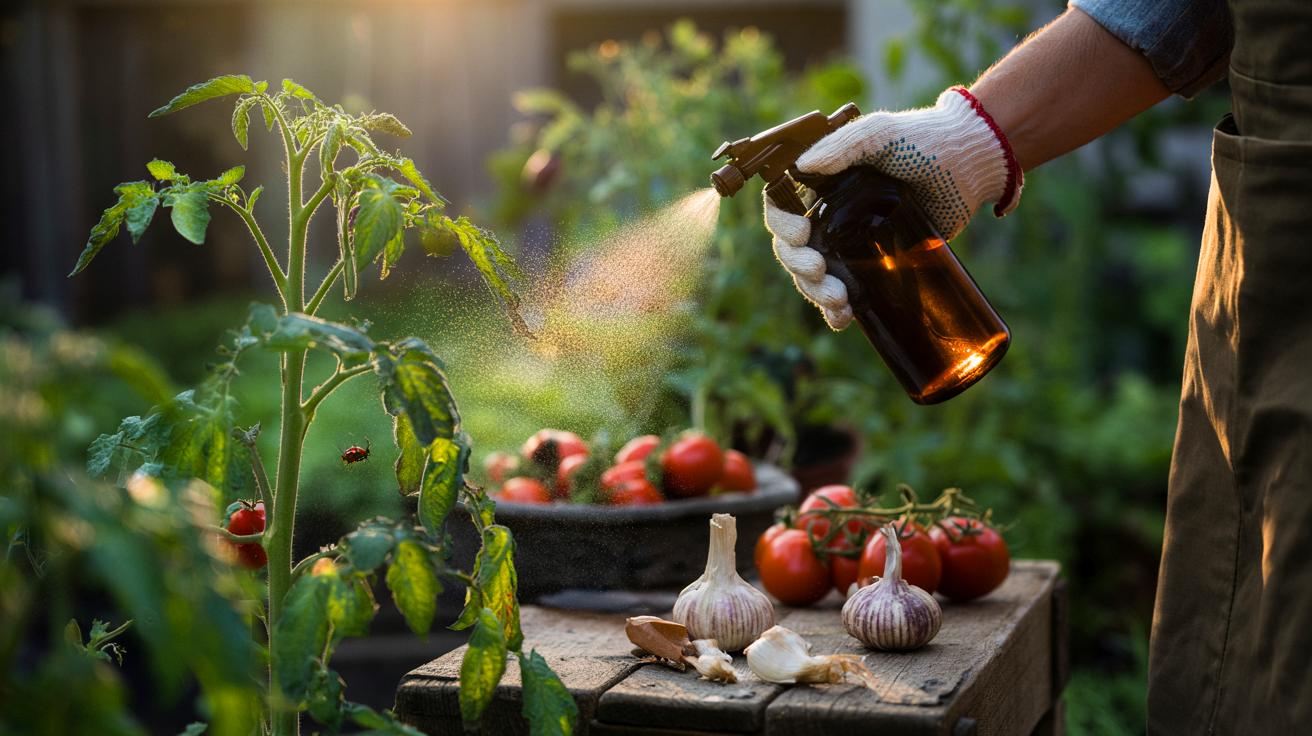
Tomato growers have a remarkably simple ally against sap-sucking invaders: garlic. Not a gimmick, not an old wives’ tale resurrected on social media, but a time-tested, kitchen-sourced tactic many home gardeners swear by. The idea is elegant. Turn pungent bulbs into a plant-safe mist that repels aphids before they colonize tender growth. The fragrance that makes dinner zing becomes a botanical “no trespassing” sign. It’s cheap. It’s quick. It slots neatly into integrated pest management strategies that prize prevention over panic. When used correctly, garlic spray can push back aphids without harming your tomato crop or neighborhood pollinators. Here’s how and why the trick works—and the small tweaks that make it reliable.
Why Aphids Target Tomatoes and How Garlic Helps
Tomatoes wear a neon sign to aphids. Lush tips, nitrogen-rich saps, and the irresistible bouquet of stressed plant volatiles guide winged scouts in. Once settled, they multiply fast, bending new stems, curling leaves, and excreting sticky honeydew that invites sooty mold. Damage spirals. In heavy outbreaks, aphids can also vector viruses, turning a promising bed into a cautionary tale. Garlic enters as a sensory disruptor. When cloves are crushed, they release allicin and other sulfur compounds that are intensely aromatic to insects. Those volatiles don’t poison; they confuse and deter. The result is a practical, low-toxicity repellent that nudges aphids to feed elsewhere.
There’s another edge. Garlic’s sulfurous notes can mask the plant cues aphids use to select hosts, reducing new landings during peak migration. On already infested plants, the spray helps knock back populations as you mechanically remove colonies—thumb and hose—so predators catch up. Think of garlic as cover scent for your garden, buying time for lady beetles and lacewings. It’s not a silver bullet. It is a steady, kitchen-grade tool that, used early and repeated, keeps pressure low and tomatoes vigorous.
How to Make a Potent Garlic Aphid Spray
Start with fresh, firm cloves. Peel 5–7 of them (about one small head), smash thoroughly, and steep in 2 cups (480 ml) of hot—not boiling—water for 12 to 24 hours. Strain through fine mesh or coffee filter. Stir in 1 teaspoon of mild liquid soap to help the spray spread and stick. For tender foliage or heat waves, dilute the concentrate 1:1 with cool water; for tougher leaves and heavier pressure, use full strength or a 1:1.5 dilution. Always mix small batches and use within 48 hours; the active aroma fades fast. If you’re adventurous, a pinch of red pepper flakes can add bite, but test first.
| Component | Ratio/Amount | Purpose | Notes |
|---|---|---|---|
| Garlic cloves | 5–7 per 2 cups water | Repellent volatiles | Crush to release allicin |
| Water | Hot, not boiling | Extraction medium | Steep 12–24 hours |
| Liquid soap | 1 tsp per batch | Surfactant/spreader | Use mild, fragrance-free |
| Dilution | 1:0–1:1.5 (concentrate:water) | Phytotoxicity control | Weaker for heat or young leaves |
Strain meticulously to avoid clogging sprayer nozzles. Label your bottle, shake before each use, and keep it out of direct sun. The scent should be sharp. If it’s faint, it’s time to brew a fresh batch.
Applying the Spray: Timing, Coverage, and Safety
Timing is everything. Early morning or late evening spray sessions reduce leaf burn and protect pollinators when they’re less active. Do not spray in full sun or during heat spikes; garlic plus midday rays can singe tender growth. Focus on the undersides of leaves, the aphids’ favorite hideouts. Wet them thoroughly. Use a gentle fan setting to avoid knocking off blossoms. If populations are building, combine the spray with a strong water blast the day before to dislodge colonies and eggs, then follow up with garlic to discourage reinfestation.
Frequency matters. In spring migrations, treat every 3–5 days for two weeks, then weekly as needed. After rain, reapply. Always spot-test a leaf cluster 24 hours in advance, especially on young transplants or heirloom varieties with thin cuticles. If you see leaf spotting or bleaching, dilute further and widen the interval. Keep sprays off open blooms whenever possible to avoid deterring beneficials. Target stems and leaf axils where aphid clusters form.
Safety is straightforward. Gloves help with the lingering smell, but the mix is kitchen-grade. Store away from kids and pets. Rinse your sprayer thoroughly between batches to prevent residue buildup. Combine with clean cultural habits—balanced feeding, no heavy nitrogen surges—to keep plants resilient and less attractive to pests.
Beyond Garlic: Pairing With Smart Garden Tactics
Garlic shines brightest in a toolbox. Pair it with low-splash irrigation, regular pruning of suckers that shelter pests, and reflective mulches that confuse aphids in flight. Encourage natural enemies. Lady beetles, hoverfly larvae, and lacewings devour soft-bodied pests; let their work compound your efforts by avoiding broad-spectrum insecticides. A hard hose blast every few days on infested zones can knock back numbers dramatically. Think layers: repel, dislodge, and recruit predators—then keep conditions unfavorable. Consider companion plants like nasturtiums as sacrificial traps on bed edges, and keep weeds down so alternate hosts don’t sustain aphid populations nearby.
Results vary with weather and pressure, but patterns emerge. Gardeners report fewer landings and slower flare-ups when garlic spray is started preemptively, before aphids crest. You’ll still see scouts. You’ll see clusters. Yet they’re smaller, easier to manage, and less likely to trigger cascading issues like sooty mold. This is the quiet promise of integrated pest management. Not perfection. Control. With observation, steady routines, and a bottle of pungent repellent, your tomatoes can push through peak aphid season intact and productive.
Garlic spray won’t replace vigilance, but it rewards it. The scent is the message, and aphids listen—enough to tip odds back toward healthy vines and clean fruit. Keep a notebook. Log weather shifts, spray intervals, and what works in your microclimate, because the best recipe is the one tuned to your beds. Start early, repeat lightly, and favor plant health over heavy-handed fixes. What tweaks—dilution, timing, companion plants—will you test this season to make the garlic trick your own?
Did you like it?4.6/5 (23)