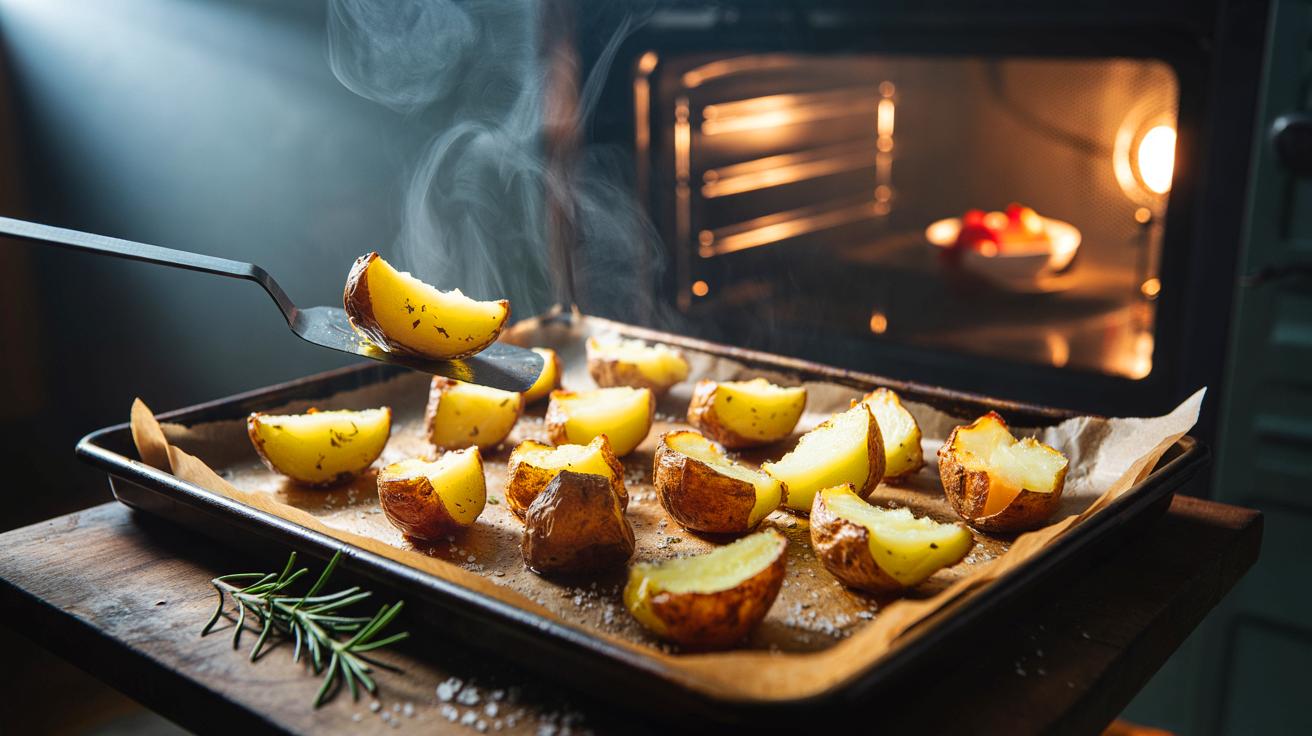
In a nutshell
- 🥔 Choose starchy varieties like Russet or go Yukon Gold for creamier centers; cut into uniform cuts with plenty of surface area for maximum crunch.
- 🔬 Use an alkaline parboil (salt + baking soda) to create a fragile starch slurry, then rough and steam-dry—achieving a crisp exterior with no oil.
- 🔥 Bake on a preheated pan at 450–475°F, flip midway, and avoid crowding to drive off moisture and lock in a crisp shell with a tender core.
- 🌬️ Prioritize airflow: use convection or an air fryer, place racks smartly, or elevate on a wire rack for even, all-over browning.
- 🧂 Finish smart: layer seasoning (in the boil and after baking), optionally dust with potato starch or semolina, add herbs/garlic late, and brighten with vinegar or lemon.
Crispy, bronzed, crackly potatoes without a glug of oil? Yes, and it’s more repeatable than you think. The secret lives in water management, starch chemistry, and hot, moving air. By choosing the right potato, creating a thin coating of surface starch, and driving off moisture fast, you can build a crisp shell and keep a soft center. High heat dries; alkalinity roughs up the exterior; airflow makes the crunch happen. This is a smart cook’s path, not a compromise. You’ll use science you can taste. And the method slips easily into weeknight routines, no specialty gear required beyond a sturdy sheet pan and a reliable oven.
Choose the Right Potatoes and Cut
Start with the potato itself. For the crispiest crusts, reach for starchy varieties such as Russet or Idaho; they shed moisture readily and form that prized surface paste that turns into a glassy shell. If you prefer a creamier interior with gentle snap, go Yukon Gold. Waxy types (Red Bliss, fingerlings) stay shapely but can resist true shatter. Check freshness: potatoes stored too cold convert starch to sugars, which brown fast but may burn before the centers cook. Choose well, and texture follows.
Size and shape matter. More surface area equals more crunch. Think 1-inch chunks, batons, or small wedges. Keep pieces uniform so heat hits evenly. Rinse cut potatoes briefly to remove dusty starch that can clump, then drain well. Dry with a towel until the pieces feel matte, not slick. That dryness is your insurance policy. It prevents steaming on the pan and sets you up for a crisp coat later. Start with the right potato and half your work is done.
The No-Oil Crisping Method: Parboil, Rough, Dry, and Blast
Build crunch before the oven. Bring 2 quarts of water to a boil with 1 tablespoon kosher salt and 1/2 teaspoon baking soda. The alkaline water weakens pectin on the potato surface, encouraging a starch slurry that later hardens into a lacquer. Add potatoes and simmer 6–8 minutes until the edges soften but centers still resist a knife. Drain thoroughly. Return potatoes to the hot pot and shake until the surfaces look fuzzy. Steam-dry 2–3 minutes. No oil is required to achieve shattering edges; you’re engineering the crust with starch and heat.
Optional, but powerful: dust lightly with 1–2 teaspoons potato starch or fine semolina for an extra-thin shell. Preheat a heavy sheet pan at 450–475°F. Line with parchment to avoid sticking, or use a preheated, unlined dark metal pan for deepest browning. Spread potatoes in a single layer with space between. Bake 20–25 minutes, then flip with a thin metal spatula to expose new sides. Continue 10–15 minutes until deep golden and audibly crisp. Rest 2 minutes; that brief pause hardens the crust. Season with salt and pepper while hot, then add herbs, garlic powder, or smoked paprika if you like.
Heat, Airflow, and Surfaces: Getting the Oven Right
Air moves moisture. That’s your ally. Use convection if available, and position the rack in the upper-middle where radiant heat is strong. Preheating the pan increases contact browning immediately; thermal shock helps set the coating before potatoes release steam. Avoid crowding—steam trapped between pieces softens edges. If your oven runs cool, bump the temperature by 10–15°F. A dark, heavy sheet speeds browning; a light, thin one may lag. Parchment prevents sticking with no oil, while a silicone mat browns more slowly. High, dry heat plus moving air equals crisp.
| Setting | Temperature | Time Range | Notes |
|---|---|---|---|
| Convection Bake | 450°F | 30–40 min | Best airflow; faster, even browning |
| Conventional Bake | 475°F | 35–45 min | Preheat pan; flip for even color |
| Air Fryer | 400°F | 18–25 min | Shake basket; minimal crowding |
For maximum crunch, consider a wire rack set over a sheet pan; it elevates potatoes so hot air sears all sides without turning. Seasoning strategy matters too: salt early in the boil, then again at the end for pop. Add fresh herbs and garlic in the final minutes to prevent scorching. If you crave extra tang without oil, finish with a spritz of vinegar or lemon—acidity sharpens flavor and cuts richness while keeping the crust intact. Control moisture paths and the texture takes care of itself.
Crispy potatoes without oil aren’t a loophole; they’re a method. You harness alkalinity, manage moisture, and let heat do the heavy lifting. The result is a brittle shell, a creamy core, and clean, focused flavor that doesn’t taste stripped down. Keep your cuts uniform, your pan blazing hot, your airflow generous, and your seasoning deliberate. Next time, try a dusting of potato starch or a wire-rack bake and compare. What variation—potato type, cut, or oven setting—will you test first to lock in your personal, no-oil signature crisp?
Did you like it?4.4/5 (27)