In a nutshell
- ✨ Washing less preserves sebum, forming a protective lipid film that keeps the cuticle flat, boosts light reflection, and reduces hygral fatigue for natural shine.
- 🚫 Over-washing with harsh surfactants (e.g., SLS/SLES) and hard water strips oils, roughens fibers, fades color, and can trigger rebound oiliness and a compromised scalp barrier.
- 📅 Shine depends on a personalized wash rhythm: fine/oily hair every 2–3 days, curls weekly, and color-treated hair less often—adjust using signs like flat roots, flakes, or dull midlengths; use clarifying/chelation as needed.
- 🧰 Stretch days smartly: distribute oils with a soft boar-bristle brush, target roots with dry shampoo, pre-wash with light oil/conditioner, finish with a cool rinse, and keep styling heat low and downward.
- 🧪 The payoff: longer-lasting blowouts, fewer split ends, calmer scalp, and richer color; try a two-week reset, track comfort and gloss, and fine-tune products like pH-balanced shampoo or co-washing.
Shiny hair isn’t only a product promise. It’s a physics lesson that plays out on your scalp. Stylists, dermatologists, and trichologists agree: when you wash less often—strategically—you allow your hair’s natural oils to do what high-gloss serums try to mimic. Those oils flatten the cuticle, boost light reflection, and protect fragile strands from friction and breakage. The catch is balance. Skip too long, and buildup smothers the roots. Wash too often, and you strip the very lipids that create luster. The sweet spot is personal, but the science is consistent. Here’s why easing up on shampoo days can transform dull, flyaway hair into a smoother, reflective curtain—no ring light required.
The Science of Shine: Sebum, Cuticles, and Light
Hair looks glossy when its surface is smooth enough to reflect light like a mirror. That surface is the cuticle: overlapping scales that, when lying flat, create an optical slick. Your scalp’s natural oil, sebum, is pivotal. It migrates down the fiber, forming a thin lipid film that reduces friction, seals micro-cracks, and enhances reflectivity. Wash too frequently and that film never fully forms. Wash less—and smart—and it does. Experts point to the scalp’s mildly acidic “acid mantle” and resident microbiome as guardians of this process. They keep the environment balanced so the cuticle stays compacted.
There’s also water science. Repeated swelling and deswelling—called hygral fatigue—ruffles the cuticle, scattering light. Fewer wash cycles mean fewer swelling events. Add the role of pH: cleansers near 4.5–5.5 help keep cuticles tight, while high-pH or harsh surfactants can pry them open. With less frequent washing, and better product choices, the fiber retains its protective oils and an intact cuticle architecture. The visual result is obvious: softer fall, fewer flyaways, a sleeker surface that throws back light.
How Over-Washing Dulls Hair and Irritates the Scalp
Over-washing is the fast track to fuzz and fade. Strong detergents—think some SLS/SLES formulas—strip sebum aggressively. Without that cushion, fibers grind against each other, the cuticle frays, and shine disappears. Hard water compounds the problem. Minerals like calcium and magnesium deposit on hair, creating a dulling film that roughens texture and makes hair feel “squeaky,” not silky. Color-treated hair loses tone faster when cleansed daily; pigments leach with every hot-water rinse.
There’s a scalp story too. Stripping oils can provoke a rebound effect: sebaceous glands ramp production, leaving roots greasy by afternoon. The response? More washing. The cycle spirals. Meanwhile, a compromised skin barrier can sting, itch, or flake, setting the stage for inflammation. Fragrance-heavy, astringent routines may amplify sensitivity. Experts often recommend spacing out shampoos, switching to gentler surfactants, and embracing lukewarm water. These tweaks minimize cuticle lift, reduce mechanical wear during towel-drying, and restore a calmer oil rhythm. In practice, fewer shampoos can mean less frizz, improved slip, and a scalp that feels settled instead of reactive.
Finding Your Wash Rhythm by Hair Type and Lifestyle
No single cadence fits all. Texture, porosity, climate, and routine—gym habits included—shape how often you should shampoo. The goal is to sustain a thin, even layer of sebum without tipping into gritty buildup. Use the guide below as a starting point, then fine-tune by feel and appearance.
| Hair Type/Life Stage | Suggested Frequency | Signs to Adjust | Notes |
|---|---|---|---|
| Fine or oily | Every 2–3 days | Flat by noon; heavy roots | Use lightweight, pH-balanced shampoo; dry shampoo in-between |
| Medium wavy/straight | Every 3–4 days | Dull midlengths; itchy scalp | Condition mid-shaft to ends only |
| Thick, curly, or coily | Weekly or 7–10 days | Flakes; limp curls | Consider co-washing; add scalp cleansing brush |
| Color-treated/sensitized | Every 4–7 days | Fading; roughness | Choose sulfate-free, cool rinses |
| Heavy exercise/sweat | Rinse or co-wash between | Salt-crunch feel | Water-only rinse post-workout; full wash as needed |
Your scalp is the barometer. If it’s tight, tender, or flaky, space washes and simplify formulas. If hair is waxy or limp, you may need a gentle clarifying step every few weeks. The right rhythm feels easy: roots stay buoyant, lengths stay reflective, and styles last longer.
Strategies to Stretch Days and Boost Natural Gloss
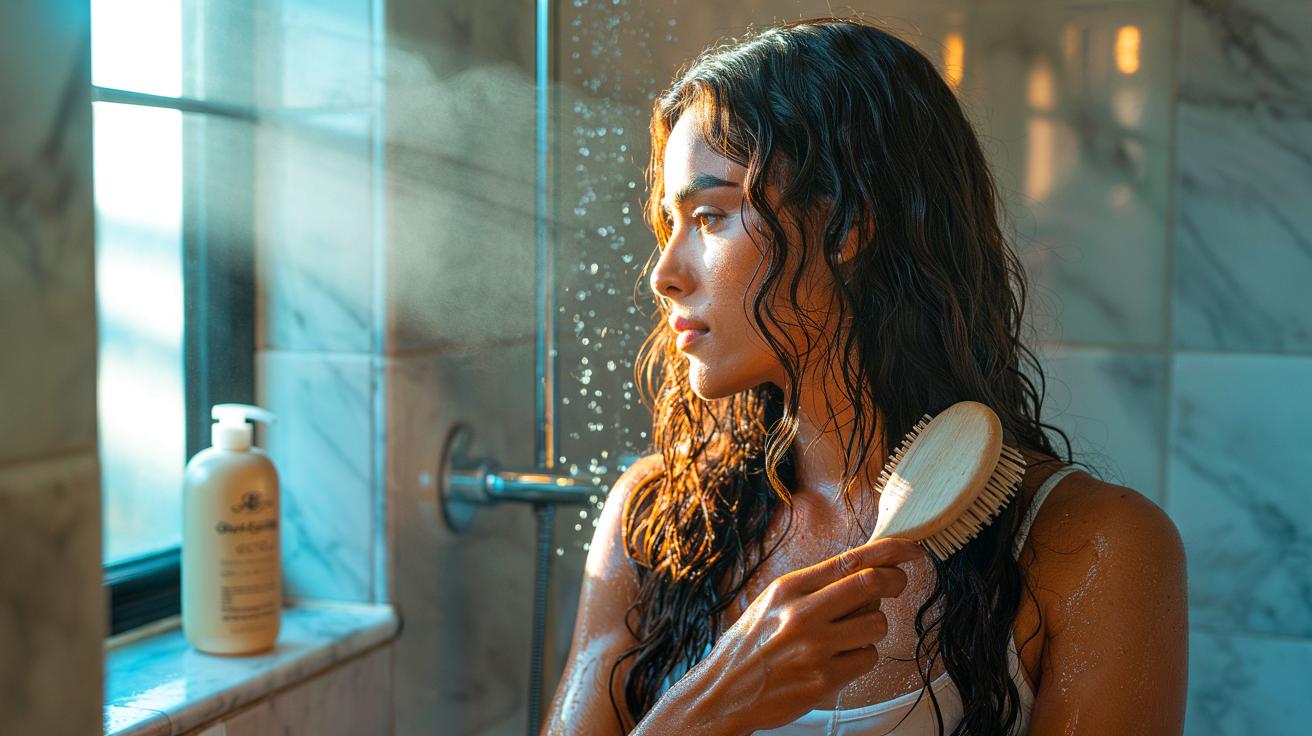
Think of the in-between days as active care, not neglect. Start with a nighttime routine: a few drops of lightweight scalp serum for balance, then brush with a soft boar-bristle or mixed bristle to distribute sebum from roots to ends. Use a silk or satin pillowcase to reduce friction. In the morning, revive with a dry shampoo at the roots and a micro-mist of leave-in on midlengths. Keep products off the scalp when they’re not designed for it; buildup can choke shine.
During wash days, minimize hygral fatigue: saturate hair with a light conditioner before shampooing if you’re porous, or oil pre-wash for coarse textures. Cleanse the scalp, not the ends, and let suds pass through lengths briefly. Finish with a cool rinse to tighten the cuticle. Heat style on low; aim airflow downward to “seal” the surface. Watch silicones—thin, volatile ones can add slip; heavy, non-soluble blends may cloud luster over time unless you clarify monthly. A periodic chelation step helps defeat hard-water haze. Small habits, compounding over weeks, create the unmistakable glow of well-managed sebum and calm cuticles.
Less washing isn’t about rules; it’s about results. When you allow sebum to fortify the cuticle and streamline light reflection, hair needs fewer styling crutches and looks healthier on its own. You’ll likely notice longer-lasting blowouts, fewer split ends, and color that keeps its tone. Test a slower rhythm for two weeks, track scalp comfort, and adjust. If your hair looks shinier with less effort, you’ve found your lane. What tweaks—timing, products, or tools—will you try first to discover your personal path to effortless shine?
Did you like it?4.5/5 (26)