In a nutshell
- 🔬 Research-backed: Gratitude journaling boosts activity in the medial prefrontal cortex, anterior cingulate cortex, and ventral striatum, with studies showing lasting neural sensitivity to gratitude cues and a bias toward constructive interpretation.
- 🧠 Mechanisms: It aligns reward circuitry, sharpens attention to positives, enhances hippocampal memory consolidation, and strengthens prefrontal regulation—yielding grounded optimism rather than rose-colored thinking.
- 📝 Protocol: Practice 3–5 days/week for ~5 minutes; log three specific items with the event, benefactor, and feeling, plus a “pay it forward” intention. Evidence-backed tools like Three Good Things, Gratitude Letters, and Benefit Finding improve well-being and reduce depressive symptoms.
- ⏱️ Practical tips: Rotate novel entries, use evenings for consolidation or mornings for priming, and remember consistency beats perfection; pair with professional care if mood is low.
- ⚠️ Nuance: Benefits vary by trait gratitude, support networks, and culture; avoid generic or performative lists, and integrate with cognitive reappraisal, exercise, and sleep for compounding gains.
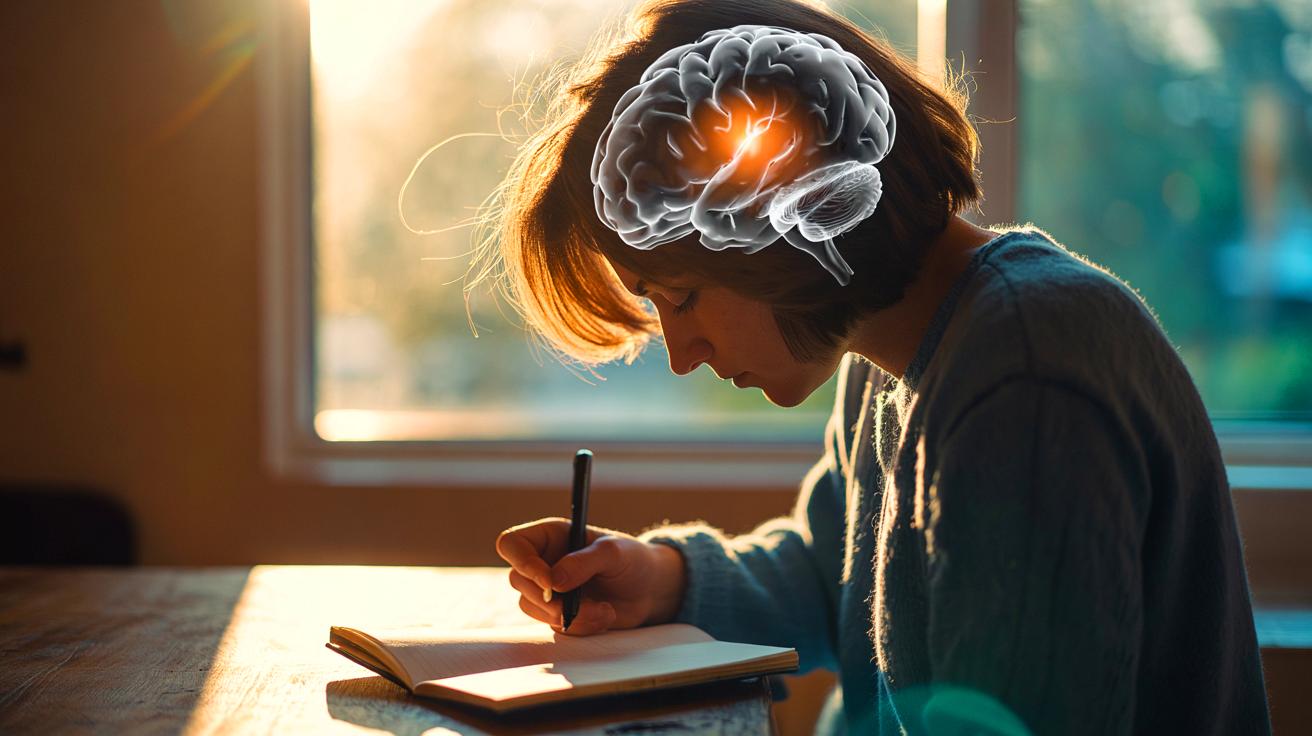
Pull open a notebook. List a few people, moments, or tiny mercies you’re thankful for. That’s gratitude journaling. It sounds quaint, even simplistic. Yet across labs and MRI suites, researchers are finding that this everyday habit nudges the brain toward optimism in measurable ways. Studies link grateful reflection to stronger activity in reward circuitry and to shifts in prefrontal regions that shape attention, valuation, and meaning. The effect isn’t instant magic. It’s practice-driven plasticity. Small, repeated entries can accumulate into durable neural tendencies to notice what’s working, not only what’s broken. The science, while still evolving, now offers a persuasive map of how this rewiring unfolds—and how to make it stick.
What Studies Reveal About Gratitude and the Brain
Early behavioral work set the stage. In classic experiments by Robert Emmons and Michael McCullough, people who kept weekly lists of blessings reported higher life satisfaction and fewer physical complaints than those tracking hassles. The brain story arrived later. A 2015 fMRI study led by Glenn R. Fox found that reflecting on received help recruited the medial prefrontal cortex and anterior cingulate cortex, hubs tied to valuation and social cognition. Participants also showed engagement in the ventral striatum, a reward region implicated in dopamine signaling. These patterns echo how the brain encodes something as “worth it.”
The next question was durability. A randomized trial from Indiana University (Joel Wong and colleagues) asked participants in counseling to write weekly gratitude letters. Weeks after the exercise ended, those letter writers displayed heightened medial prefrontal responses to gratitude cues in the scanner, suggesting a learned sensitivity. Other work links trait gratitude to stronger connectivity between the default mode and frontal control networks, a pathway believed to support reframing and future-oriented thought. The gist: gratitude practice doesn’t merely feel good; it conditions networks that bias interpretation and expectation toward the constructive.
The Mechanisms: Reward, Attention, and Memory Reframing
Gratitude journaling activates the brain’s reward system, especially the ventral striatum, which responds to valued outcomes and social reciprocity. When you encode a positive event and its benefactor, the brain tags it as salient, making similar cues easier to spot later. That’s attentional tuning. Over time, the medial prefrontal cortex helps reweight predictions about what tomorrow will bring, generating a subtle but pervasive tilt toward optimism. This is not daydreaming. It’s Bayesian updating with better priors.
Memory is part of the loop. The hippocampus consolidates experiences that are rehearsed and emotionally meaningful. Journaling rehearses them. It also prompts causal attributions—who helped, what enabled success—that feed into anterior cingulate monitoring of effort and outcomes. The result: more accurate credit assignment, less learned helplessness. As negative stimuli still arrive, repeated gratitude entries dampen the amygdala’s takeover by prefrontal regulation, a familiar pathway in cognitive therapies. In plain terms, you’re training the brain to privilege constructive signals without blinding itself to risk. That calibration—reward, attention, and memory working in concert—is the neural signature of grounded optimism.
A Simple Protocol Backed by Evidence
The specifics matter. Frequency, depth, and social focus all shape outcomes. Try a five-minute, three-item ritual, three to five days per week, for at least eight weeks. Each entry should identify the event, the benefactor or enabling condition, and the feeling it sparked. If possible, add a brief sentence about how you might “pay it forward.” Clinical studies suggest that this combination of recognition, attribution, and intention recruits valuation and control networks more strongly than vague lists. Keep it fresh—novel entries stave off adaptation.
| Practice | Time | Target Mechanism | Key Finding |
|---|---|---|---|
| Three Good Things | 5–10 min/night | Reward tagging; attentional tuning | Higher well-being; reduced depressive symptoms |
| Gratitude Letters | 1/week for 3–4 weeks | Social valuation; mPFC plasticity | Lasting mPFC activation to gratitude cues |
| Benefit Finding | 5 min, 3x/week | Cognitive reappraisal; hippocampal encoding | Improved optimism and coping |
Timing helps. Evening entries harness memory consolidation during sleep; morning entries may prime attention for the day’s positives. If you skip days, resume without guilt. Consistency beats perfection. And if your mood is low, pair journaling with professional support—these tools complement, not replace, evidence-based care.
Who Benefits Most—and Where It Falls Short
Not everyone responds equally. People with stronger baseline trait gratitude and social support networks often gain faster, perhaps because the practice has more raw material to work with. Those wrestling with severe depression or trauma can still benefit, but the entries may feel forced at first. For them, starting small—one specific, sensory-rich moment—can reduce the cognitive load. Culture matters, too. In more collectivist settings, gratitude toward groups and institutions tends to dominate; in individualist contexts, people emphasize personal growth or choice. Both pathways recruit social cognition circuits, just with different narratives.
There are pitfalls. Overly generic lists devolve into autopilot, offering little neural challenge. Performative gratitude—writing to impress a future reader—can backfire by stoking self-critique. And gratitude is not the same as passivity. Recognizing help does not excuse harm or erase structural barriers. The healthiest journals weave appreciation with agency: what worked, who contributed, and what you’ll try next. Blend it with cognitive reappraisal, exercise, and sleep hygiene, and the gains tend to compound. In the end, the practice is humble but potent—a quiet nudge that teaches the brain, day by day, where to look for light.
Gratitude journaling thrives on specifics, sincerity, and repetition. Over weeks, the practice recruits reward and control circuits, encodes constructive memories, and shifts predictions about the future toward the possible rather than the perilous. That’s what optimism looks like in neural terms: a brain calibrated to scan for opportunities without ignoring risk. It’s training, not wishful thinking. The invitation is simple—five minutes, a pen, and the willingness to notice. If you tried this for the next 21 days, what patterns might your brain start to find, and how would your choices change as a result?
Did you like it?4.5/5 (26)
This is the clearest explanation I’ve read on gratitude and the brain. The breakdown of mPFC, ACC, and ventral striatum activity makes it feel tangible, not fluffy. Printing the 5‑minute protocol for my nightstand—consistency over perfection really lands. Thank you for making the science actionable.
If evenings boost consolidation and mornings prime attention, is there any downside to doing both? Like a quick check-in at dawn and a deeper entry before bed?
Loved the hippo-campus cameo—so memory really gets gains from tiny stories? If I dramatizise a bit (smells, sounds, who helped), does that amplify encoding, or risk turning it performative?
I tried Three Good Things for two weeks and noticed lighter mornings and fewer doomscroll spirals. Pairing it with a short walk seemed to lock it in. Your “pay it forward” line adds heart.
How long before benefits show up if my consistancy is meh? I manage three days one week, then none the next—should I reset, or just continue without guilt as you suggest?
As a therapist, I appreciate the nuance about not replacing clinical care. For clients with trauma, starting with one sensory-rich moment and co-writing a gratitude letter in session has been gentler and more doable.
Does writing by hand vs. typing make a difference for hippocampal encoding? I can definately commit on my phone, but pen-and-paper feels richer. Curious if studies compared mediums or haptics.
Fantastic summary. I’m a middle-school teacher and started a three-item gratitude warmup on Tuesdays and Thursdays. We include a benefactor line and a tiny pay-it-forward plan. Classroom climate shifted—more noticing, less snark. Thank you! 🙂
The Indiana University letter-writing findings are fascinating. Do you have a citation list or DOI links for the mPFC activation work and the connectivity studies you mentioned? I’d love to share with our wellness committee.
For folks with ADHD, the attentional tuning piece really resonates. Any practical cues to kickstart the habit—like pairing journaling with brushing teeth, or using a visual trigger near the bed?
My ventral striatum just did a tiny fist pump reading this—Bayesian optimism never sounded so cozy 🙂 Off to log three wins and one pay-it-forward nudge before coffee.
Pro tip that helped me: keep a sticky note on the pillow that says “three specifics.” When I forget, I dictate a voice note and transcribe next day—less friction, better calender follow‑through.
Appreciate the cultural angle. In my Filipino family, our gratitude lists often honor whole groups—church choir, barangay volunteers—more than individuals. It still feels potent, like the social valuation network is humming in chorus.
Writing gratitude letters to my husand shifted how we argue—more repair, less blame. Funny how five minutes with a pen can unknot a whole evening. Keeping this ritual going.