In a nutshell
- 🌿 Botanists recommend a soap–neem spray—mild liquid castile soap plus cold-pressed neem oil—for quick knockdown and sustained suppression of aphids while sparing garden allies.
- 🧪 Mix per quart: 1 tsp soap + 1–2 tsp neem; add soap to water first, then neem, use the same day, and spot-test foliage to avoid phytotoxicity.
- 🌅 Apply at dawn or dusk, saturating leaf undersides; repeat every 4–7 days, and avoid spraying in full sun or above 85°F (29°C).
- 🐝 Protect beneficial insects by avoiding blooms and direct contact; let residues dry, and respect neem’s preharvest interval on edibles (soap has none).
- 🔍 Pair the spray with smart tactics—prune infested tips, clean honeydew, scout twice weekly, and consider alternatives (soap-only, garlic–chili, horticultural oil) based on plant sensitivity and pressure.
Aphids arrive quietly, then suddenly they are everywhere—curling new shoots, stippling leaves, and dripping sticky honeydew that invites sooty mold. Many gardeners reach for harsh chemicals. Botanists urge restraint. The spray they recommend is disarmingly simple, blended from household staples and a tree seed used for centuries: mild liquid soap and cold-pressed neem oil. This duo targets soft-bodied insects while sparing bees and lady beetles once it dries. It’s affordable, quick to mix, and safe for food crops and houseplants when applied correctly. In a season where weather swings and outbreaks feel relentless, this natural option offers control without collateral damage—smart, practical, and surprisingly potent.
What Botanists Mean by a Safe Natural Spray
When plant scientists say “safe,” they mean a treatment that disrupts aphids without poisoning the broader garden web. Mild liquid castile soap dissolves protective waxes and punctures cell membranes of soft-bodied pests; pests desiccate, fast. Neem oil (from Azadirachta indica) contributes azadirachtin, an antifeedant and insect growth regulator that confuses aphid molting cycles and reproduction. The combination delivers quick knockdown from soap and sustained suppression from neem, a one-two punch that outlasts a single contact spray.
Crucially, this mix is not a broad-spectrum nerve toxin. Once dry, residues are minimal, so beneficial insects—lacewings, syrphid flies, parasitic wasps—are largely spared if you avoid direct hits. It’s also low-odor compared with many synthetic options, making it realistic for patios and indoor plants. Used as directed, this natural spray offers control while keeping your garden’s allies on duty. For edible crops, follow label preharvest intervals for neem; soap has no withholding period. Sensible timing and coverage matter more than brute force.
The Recipe: Soap–Neem Aphid Spray, Step by Step
Start with quality ingredients. Choose unscented, dye-free liquid castile soap and cold-pressed neem oil labeled for garden use. Use clean, tepid water; hard water can reduce soap efficacy. For a quart (about 1 liter) of spray, mix 1 teaspoon (5 mL) soap and 1 to 2 teaspoons (5 to 10 mL) neem oil. This yields about 0.25% soap and 0.5%–1% neem—a botanist-approved range that balances effectiveness and plant safety. The soap also acts as an emulsifier, helping the oil disperse.
Method matters. Add the soap to the water first, shake gently, then drizzle in the neem while agitating to form a uniform, milky solution. Use it the day you mix it; neem degrades in light and warm conditions. Saturate aphids directly, especially the leaf undersides and tender tips, until just shy of runoff. Repeat every 4 to 7 days for two to three cycles to intercept new hatchlings. Always test on a small patch of foliage and wait 24 hours before broader application to rule out phytotoxicity. Skip heat waves and full sun; aim for cool, calm hours.
When and How to Spray Without Harming Beneficials
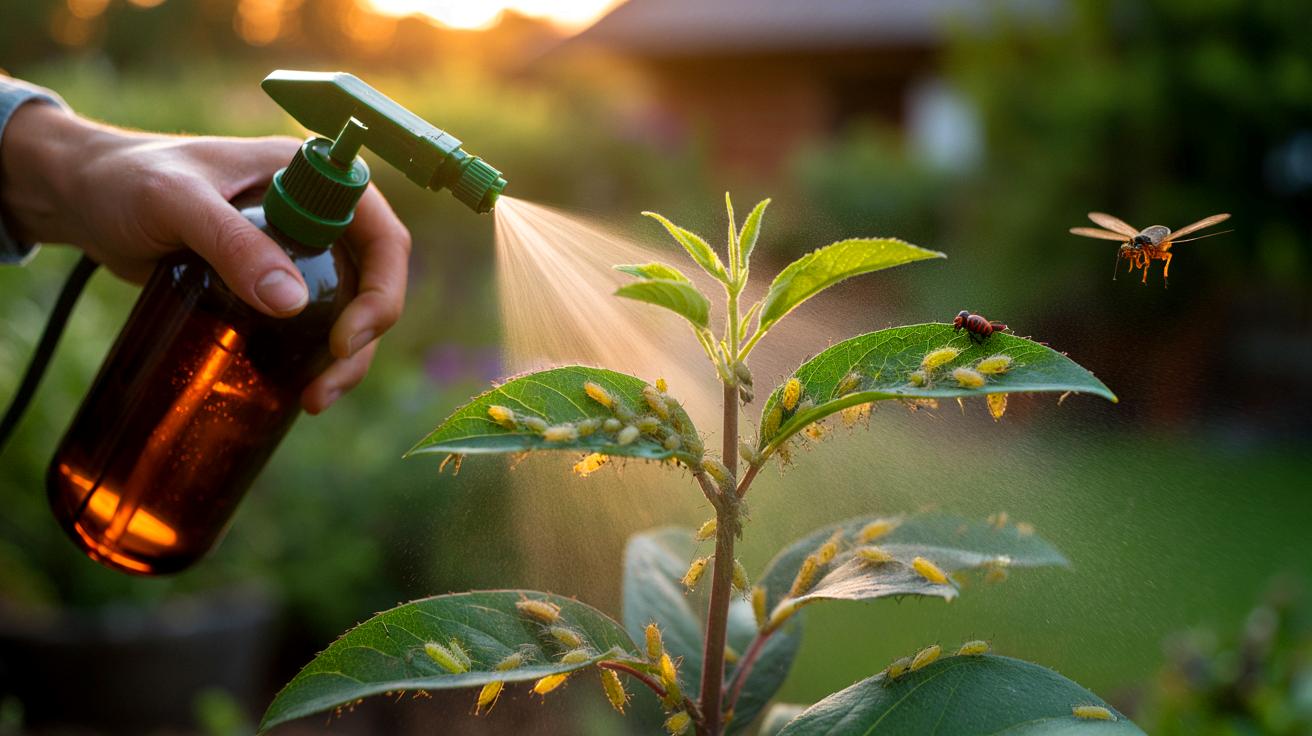
Timing is strategy. Spray at dawn or dusk, when pollinators are inactive and evaporation is slower, which improves contact time. Target colonies while they are clustered on new growth. Indoors, move potted plants to a sink or shower for thorough coverage and easy cleanup of honeydew. Outdoors, prune heavily infested tips first to reduce pressure, then spray the remaining aphids and hidden nymphs.
Protect your allies. Avoid spraying open blooms and keep blasts off flowers where bees forage. Let the solution dry before releasing or encouraging predators such as lady beetles and lacewing larvae. Rinse off dusty leaves beforehand; clean leaf surfaces help the spray spread. Never spray during peak sun or above 85°F (29°C)—leaf burn and stress are real risks. After rain, reapply. Between treatments, wipe honeydew from leaves and surfaces to reduce sooty mold, and water consistently; drought-stressed plants pump out extra sugars that aphids love.
Comparing Natural Aphid Sprays and Add-Ins
Gardeners like options, but not all “natural” mixes perform equally or carry the same risks. Here’s a quick snapshot to guide your choice and fine-tune tactics based on pressure, plant sensitivity, and weather. Note that water quality and droplet coverage dramatically change outcomes; small details often decide success. Use distilled or rainwater if your tap water is very hard, and choose a fine-mist sprayer for even leaf wetting.
| Spray | Key Ingredients | How It Works | Pros | Cautions |
|---|---|---|---|---|
| Soap Only | Castile soap + water | Disrupts membranes on contact | Cheap, fast knockdown | Short-lived; can spot tender leaves |
| Neem + Soap | Cold-pressed neem, castile soap, water | Contact kill + growth regulation | Broader, longer suppression | Test first; avoid heat and full sun |
| Garlic–Chili Tea | Steeped garlic, chili, drop of soap | Repellent cues, mild contact action | Low cost, DIY | Variable potency; can irritate skin/eyes |
| Horticultural Oil | Plant-based oils, emulsified | Smothers eggs and nymphs | Great for dormant sprays | Heat-sensitive; follow dilution exactly |
For routine outbreaks, botanists favor the neem + soap blend for its balance of speed, safety, and staying power. Consider add-ins like a small amount of aloe-based wetting agent for better spread, but skip harsh solvents or high-proof alcohols that can scorch foliage. Consistency, not intensity, is your edge.
Natural control is a rhythm, not a single event. Scout twice weekly, treat colonies early, and keep plants vigorous with balanced light, water, and nutrients; aphids prefer lush, overly nitrogen-fed growth. If a plant is heavily infested and weakened, prune hard or even cut losses—saving the rest of the garden matters. Pair the soap–neem spray with habitat for predators, from umbel flowers to shallow water sources. When you blend precise mixing, mindful timing, and ecological backup, aphids go from crisis to manageable chore. What plant in your space needs this gentle reset, and how will you tailor the recipe to the way you grow?
Did you like it?4.5/5 (27)